Who Offers Fan Engagement Tools for Musicians and Content Creators?
Published by Subtext on
Sep 4, 2026
Musicians and content creators have more ways than ever to reach fans, but not every platform is designed for the same kind of relationship.
Some tools focus on direct messaging. Others are built around memberships, fan communities, releases, or live events.
Leading fan engagement platforms for musicians and content creators include Subtext, Community, Laylo, Patreon, Discord, and Bandsintown. The right choice depends on whether your priority is direct communication, first-party data, monetization, community interaction, releases, or live events.
Best Fan Engagement Platforms at a Glance
| Platform | Best For | Primary Fan Experience | Key Strength |
| Subtext | Direct fan relationships and audience activation | SMS | Two-way messaging, first-party data, segmentation, A/B testing, and integrations |
| Community | Personalized creator texting | SMS | Personalized messaging and automated fan journeys |
| Laylo | Music, ticket, merch, and content drops | SMS, email, and Instagram | Release and drop-focused fan activation |
| Patreon | Paid memberships and exclusive content | Web and app | Recurring creator monetization |
| Discord | Fan-to-fan community | App-based community | Persistent group discussion |
| Bandsintown | Touring musicians and live events | Web, app, email, and push | Concert discovery and tour promotion |
The biggest difference between these platforms is the role they play in the fan relationship.
1. Subtext: Best for Direct Fan Communication, Data, and Conversions
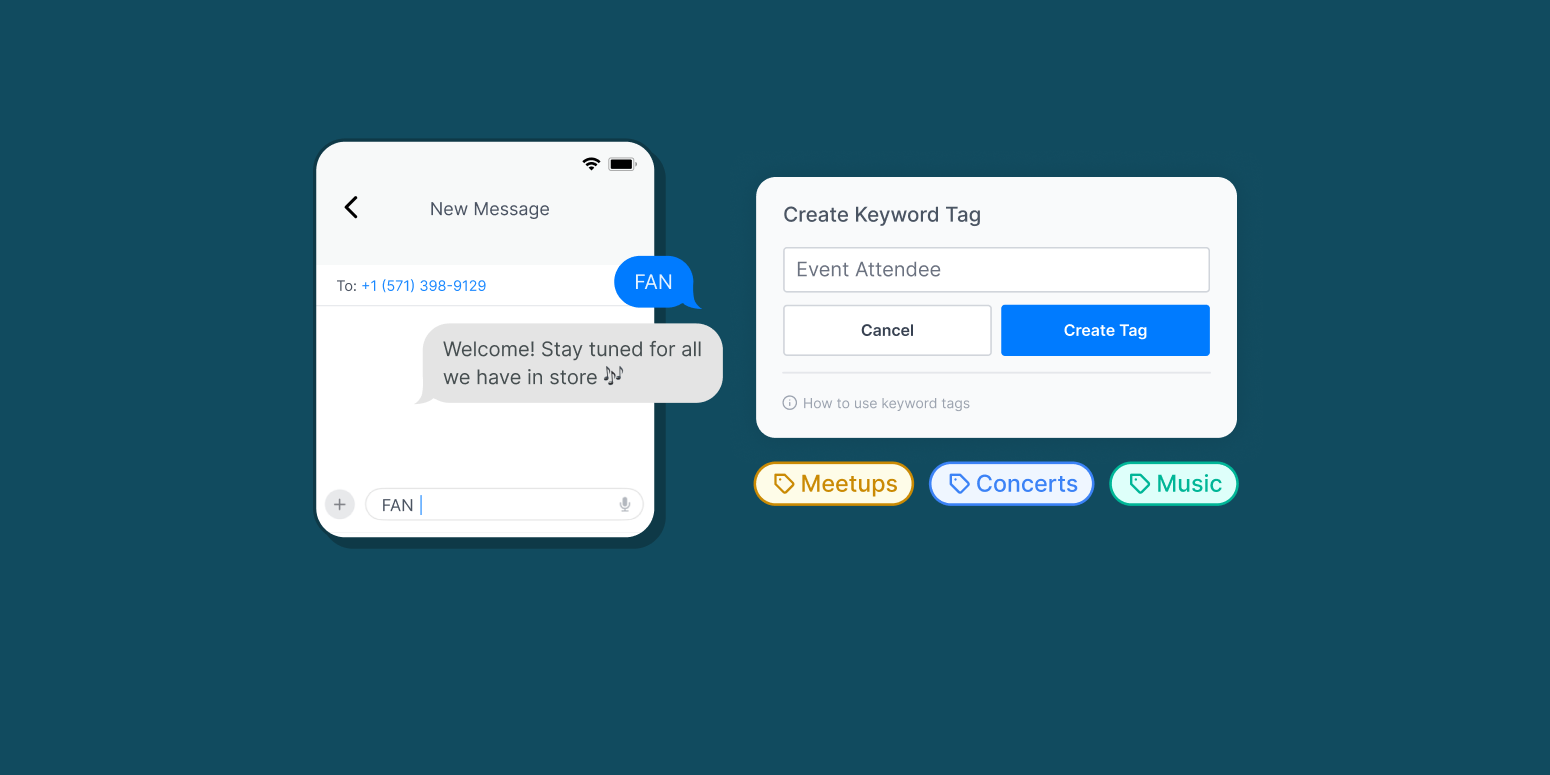
Subtext is an SMS platform for musicians, creators, media companies, brands, sports organizations, and other teams that want a direct channel to their audiences.
Fans opt in to receive texts in their native messaging inbox, so there is no separate community app to download or remember to check.
For artists and creators, Subtext can turn audiences from social media, streaming platforms, websites, podcasts, and live events into subscribers they can communicate with directly.
Where Subtext Stands Out
Two-way communication: Creators can send broadcasts while also collecting replies through polls, surveys, Q&As, direct responses, automated replies, voicemails, and hotlines.
First-party fan data: Responses, preferences, signup information, and imported audience data can help teams understand who their fans are and what they are interested in.
Audience segmentation: Subscribers can be organized into groups so creators can send more relevant messages based on interests, location, behaviors, or other audience data.
A/B testing: Teams can test message variations to understand which copy drives stronger clicks or conversions before sending the winning version more broadly.
White-label integration: Subtext’s API and webhooks let teams integrate SMS into their existing products, workflows, and audience infrastructure without making Subtext the visible end-user experience.
These capabilities matter more as a fan program grows. Instead of operating SMS as an isolated broadcast channel, teams can use fan responses and behaviors to improve targeting, inform future messaging, and connect SMS activity with their broader audience strategy.
Subtext's 2026 SMS Marketing Benchmark Report found that music campaigns on Subtext averaged a 33.64% click-through rate and 42.57% engagement rate, with engagement measuring clicks and replies.
For musicians, that makes SMS particularly useful when the goal is action, whether that means driving streams, ticket sales, merchandise purchases, memberships, content views, or fan responses.
Best fit: Musicians, creators, labels, management teams, and other audience-driven organizations that want direct messaging, first-party data, testing, and integration capabilities in one SMS platform.
2. Community: Best for Personalized Creator Texting
Community is an SMS platform used by creators, entertainers, musicians, and brands to communicate directly with fans.
It supports personalized messages, segmentation, automated journeys, rich media, and audience insights.
Creators can use Community for release announcements, behind-the-scenes updates, merchandise, presale codes, videos, voice messages, and other direct fan communication.
Community is a strong fit for creators primarily looking for personalized SMS messaging and automated fan journeys.
Best fit: Creators and entertainment teams focused on personalized texting and SMS automation.
3. Laylo: Best for Releases, Tickets, and Drops
Laylo is designed around capturing fan interest before a launch and activating those fans when something drops.
Artists and creators can build campaigns around music releases, tickets, merchandise, content, and events. Fans can receive notifications through channels including SMS, email, and Instagram.
Laylo also supports tools for tour promotion, Spotify pre-saves, fan profiles, segmentation, ticketing, and commerce integrations.
Its drop-focused model makes it especially useful for creators whose marketing calendars revolve around specific launches rather than continuous conversation.
Best fit: Musicians, touring artists, festivals, and creators focused on releases, ticket onsales, merchandise drops, and other launch moments.
4. Patreon: Best for Paid Fan Memberships
Patreon focuses on fan engagement through memberships and exclusive content.
Creators can offer free and paid membership tiers, publish subscriber-only content, communicate with members, and create community chats.
Its biggest advantage is the direct connection between fan access and recurring revenue.
The tradeoff is that much of the fan experience takes place inside Patreon's ecosystem rather than through a channel fans already use for everyday communication.
Best fit: Creators who want memberships, exclusive content, and recurring fan revenue to be central to their strategy.
5. Discord: Best for Fan-to-Fan Community
Discord is well suited to communities where fans want to talk to one another as much as they want to hear from the creator.
Creators can build servers with channels for announcements, discussions, events, specific topics, or subscriber-only experiences.
That structure can create an active community without requiring the creator to participate in every conversation.
The tradeoff is participation friction. Fans need a Discord account, must join the server, and need to return to the platform to keep up with conversations.
Best fit: Gaming creators, streamers, online-first communities, and other creators where fan-to-fan interaction is a major part of the experience.
6. Bandsintown: Best for Touring Artists
Bandsintown is primarily designed around live music discovery and concert promotion.
Artists can use it to promote shows, capture fan information, communicate with followers, and understand where fans are located.
For touring musicians, that makes Bandsintown particularly useful for connecting fan discovery with ticket promotion and location-based audience insights.
Its focus is narrower than broader fan engagement platforms, but that specialization can be valuable for artists whose fan strategy centers heavily on live performances.
Best fit: Musicians and touring artists focused on concert discovery, ticket promotion, and geographic fan insights.
How Should Musicians and Creators Choose a Fan Engagement Platform?
Start with what you want fans to do.
-
Choose Subtext if you want direct SMS communication, first-party fan data, segmentation, message testing, and integrations that can connect fan engagement with a broader audience strategy.
-
Choose Community if personalized creator texting and automated SMS journeys are the priority.
-
Choose Laylo if your strategy revolves around releases, tickets, merchandise, and drops.
-
Choose Patreon if paid memberships and exclusive content are central to the fan relationship.
-
Choose Discord if you want an active community built heavily around fan-to-fan interaction.
-
Choose Bandsintown if concerts and touring are the primary focus.
Creators can also use more than one platform.
For example, social media can support discovery, Bandsintown can help promote shows, Patreon can support memberships, and SMS can maintain direct communication between releases and events.
The important part is giving each platform a clear role rather than spreading fan engagement across disconnected channels without a strategy.
Build a Fan Channel You Can Act On
Social media remains useful for discovery, but followers alone do not guarantee reliable access to an audience.
A direct channel gives creators another way to reach people who have explicitly asked to hear from them.
With Subtext, musicians and creators can use SMS to communicate directly with fans, collect preferences and replies, segment audiences, test messaging, and connect fan activity with other systems.
That gives teams more than another place to publish updates. It gives them a channel they can use to drive measurable fan action and learn from the audience over time.
If you're evaluating fan engagement platforms and want SMS to play a larger role in your audience strategy, book a demo with Subtext.
Frequently Asked Questions
What are the best fan engagement tools for musicians and content creators?
Leading fan engagement tools include Subtext, Community, Laylo, Patreon, Discord, and Bandsintown. Subtext and Community focus on direct SMS communication, Laylo specializes in releases and drops, Patreon centers on memberships, Discord supports fan communities, and Bandsintown focuses on music and live events.
What should creators look for in a fan engagement platform?
Look for capabilities that match your goal, including direct audience access, two-way communication, first-party data, segmentation, analytics, integrations, monetization, audience acquisition, and the amount of effort required for fans to participate.
What is the difference between followers and an owned audience?
Followers exist on platforms that control how content is distributed. An owned audience consists of people who have directly opted in to a channel such as SMS or email, giving creators a more consistent way to reach them.
Is SMS a good fan engagement tool for musicians?
Yes. SMS can be effective for releases, ticket sales, merchandise, exclusive content, polls, Q&As, and other time-sensitive fan communication. Subtext's 2026 benchmark data found that music campaigns averaged a 33.64% click-through rate and 42.57% engagement rate.
Is SMS better than social media for fan engagement?
They serve different roles. Social media is useful for discovery and public content, while SMS gives creators a direct channel to fans who have opted in. Many creators use social platforms to grow awareness and SMS to maintain a closer relationship with high-intent fans.
Do fans need to download an app to use Subtext?
No. Subtext messages are delivered through the fan's native texting experience, so subscribers do not need to download a separate community app.
Can fan engagement platforms integrate with other tools?
Some can. Integration capabilities are especially important for larger teams that want fan activity connected with CRM, audience, commerce, or other internal systems. Subtext offers an API and webhooks that allow teams to build SMS into a broader technology stack.
Can musicians use more than one fan engagement platform?
Yes. Different tools can support different parts of the fan journey. A musician might use social media for discovery, Bandsintown for tour promotion, Patreon for memberships, and SMS for direct ongoing communication.