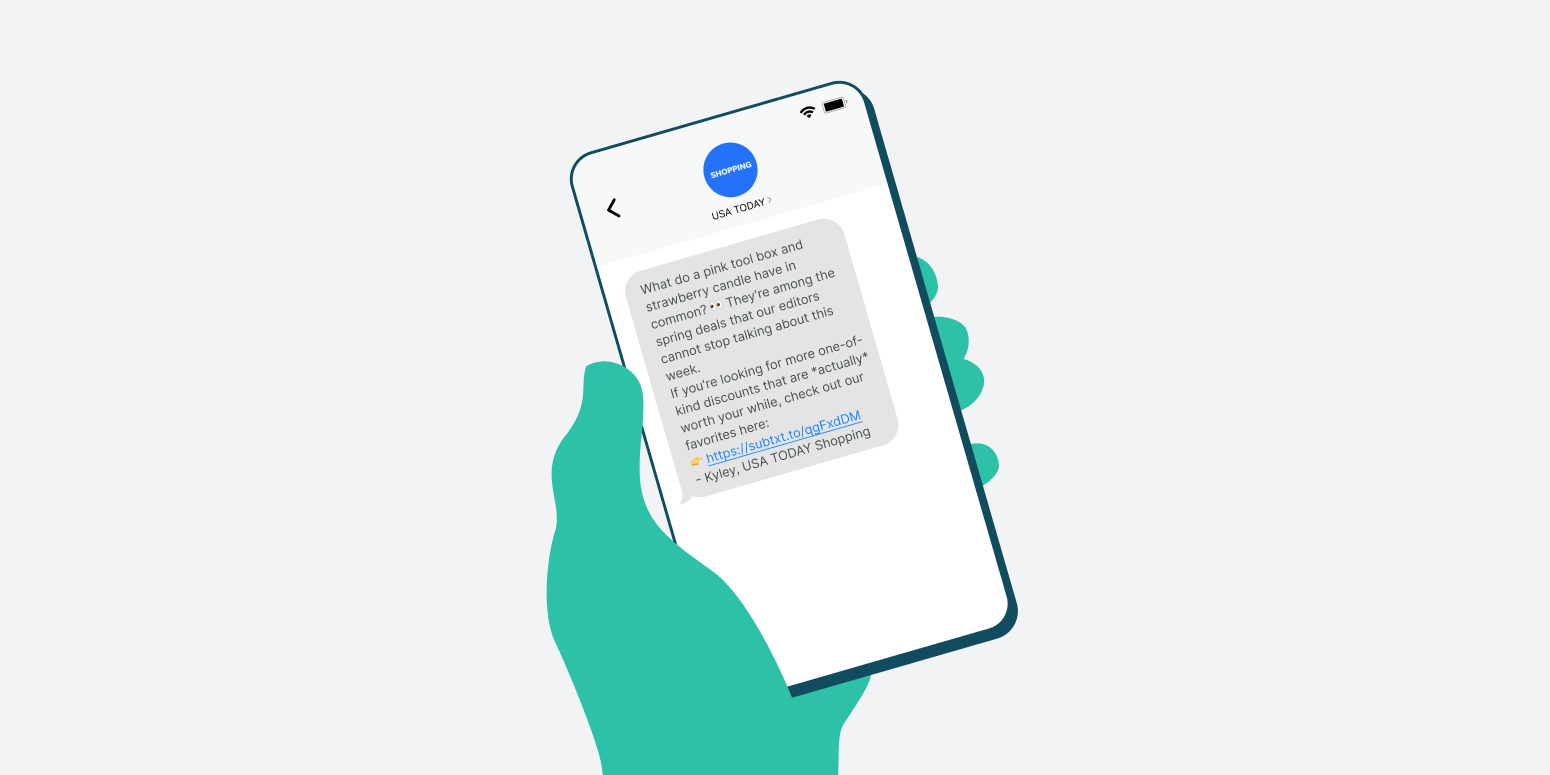
Commerce moves fast.
A strong deal is only valuable if your audience sees it in time to act. Prices change, inventory disappears, promo codes expire, and shopping moments pass quickly. That is what makes SMS such a strong channel for e-commerce. It gives publishers, creators, and brands a direct way to send timely deals, product picks, and shopping alerts while the opportunity is still live.
This playbook breaks down how to launch and run an e-commerce SMS channel with Subtext to drive clicks, engagement, and revenue.
Why E-Commerce SMS Works
E-commerce is one of the strongest use cases for SMS because it pairs naturally with time-sensitive content. Deal drops, product recommendations, limited-time offers, and seasonal shopping moments all benefit from direct reach.
That performance shows up in the numbers. Subtext’s 2026 SMS benchmark report, based on more than 10 billion texts sent in 2025 to 28 million subscribers, found that SMS campaigns maintained a 98% open rate, with 95% of messages opened within three minutes and subscriber churn below 1%. Across industries, click-through rates exceeded 20% in five of eight sectors, and advertiser campaigns averaged a 14.18% CTR and 20.37% engagement rate.
SMS also gives commerce teams a more direct and more personalized way to engage subscribers. Beyond the immediacy of the channel, it creates opportunities to collect subscriber preferences, build first-party audience data, and use segmentation to deliver more relevant offers over time. That matters because not every subscriber wants the same products, categories, or shopping alerts.
On Subtext, that can include daily deal alerts, category-specific recommendations, flash sale texts, and tentpole shopping coverage. It can also include subscriber tags and segmentation that help teams tailor sends based on interest, making the channel more useful to the audience and more effective for the business. This is where commerce SMS becomes more than a fast promotional channel. It becomes a stronger owned channel for driving clicks, engagement, and revenue.
How to Use This Playbook
This playbook is built for publishers, creators, brands, and commerce teams launching a new SMS channel or improving an existing one.
Use it to define the offer, build subscriber acquisition paths, choose your message types, set a cadence, and create a more organized approach to commerce texting on Subtext.
You do not need to do everything at once. The strongest launches start with a clear promise, a few effective signup paths, and a content mix the team can actually sustain.
Step 1: Define the Channel Before You Launch It
Before you send anything, get clear on what subscribers are signing up for.
A strong commerce SMS channel starts with a simple promise: what people will get, why it is worth receiving by text, and how often they should expect to hear from you.
For example:
Get our best daily deals, product picks, and limited-time shopping alerts sent straight to your phone.
That is much stronger than a vague “subscribe for updates” message. It tells people what kind of value they can expect and makes the channel easier to promote across your site, social, and other owned channels.
At this stage, decide:
-
What kinds of messages the channel will send
-
Who the channel is for
-
How often you plan to text
-
How the voice should feel
-
What makes the channel worth subscribing to
Subtext helps here by giving each campaign its own structure, signup flow, and promotional assets so the offer can be clearly presented from the start.
Step 2: Determine Your KPIs
Before you build the channel, decide how you will measure success.
The right KPIs depend on what the channel is meant to do. For some teams, the goal is stronger engagement with commerce content. For others, it is affiliate revenue, more efficient promotion during major shopping moments, or better use of first-party subscriber data. Defining that early helps shape the way you build the program.
For a commerce SMS channel, the most useful metrics often include:
-
Subscriber growth
-
Click-through rate
-
Conversion rate
-
Affiliate revenue per text
-
Revenue by category or segment
-
Churn rate
These metrics help you understand not just whether the channel is growing, but whether it is driving meaningful engagement and revenue over time.
The goal is to identify which combinations of offer type, timing, audience, and message format create repeatable results without weakening the subscriber experience.
Step 3: Choose Your Message Types
Before you set your cadence, decide what kinds of messages belong in the channel. A defined content mix makes it easier to set expectations, plan sends, and keep the channel focused.
On Subtext, that can include a few core message types:
Daily Deals
These are the foundation of many commerce channels. A daily deal text gives subscribers a reason to stay engaged and helps build a repeatable reading habit.
Use these when:
-
You have a steady stream of worthwhile offers
-
Your audience expects regular recommendations
-
You want to create a dependable weekday rhythm
Category-Specific Alerts
These are targeted sends tied to subscriber interests, such as tech, home, beauty, fashion, or travel.
Use these when:
-
You want to make the channel personalized
-
You have enough subscriber data or tags to segment effectively
-
You want a better match between the offer and the audience
This is one of the clearest ways Subtext helps commerce teams run a more tailored program. With tags, you can send offers that align more closely with what subscribers actually want.
Flash Deal Alerts
These are for short-window opportunities that need speed.
Use these when:
-
The deal is time-sensitive
-
The inventory is limited
-
The discount is strong enough to justify a real interruption
These texts should be concise, clear, and easy to act on right away.
Tentpole Shopping Event Coverage
These are sends tied to major retail moments like Prime Day, Black Friday, Cyber Monday, and holiday gifting periods.
Use these when:
-
Shopping intent is unusually high
-
Deals are moving faster than usual
-
Subscribers will benefit from more frequent updates for a limited window
Curated Roundups
These are broader shopping texts that pull together several recommendations around a theme, event, or category.
Examples include:
-
Best deals today
-
Editor picks under $50
-
Top kitchen deals this week
-
Last-minute gift ideas
These work well when you want to deliver more breadth without sending multiple separate alerts.
Personal Recommendations
These are texts with more points of view, often tied to products your team has tested, reviewed, or strongly recommends.
Use these when:
-
You have a real editorial opinion
-
You want the channel to feel more human
-
The recommendation itself is part of the value
This format can be especially strong for publishers and creators who already have an established voice with their audience.
The goal here is not to use every format at once. It is to choose a mix that fits your audience, your content model, and your team’s capacity.
Step 4: Build Your Acquisition System
A commerce SMS channel needs subscriber growth built into the launch plan. The easier you make it to sign up, the easier it is to turn interest into subscriptions.
Subtext gives teams multiple ways to drive signups across site, social, and mobile surfaces, which makes it easier to meet subscribers where they already are.
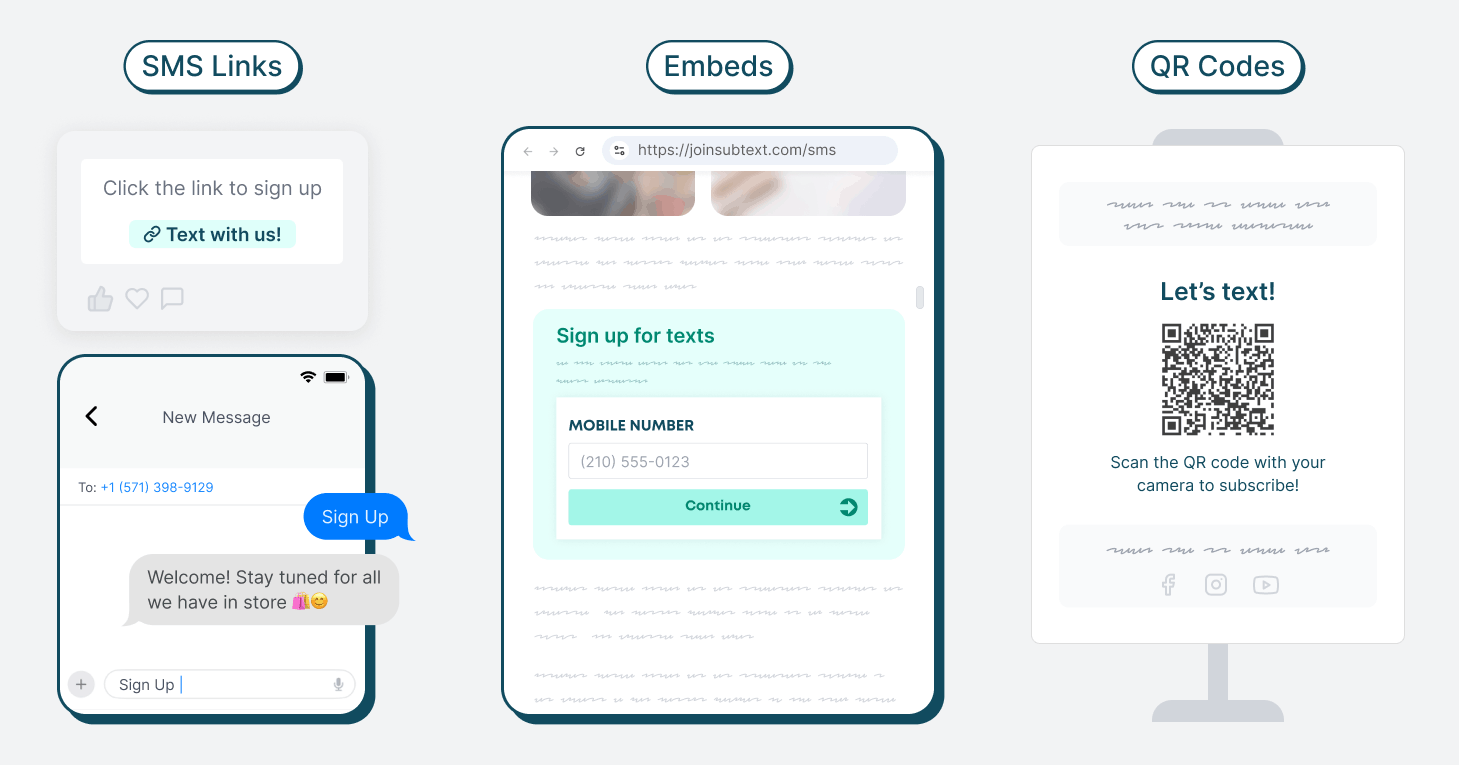
Text-to-Sign-Up
Readers can text your primary marketing number and receive a bounce-back link to complete the signup. You can also set up a subscription keyword so users can text that keyword and be added more seamlessly.
This is especially useful when you want a simple CTA that works across social, video, podcasts, or other channels where a short keyword is easier to promote than a URL.
Sign-Up URL
Every Subtext channel has its own customizable landing page where users can sign up directly.
This link should be promoted anywhere your audience already engages with your commerce content, including:
-
Social bios
-
Pinned posts
-
Newsletters
-
Author pages
-
Link-in-bio pages
-
Shopping content hubs
Embed Codes
Embeds are one of the strongest subscriber acquisition tools because they let you capture intent directly on your own site.
For commerce teams, strong placements include:
-
The homepage
-
Deal roundups
-
Buying guides
-
Category pages
-
Shopping newsletters pages
-
Article templates with affiliate content
Subtext’s embed options make it easier to turn existing site traffic into SMS subscribers without sending people somewhere else first.
SMS Links
SMS links are especially useful for mobile-heavy promotion. When tapped from a phone, they open the user’s messaging app with the campaign number and keyword or phrase already filled in.
This makes them a strong fit for:
-
Instagram Stories
-
Reels
-
TikTok
-
Mobile web promos
-
Creator-led promotion
QR Codes
QR codes work similarly to SMS links, but in a scannable format that is useful for external marketing and cross-channel promotion.
They are especially helpful in:
-
Event activations
-
Printed materials
-
Graphics
-
Presentation decks
-
Retail or in-person promotional placements
The goal is not to rely on a single signup path. It is to make joining the channel easy wherever subscribers discover it.
Step 5: Set Your Cadence and Expectations
Once you know what kinds of messages you plan to send, you can build a cadence that fits the channel.
For many commerce programs, consistency matters more than volume. If you text too often without enough value, the channel starts to feel noisy. If you text too inconsistently, it is harder to build a habit.
A strong starting point might look like:
-
Daily deal alerts on weekdays
-
Three to five sends per week
-
A weekly roundup plus flash deal alerts
-
More frequent sends during major shopping events
Weekdays often perform better than weekends, and midday is usually a good place to start testing. But the best cadence is the one your team can sustain without lowering the quality of what you send.
This is also where expectation-setting matters. If you plan to increase send volume during moments like Prime Day, Black Friday, Cyber Monday, or the holiday season, let subscribers know ahead of time.
For example:
Heads up: we’ll be sending more deals than usual this week, so you don’t miss the best offers. We’ll keep it focused on the ones most worth your attention.
Step 6: Make the Channel Feel Human
The strongest commerce SMS channels do not feel like automated promotion feeds. They feel like recommendations from a person with a point of view.
A good commerce text should do more than drop a link. It should give the subscriber just enough context to understand why the offer matters.
That could mean:
-
Introducing yourself
-
Signing off with your name
-
Sharing a quick opinion on the product
-
Explaining why the deal stands out
-
Keeping the tone direct and natural
For example, instead of:
Air fryer on sale now. Buy here: [link]
Try:
One of our favorite air fryers just dropped in price. Great option if you want something compact but still big enough for weeknight dinners. Grab it here: [link]
—Maya
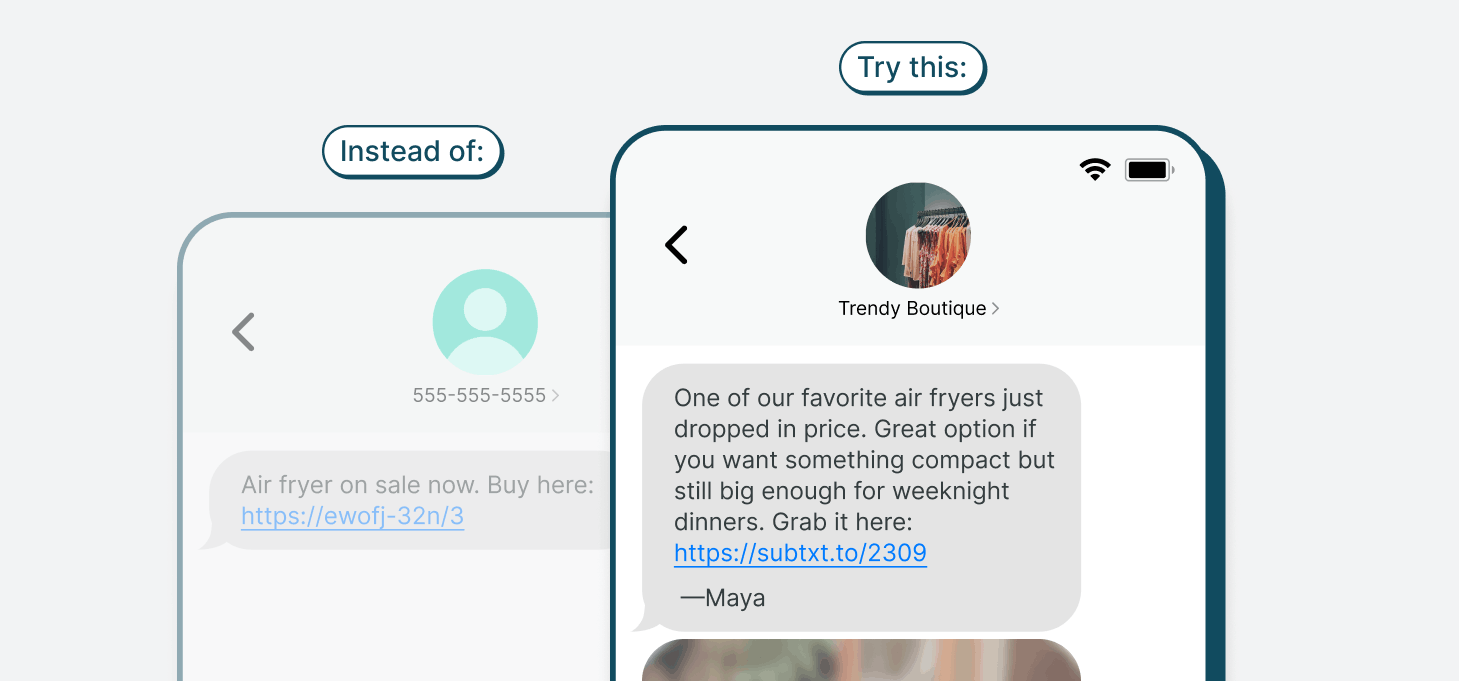
That kind of framing makes the message feel more editorial and more personal.
Subtext supports that style of communication well because the channel itself is built for direct, one-to-one messaging instead of broad promotional blasts.
Step 7: Use Segmentation to Improve Relevance
Not every subscriber wants the same kinds of deals. Subscriber tags help you organize subscribers by interest, so sends can be more targeted from the start.
If someone signed up for beauty product recommendations, they may not care about home office furniture. If someone wants tech discounts, they may ignore fashion sends. The more aligned the message is with subscriber interest, the stronger the channel tends to perform.
Those tags have to come from somewhere. A simple way to start is by collecting preferences during signup or shortly after. You can ask subscribers what kinds of deals they want to receive, then use those responses to organize the audience into segments. You can also refine those tags over time based on what subscribers click, respond to, or consistently engage with.
Start simple with a handful of interest-based tags, such as:
-
Tech
-
Home
-
Beauty
-
Fashion
-
Parenting
-
Travel
-
Gifts
Then use segments to send more aligned recommendations over time.
Subtext’s tagging tools make this practical without requiring a complicated setup. Even a few basic segments can help a commerce channel feel more tailored and more effective.
Step 8: Ask for Feedback
One of the biggest advantages of SMS is that it gives you a direct line to your audience, not just a broadcast channel. That makes feedback especially valuable.
If you want the channel to remain useful over time, ask subscribers what they want more of, what they want less of, and whether the experience meets their expectations. That can be as simple as asking which categories they care about most, whether the current frequency feels right, or what kinds of deals they find most useful.
You can collect that feedback in a few different ways:
-
Send a quick SMS survey
-
Ask subscribers to reply with preferences
-
Run simple polls around categories or deal types
-
Check in after major shopping moments or seasonal campaigns
This kind of feedback helps you refine the channel over time. It can shape what you send, how often you send it, and how you segment the audience going forward.
On Subtext, this also creates a stronger feedback loop between subscriber behavior and channel strategy. Instead of guessing what people want, you can ask directly and use that input to make the channel more relevant.
The best commerce SMS channels do not stay static. They get better as the team learns more about what subscribers actually value.
Step 9: Add Visuals Where They Help
Commerce is often visual, so some messages work better when subscribers can quickly see what you are talking about.
A product image, screenshot, or other visual aid can help make the offer clearer and more engaging, especially for:
-
Fashion
-
Beauty
-
Home
-
Gifts
-
Lifestyle products
The key is to use visuals that improve the recommendation. If the image helps the subscriber understand the item faster or makes the message more compelling, it is worth including. If it adds nothing meaningful, keep the text simple.
Subtext supports visual messaging where it makes sense, which can be especially useful for visually driven commerce content.
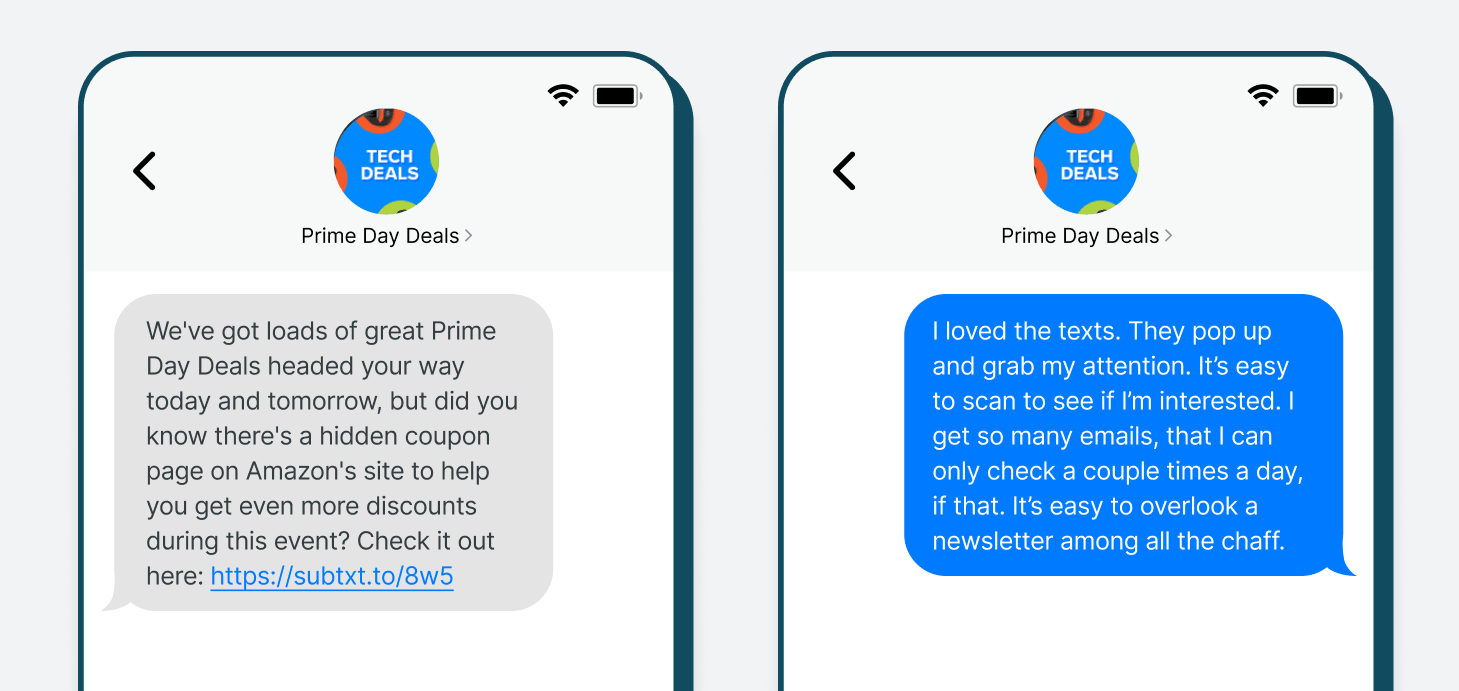
Case Study Example: Prime Day Affiliate Revenue Over SMS
One strong example comes from a tech journalism client that used Subtext during Amazon Prime Day. Over five days, the team sent 22 texts featuring timely deals across categories like gaming, mobile, kitchen, and home.
The results show what commerce SMS can do when timing and offer quality line up:
-
Overall Prime Day text CTR reached 15%
-
Most Prime Day texts drove CTRs of 10% or higher
-
The top three texts reached CTRs between 20% and 32%
-
Five of the top 25 overall most purchased Prime Day items were promoted through Subtext, including one shared exclusively with the SMS audience
It is a strong example of how Subtext can help turn major shopping moments into a real affiliate revenue opportunity.
A Plan You Can Actually Run
A strong e-commerce SMS channel does not need to start big. It needs a clear offer, a manageable content mix, and a cadence your team can maintain.
Start with a few message types you know how to send well. Make signing up easy across the places your audience already engages with you. Use tags to keep recommendations more relevant over time. Then build from there.
Subtext helps teams bring those pieces together in one place, from subscriber acquisition and tagging to campaign management and message delivery. If you want to see how Subtext can support your commerce SMS strategy, book a demo.