The most effective way to build a thriving community at any scale is through personalized direct messaging—especially SMS—that makes each member feel individually recognized. Community building through direct messaging is the practice of using private, one-to-one communication channels like SMS to foster personal connections, recognition, and belonging among audience members.
The engagement paradox has become the central challenge for today's marketers and creators: as audience size grows, meaningful connection typically declines. That's why anyone serious about learning how to create a community with staying power has no choice but to prioritize dedicated communication channels that preserve personal connection.
Direct messaging, particularly through universally accessible channels like SMS, is the perfect counterbalance to audience expansion, creating spaces where individual voices can be heard loud and clear.
Key Takeaways
- Use personalized SMS messaging to make each community member feel individually recognized and valued.
- Foster belonging by creating shared experiences and collaborative projects through direct messaging.
- Segment your audience strategically to deliver relevant, meaningful content to different community groups.
- Maintain consistent, authentic engagement to build trust and long-term community loyalty.
- Track response rates, message initiation, and retention metrics to measure community health.
Why Direct Messaging Changes the Dynamic
Human connection follows predictable patterns. Before someone commits to a community, they need to experience what psychologists call "social recognition"—the feeling of being personally acknowledged rather than anonymously included.
This recognition factor is why community-focused strategies consistently outperform traditional marketing approaches in driving loyalty, retention, and word-of-mouth growth.
The Psychological Power of Being Seen
Direct messaging has become central to creating a community in digital spaces precisely because it fulfills this fundamental need.
When a brand or creator sends personalized messages, it triggers the recognition response that bridges the gap between casual interest and community belonging. Unlike public content, where everyone receives identical information, these private exchanges create the crucial distinction between being “one of many” and being personally acknowledged.
Breaking Down the Digital Barrier
Public platforms create an inherent distance between brands and their audiences. Direct messaging shrinks this distance by breaking down four critical barriers:
- The Authenticity Barrier: Helps audiences distinguish between a brand and the real people behind it.
- The Access Barrier: Creates pathways for communication that feel privileged rather than public.
- The Response Barrier: Facilitates timely replies that acknowledge the individual.
- The Relationship Barrier: Shifts the brand-audience dynamic from formal and impersonal to more balanced and human.
Through private channels, everyone on both sides of a dialogue becomes a real person rather than an abstract entity.
| Characteristic | Audience | Community |
| Communication | One-way broadcasts | Two-way conversations |
| Connection | To the brand only | To the brand and each other |
| Engagement | Passive consumption | Active participation |
| Identity | Anonymous follwers | Recognized members |
| Loyalty | Transactional | Emotional and lasting |
Recommended: SMS vs. Email Marketing: Which Is More Effective?
How to Create a Community Through Strategic Direct Messaging
Creating a strong community isn’t about random conversations. It requires strategic thinking and authentic implementation. These key approaches upgrade branded messaging from simple communication to community building.
Personalized Responses That Recognize Individuality
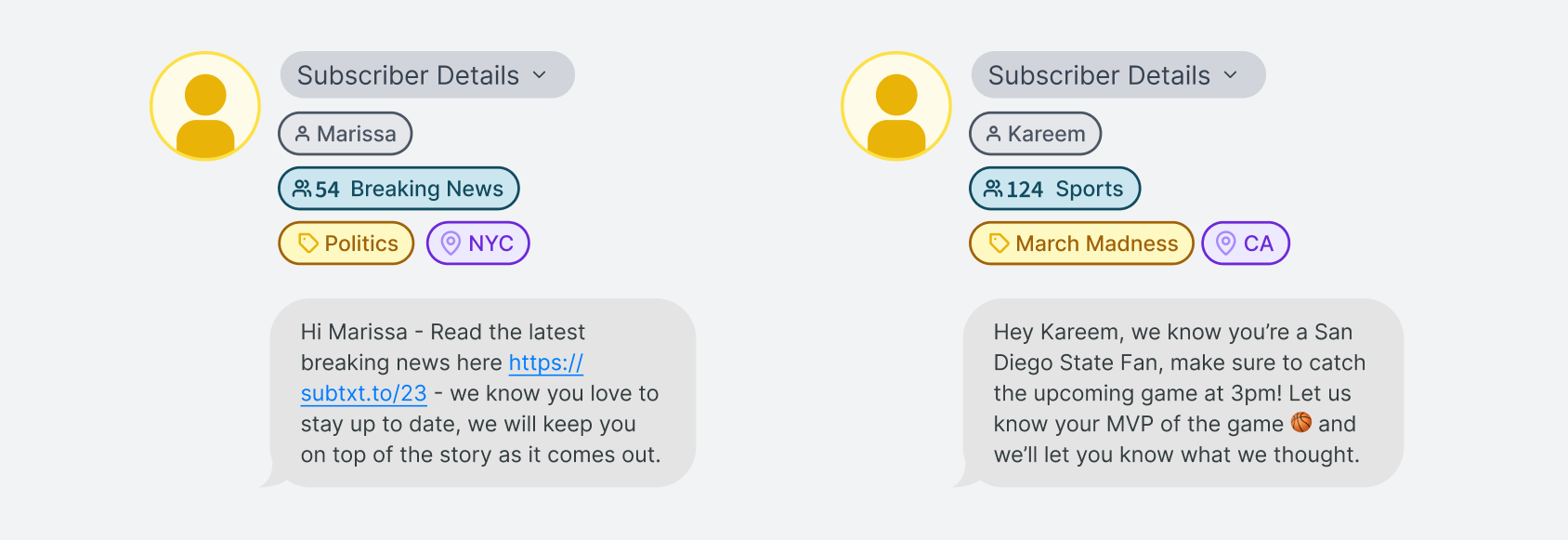
Generic responses might scale better, but personalized messages build stronger connections. Research shows 80% of users return the effort with greater loyalty. Additionally, SMS messages have a 98% open rate compared to just 20% for email, and 90% of text messages are read within three minutes of delivery. When responding to community members, reference their specific questions, history with your content, or personal details they've shared previously.
This individual recognition signals that you see them as unique community members, not interchangeable subscribers. It's the difference between:
- "Thanks for your message."
- Generic
- Quick
- Easy
- "Thanks for sharing your concert experience, Jamie! We love hearing from fans who attended the show. We'll share our favorite highlights next week—stay tuned!"
- Personalized
- Specific
- Meaningful
Community-Driven Conversations That Foster Belonging
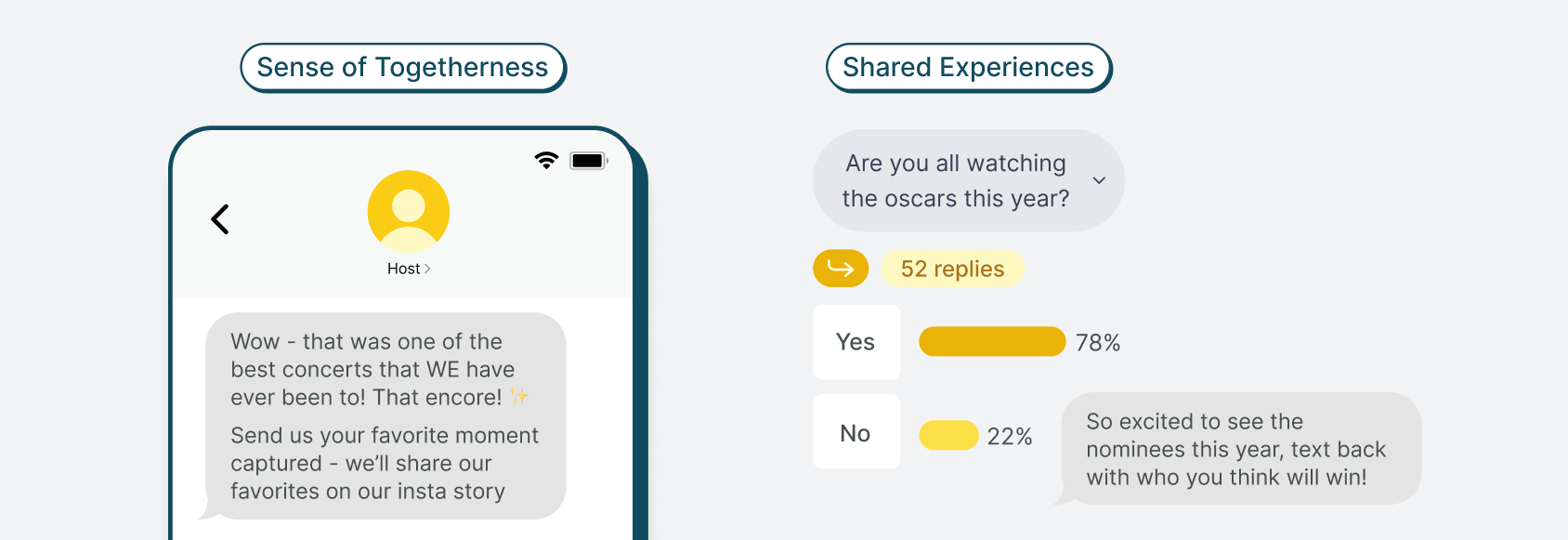
When subscribers know they're part of a larger group united by their interests, the community becomes more valuable to them, beyond just their relationship with you. Strategic direct messaging can create a powerful sense of community through these four practical approaches.
- Contribute to the Community Pulse: Share aggregate insights and content to create a "we're all thinking about this together" feeling.
- Spark Collaborative Projects: Invite input on different initiatives and combine responses into shared outcomes—but don't forget to credit participants to reinforce group identity.
- Coordinate Shared Experiences: Create shared moments by organizing watch parties, challenges, and virtual events, sharing insights with the group afterward.
- Acknowledge You're Listening: Identify common insights emerging in your community and address these themes in content and communications.
Strategic Segmentation for Relevance
Not every message belongs in every inbox. One of the most powerful aspects of direct messaging for community building is the ability to segment your audience and deliver content that matches:
- Individual interests and preferences
- Specific engagement levels and history
- Geographic or demographic factors
- Previous purchase or interaction history
- Where they are in their community journey
When community members consistently receive messages that feel particular and relevant, their sense of belonging intensifies. Members stop identifying as generic subscribers and begin seeing themselves as participants in a thoughtfully curated community that values their unique perspective.
Step-by-Step Guide to Building Community Through Direct Messaging
- Set up contact management: Implement a simple system where you record 1-2 unique details about highly engaged community members. Even noting someone's location, a shared interest, or their most common type of engagement creates opportunities for personalized follow-ups that signal they're truly seen.
- Create a weekly participation routine: Ask all subscribers to submit something via a gentle participation structure. Feature submissions and explain what you appreciated about them. This allows members to engage at their comfort level while showcasing your community as a whole.
- Begin with geographic segmentation: Start with simple segmentation based on geographic data, then gradually develop more nuanced groups based on content preferences, purchase history, or interaction patterns. Learn more about SMS marketing strategies that enhance personalization.
- Establish a consistent messaging cadence: Develop a reliable schedule—whether weekly updates, monthly check-ins, or event-based communications—that community members can count on.
- Track and measure engagement: Monitor response rates, message initiation, retention metrics, and word-of-mouth growth to gauge community health and adjust your strategy accordingly.
Practical Direct Messaging Guidelines That Build Community
The difference between messaging that works and messaging that fails often comes down to implementation. Follow these practical guidelines to ensure your direct messaging strengthens rather than weakens community bonds:
Lead with Authenticity
Today’s audiences can sense inauthenticity instantly. Messages should reflect your actual voice, not corporate speak or marketing jargon. This authenticity extends to admitting mistakes, acknowledging limitations, and being transparently human. Perfect brands don’t build communities—relatable ones do.
Prioritize Responsiveness
In direct messaging, timing matters. When community members reach out, they expect reasonably prompt responses. Setting clear expectations about response times helps manage this, but the general rule remains: faster is better. Consider implementing systems that ensure messages don’t fall through the cracks.
Maintain Consistent Engagement
Building community is an ongoing commitment; consistent messaging maintains vital relationship momentum. This doesn’t mean messaging daily, but it does mean developing a reliable cadence that community members can count on. Whether weekly updates, monthly check-ins, or event-based communications, consistency builds trust.
Recommended: 6 Audience Engagement Strategies That Actually Work
Measuring the Impact of Direct Messaging on Community Growth
Like any strategic initiative, community-building efforts should be measured to ensure effectiveness. While the qualitative aspects of community, like sentiment and connection, matter tremendously, several quantitative metrics provide insight into progress.
- Response Rates: Consistent responses indicate engagement and interest. Track response rates over time to gauge how compelling your communications are.
- Message Initiation: As the community strengthens, members are more likely to initiate conversations, and the shift from reactive to proactive engagement signals a maturing community.
- Retention Metrics: Strong communities show higher retention rates. Track how direct messaging engagement correlates with subscription longevity, purchase frequency, or other loyalty indicators.
- Word-of-Mouth Growth: Thriving communities generate organic growth through referrals. Monitor the number of new members who come through existing community recommendations versus other acquisition channels.
By tracking these metrics while implementing the strategies above, you’ll develop a clear picture of your community’s health and growth trajectory.
From Audience to Community: The Direct Messaging Bridge
The transformation from having an audience to nurturing a community represents one of the most valuable evolutions a creator or brand can achieve. Direct messaging provides the most direct path to this transformation by creating space for the personal connections, shared experiences, and mutual value that define true communities. SMS messaging provides a uniquely powerful path to this transformation.
Your audience is waiting for this deeper connection; they already have the perfect community-building tool in their pockets.
Start building a strong, connected community today by engaging your audience through personalized and genuine two-way SMS interactions. Book a demo with Subtext to discover how our platform can help you create the authentic connections your community deserves—all through the simple power of texting.
Frequently Asked Questions
What is the best channel for community building?
SMS is one of the most effective channels for community building because of its 98% open rate and the personal, immediate nature of text messaging. Unlike social media or email, SMS creates a direct, private connection that makes members feel individually recognized.
How often should you message your community?
The ideal frequency depends on your audience, but consistency matters more than volume. Most successful communities maintain a regular cadence of 1-3 messages per week, balancing engagement with respect for members' attention.
What's the difference between an audience and a community?
An audience passively consumes content through one-way communication, while a community actively participates through two-way conversations. Community members feel connected to both the brand and each other, creating deeper loyalty and engagement.
How do you measure community engagement success?
Track response rates, message initiation by members, retention metrics, and word-of-mouth referrals. A healthy community shows increasing member-initiated conversations and organic growth through recommendations.
Can you build community at scale through direct messaging?
Yes. Strategic segmentation, personalized responses, and consistent engagement allow brands to maintain meaningful connections even as their community grows. The key is making each member feel individually recognized regardless of total community size.