Audience data is undergoing a seismic shift. Third-party cookies are disappearing. Privacy regulations are expanding. Social algorithms are unpredictable. Advertisers, sponsors, and marketers are demanding deeper, more reliable insights rather than broad reach. With expectations rising across the board, personalization has become essential.
Organizations need direct, permission-based ways to understand their audiences. SMS is uniquely positioned to deliver that, and Subtext takes it further by making first-party data collection natural, conversational, and compliant.
With Subtext, every interaction becomes a real-time signal that strengthens both your SMS program and your broader audience strategy.
What Is SMS First-Party Data?
SMS first-party data is the subscriber information you collect directly through your own SMS program: phone numbers, opt-in timestamps, reply content, preference tags, and event-driven actions gathered from your messages or landing pages. You own this data and can act on it without relying on an intermediary platform.
It matters because you control it, can act on it immediately, and can use it to personalize messages, measure retention, and reduce your dependence on rented audiences. Subtext captures this data through signup fields, Surveys, keyword replies, and behavioral signals like clicks and link opens, then lets you sync it into your CRM, email, and analytics tools. Clear opt-in language and auditable records keep it reliable and compliant along the way.
Subtext helps you:
- Increase engagement through personalized, interest-based messaging
- Improve monetization with targeted offers, smarter routing, and high-value segments
- Reduce churn by tailoring content and frequency
- Build advertiser and sponsor-ready segments backed by behavioral data
- Power automation that reacts instantly to subscriber actions
- Strengthen email, paid media, social, and on-site personalization with real audience insights
The result is simple: more relevant messages, deeper relationships, and a more profitable SMS program, along with stronger performance across every channel that uses your first-party data.
Here's how Subtext helps you collect that data.
1. Collect High-Value Info at Signup
Signup is the moment of maximum intent. When someone joins your SMS list, they are signaling that they want direct communication. It is the ideal time to gather one or two pieces of information that help you deliver value right away.
How SMS opt-ins work:
Subscribers typically text in a keyword or opt in through a form or pop-up. Subtext supports compliant, fast opt-ins and allows you to enrich profiles with lightweight fields at signup.
Common fields include:
- Zip code for regional updates or local segmentation
- Name for personalization and trust
- Email for cross-channel identity
Topic-level interests so subscribers enter the right content stream
What this unlocks immediately:
| Field | What It Unlocks | Example Message |
| ZIP/Postal Code | Localized alerts and regional sends | “NYC-only presale at 10 am. Reply YES for the link.” |
| Content Interest | Instant segment routing | “You’re set for Soccer updates. Want Champions League alerts too?” |
| Frequency Preference | Reduced churn and better match of cadence | “Choose DAILY, 2XWEEK, or WEEKLY.” |
From the moment someone joins, Subtext begins building a profile that powers personalization.
A simple signup form converts better than a long one, but collecting the right information upfront builds long-term value.
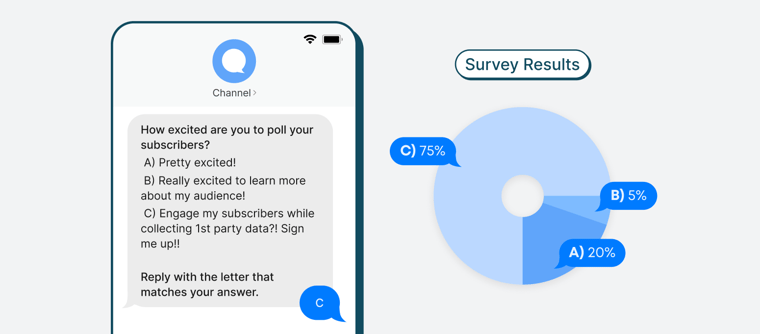
2. Subtext Surveys: Your Ongoing Audience Intelligence Tool
Signup provides a starting point. Subtext Surveys deepen that understanding over time as subscriber interests evolve.
Surveys reveal:
- Which topics matter most right now
- Preferred content formats and message cadence
- Intent signals for events, products, or content
- Early indicators of churn or dissatisfaction
Every Subtext Survey response automatically triggers tags and segmentation. Subtext organizes the insights for you.
Best practices for SMS surveys:
- Keep questions concise (1–3 replies max)
- Offer value in return (early access, priority invites)
- Time surveys around known engagement peaks
- Close the loop by acknowledging what you learned
Teams use survey data to:
- Route high-intent subscribers into targeted tracks
- Build advertiser-friendly segments
- Personalize message cadence or depth
- Test new ideas with the right audiences before rolling them out
Subtext turns simple responses into actionable intelligence.
3. Turn Engagement Behavior Into Segmentation
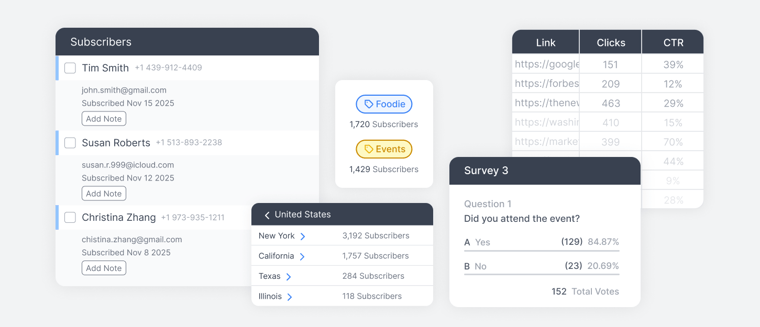
Subtext captures three core engagement signals that help you understand what your audience responds to: replies, survey responses, and overall link-click performance. These explicit actions provide clean, reliable first-party data because subscribers choose to engage in ways that clearly reflect their interests.
This type of first-party data is both powerful and privacy-safe. Subtext does not track individual-level behavior. Instead, it highlights which content resonates across your audience as a whole, while tagging subscribers only when they explicitly reply or complete a survey.
Teams use these engagement patterns to:
- Identify topics or formats that consistently generate interest
- Understand which prompts encourage the most replies
- Group subscribers based on survey choices and explicit actions
- Shape future sends around themes that perform well across the audience
Examples:
- Using Subtext Surveys to organize audiences by interest or intent
- Asking reply-based questions that route subscribers into the right content tracks
- Reviewing messages with strong click-through rates to inform future content
Subtext turns this engagement activity into structured intelligence you can use to personalize messaging and improve performance over time.
Quick Comparison: SMS First-Party Data vs. Third-Party Data
Here's how SMS first-party data stacks up against third-party or rented data sources:
| First-Party (SMS) | Third-Party | |
| Control | You own it | Rented |
| Accuracy | Explicit subscriber signals | Inferred segments |
| Privacy | Opt-in and auditable | Riskier amid platform changes |
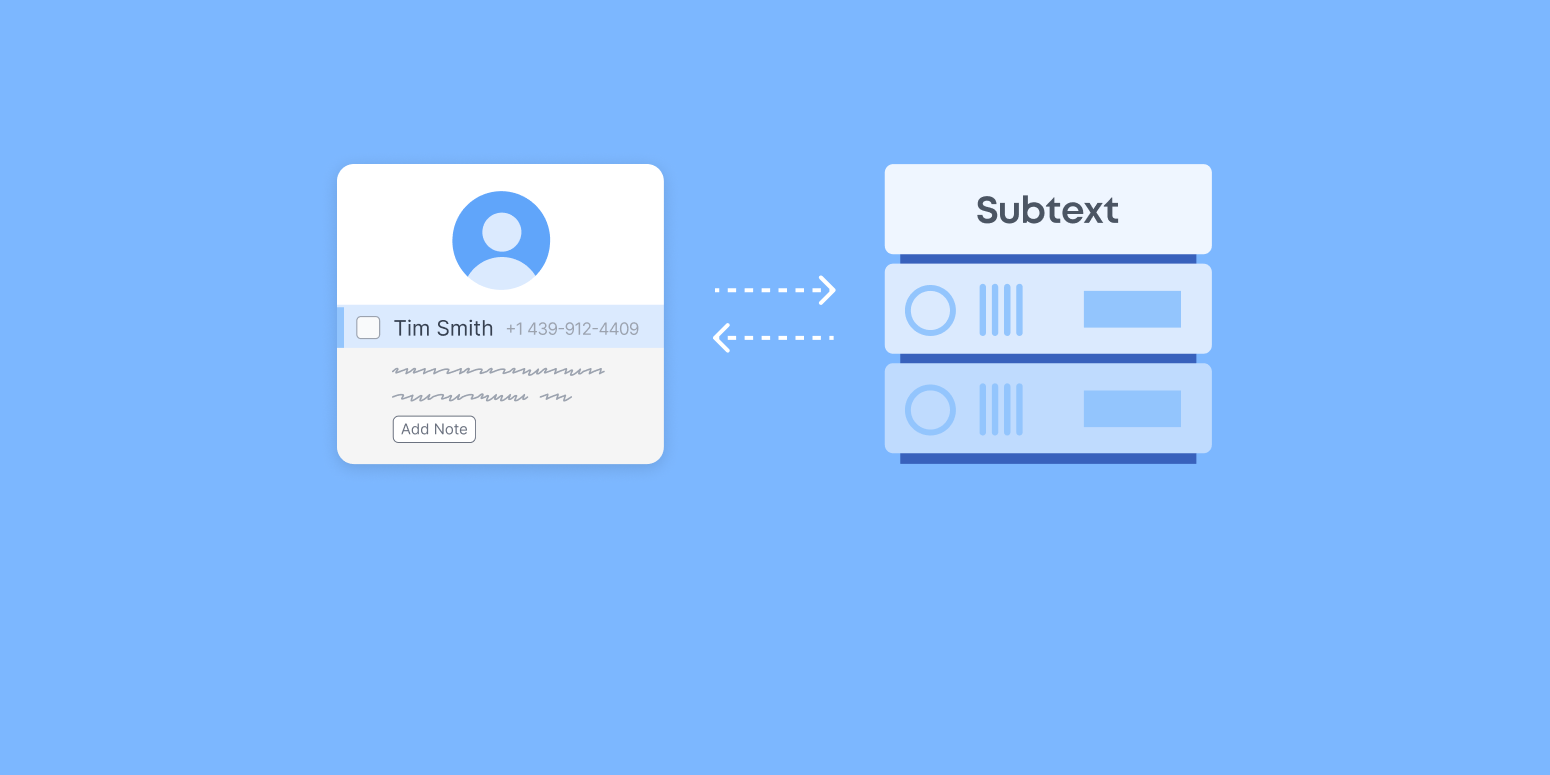
4. Subtext API: Sync Data In and Export Insights Out
Most organizations already hold valuable audience data in CRMs, ecommerce platforms, membership systems, or analytics tools. The Subtext API makes it easy to bring that data into your SMS program, so your messaging reflects what you already know.
The real advantage is that it works in both directions.
As subscribers engage through replies, clicks, surveys, and keywords, Subtext captures rich first-party data you can sync back into your systems. Every department and channel becomes smarter.
Data often imported:
- Membership tiers or subscription status
- Purchase or registration history
- Loyalty or engagement scores
- Custom CRM fields or audience attributes
Data often exported:
- Tags tied to interests and preferences
- Survey responses and sentiment indicators
- Keyword selections
- Click-through insights
- Demographic data
This two-way sync helps teams:
- Personalize long-term content tracks
- Trigger messages based on activity in other systems
- Build richer cross-channel profiles
- Improve targeting in email and paid media
- Create high-value advertiser segments
- Keep CRM and analytics platforms continuously updated.
Subtext becomes the connective tissue between your direct audience relationships and your broader marketing ecosystem.
5. Use Keywords to Collect Preferences and Build Profiles Over Time
Keywords give subscribers a simple and intuitive way to share what they want. Instead of filling out a form, they reply with a keyword that reflects the type of content, topic, or update they prefer. Subtext applies the appropriate tag immediately.
Keyword-based data collection is ideal for:
- Identifying interest areas inside a broader channel
- Capturing topic-level preferences
- Understanding intent during campaigns
- Distinguishing content depth preferences
Keywords also support progressive profiling. As your content offering expands, you can prompt subscribers to refine or broaden their preferences over time.
Teams use keywords to:
- Introduce new content categories
- Allow subscribers to opt into or out of specific topics
- Test interest before creating new segments
- Ask subscribers what types of updates they want next
Every keyword response provides structured, high-quality first-party data that deepens personalization without adding friction.
Build a First-Party Data Strategy With SMS
For marketers building or modernizing their data engines, SMS can anchor a repeatable, privacy-first strategy:
- At signup: capture essentials (name, location, top interest)
- Month 1–2: deploy short Surveys and collect preferences
- Ongoing: activate behavioral and lifecycle automations
- Integrate: sync Subtext with CRM, email, and analytics tools
- Optimize: measure performance and refine segmentation over time
This creates a virtuous cycle of real-time signals → smarter segmentation → higher ROI.
Compliance and Data Stewardship
A first-party data strategy only works if it is trust-driven. Subtext supports transparent, compliant data collection with:
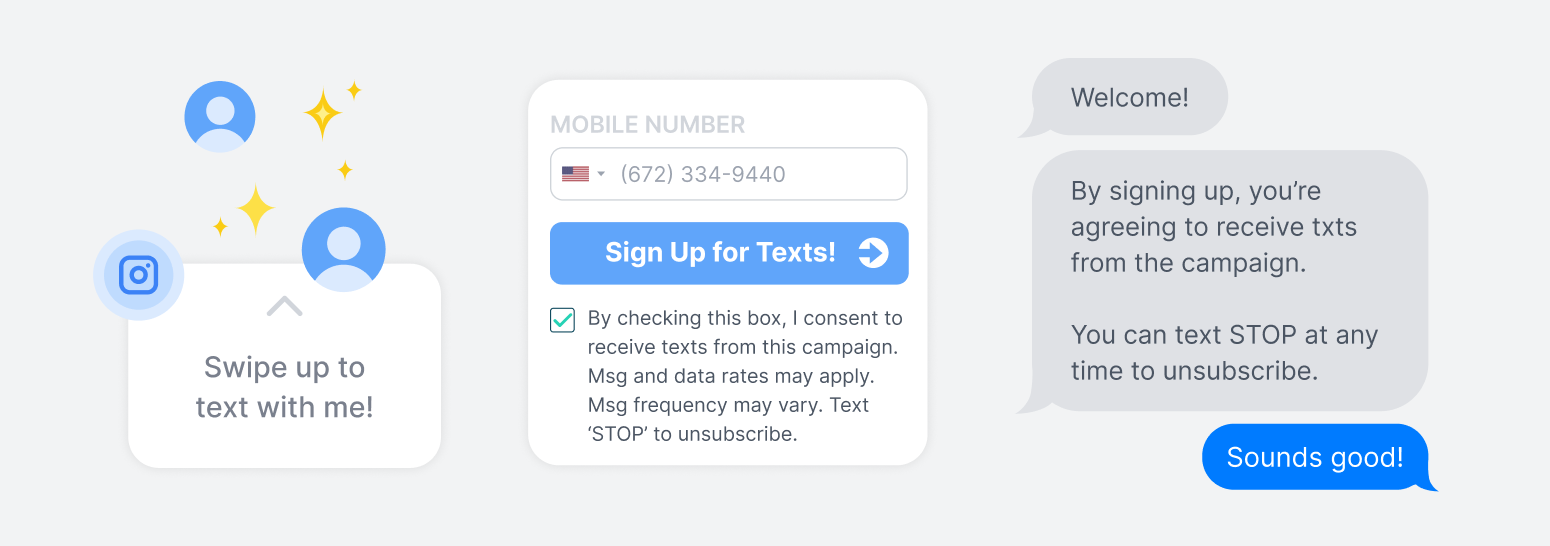
- Clear opt-in language
- Always-on opt-out options
- Secure data handling
- Audit-friendly consent records
- Explicit opt-in language at signup, with an easy-to-find STOP option in every message
- Auditable records of opt-ins and message content, ready for carrier and legal review
This protects your audience and strengthens your brand in the long term.
Your SMS First-Party Data Quick-Start Checklist
Ready to put this into practice? Start here:
-
Confirm your opt-in copy includes clear consent language and an easy STOP flow.
-
Tag the source on every new opt-in (keyword, landing page, campaign).
-
Launch one SMS survey to start capturing subscriber preferences.
-
Map SMS engagement data to your CRM fields.
-
Schedule a quarterly audit of your first-party data collection.
Build a Smarter, More Profitable SMS Program With First-Party Data
Collecting first-party data is no longer optional. But collecting it is only half the equation. You also need a platform that you can use.
Subtext is built for exactly that.
Whether you gather insights through signup fields, Surveys, keywords, engagement signals, or API integrations, Subtext turns all of it into:
- More relevant messaging
- More engaged audiences
- Higher conversion rates
- Lower churn
- Stronger advertiser and sponsor value
- More predictable audience revenue
Subtext is not just an SMS platform. It is the intelligence layer that makes your SMS strategy smarter, more personalized, and more profitable.
Book a demo to see how Subtext helps teams turn first-party data into meaningful results. Or explore our FAQ section to learn how Subtext supports scalable, data-driven audience engagement.