News organizations are facing a distribution problem.
Search traffic is less predictable. Social platforms are harder to rely on. Email inboxes are crowded. And AI is changing how audiences discover, summarize, and consume information online.
That makes owned audience relationships more important than ever.
For publishers, SMS is not just another place to promote links. It is a first-party channel for reaching known readers, gathering feedback, and turning audience interest into repeat engagement at scale.
That last part matters. Newsrooms want more direct relationships with readers, but they also need those relationships to be manageable. One-to-one audience engagement is powerful, but it can quickly become difficult to sustain without the right systems in place.
Subtext helps news organizations make reader engagement scalable. Publishers can send timely updates, collect replies, run surveys, segment audiences, drive clicks, support events, and build stronger relationships with the people most likely to read, subscribe, renew, attend, and come back.
Across national, local, and independent media, news organizations are using Subtext to build that connection. Tangle News, Newsweek, and Cleveland.com’s Chris Quinn each use SMS differently, but all three show how a direct, two-way channel can help publishers turn audience attention into loyalty, insight, and revenue opportunity.
Tangle News
Tangle News has built its brand around political coverage that is transparent, balanced, and rooted in reader trust. As its audience grew, the team wanted to preserve the participation and feedback that helped make the publication stand out.
That is where SMS made sense.
Tangle did not need another passive distribution channel. It needed a way to hear from readers, test ideas, gather feedback, and make subscribers feel like they had a role in shaping the coverage.
It also needed a more durable way to grow its owned audience. As AI changes search behavior and makes email performance harder to predict, SMS gives Tangle a direct channel with readers in a place that is not controlled by algorithms, inbox filters, or search results.
With Subtext, Tangle launched an SMS channel designed around participation. The team promoted the channel through a launch article, newsletter mentions, Reddit posts, and by highlighting reader questions submitted through text. At signup, readers could choose the types of messages they wanted to receive, including topic surveys, behind-the-scenes updates, promotions, and breaking news analysis.
The response was immediate. Tangle added more than 12,000 SMS subscribers in the first 48 hours and has since grown the channel to more than 14,000 subscribers, representing roughly 2.5–3% of the publication’s newsletter audience.
But the bigger story is what those subscribers do after they join.
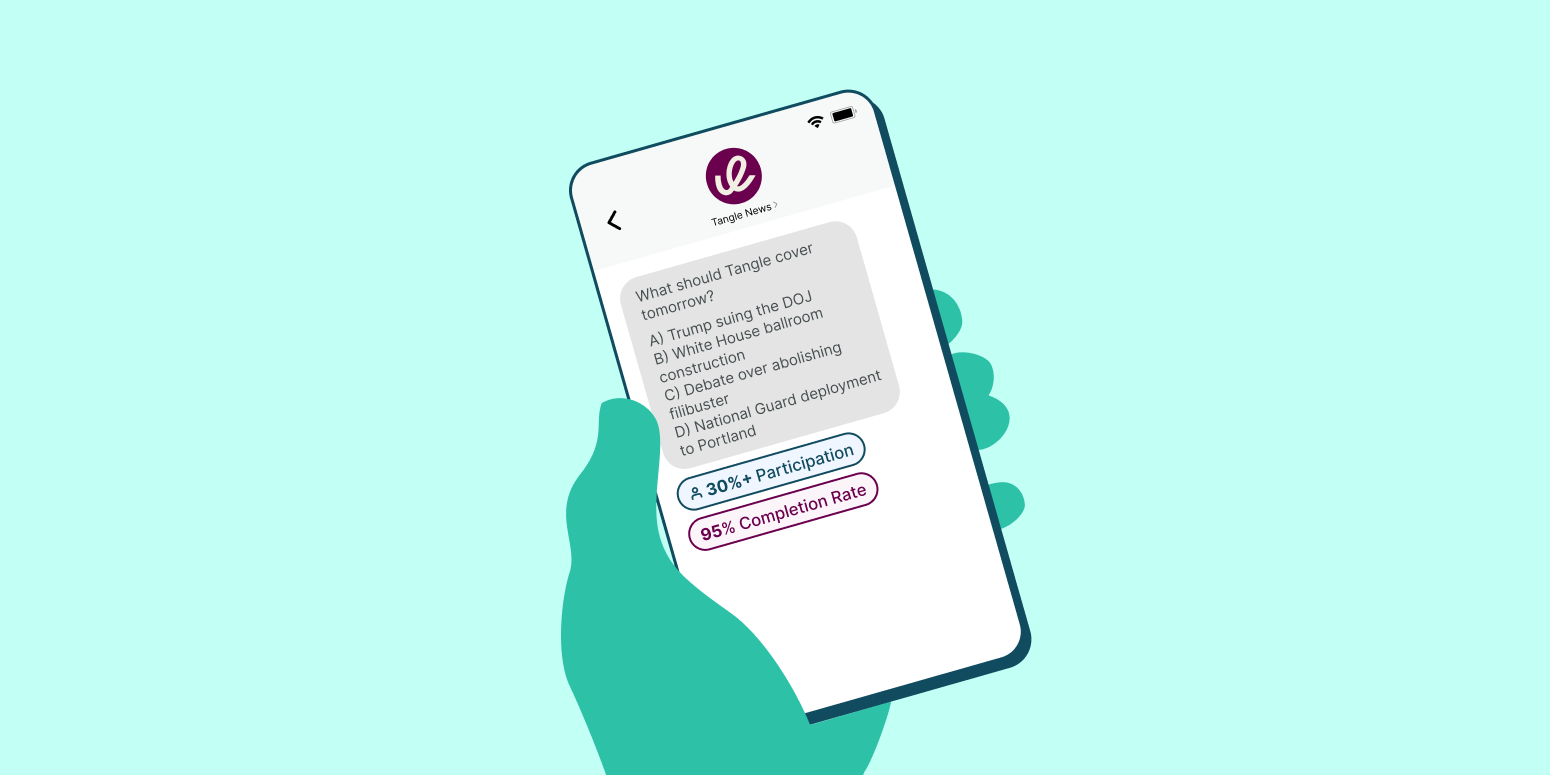
Tangle uses Subtext to invite readers into the editorial process, especially through Monday topic surveys that let subscribers vote on what the newsroom should cover next. Those surveys regularly drive 30%+ participation, with a 95% completion rate among respondents. When Tangle shares links by text, the channel drives an average 14.64% click-through rate.
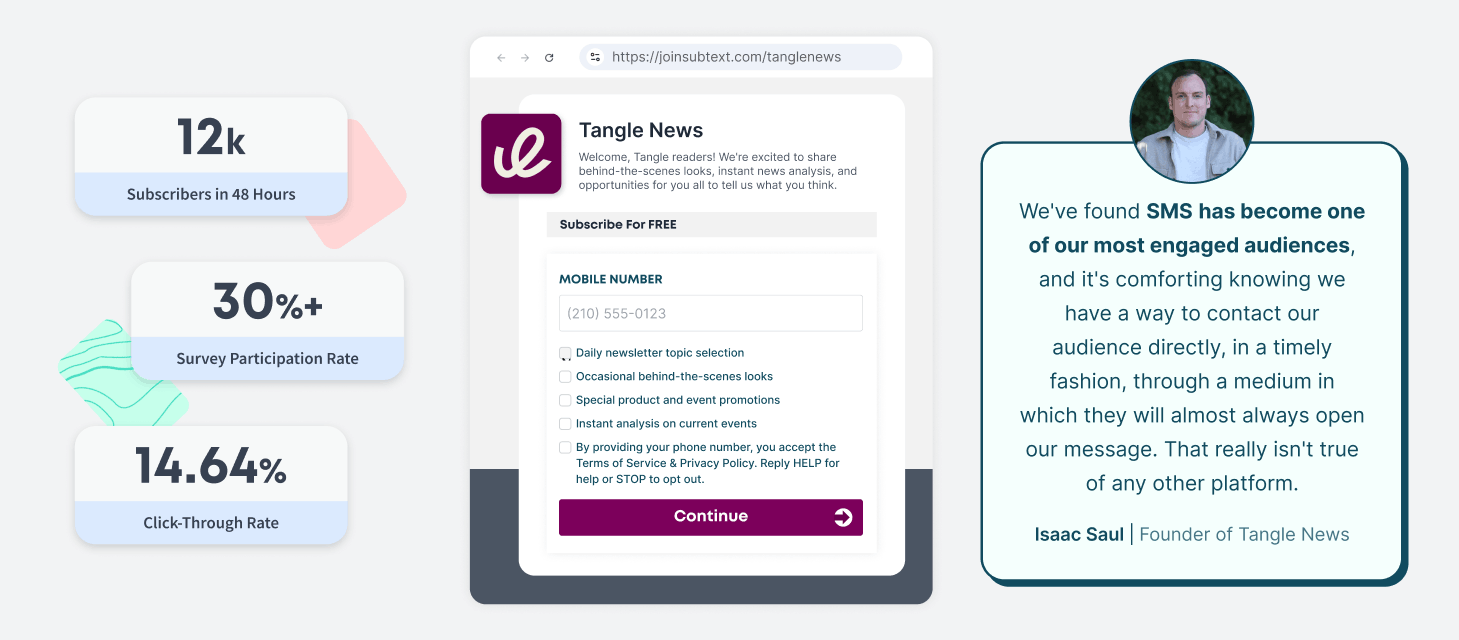
Why it works: Tangle gives readers a clear reason to respond. Subscribers are not just receiving updates. They are helping identify what topics matter, sharing what they want to understand, and seeing their input reflected in the editorial product.
For Tangle, Subtext has become a scalable feedback loop with its most engaged readers. It helps the team understand audience priorities, strengthen loyalty, and keep reader engagement from becoming one-way. That kind of insight can inform coverage, newsletter strategy, paid products, events, and other revenue-driving audience initiatives.
Newsweek
Newsweek’s 1600 newsletter, led by Carlo Versano, is built around political news and analysis. But the audience strategy behind the channel goes beyond sending another newsletter.
Through Subtext, Newsweek gives readers a way to text Carlo directly with questions, feedback, story ideas, tips, and topics they want to see covered. Readers can also get a direct line to the reporters who work with him.
That format makes the relationship more personal and more useful for the newsroom.
It also fits a broader shift happening across media. As publishers look for ways to deepen engagement with known audiences, Newsweek is putting more focus on journalist-led relationships, newsletter subscribers, and reader participation. In coverage from A Media Operator, Newsweek’s executive editor Alfred Joyner described the strategy as a move away from the “ivory tower” model of media and toward more conversation and dialogue with readers.
The early performance reflects that loyalty. Campaign data shows Newsweek’s channel has averaged a 30% response and engagement rate per broadcast. Links shared through the campaign are averaging a 33% click-through rate, 55% above Subtext’s news and media benchmark of 21.32%.
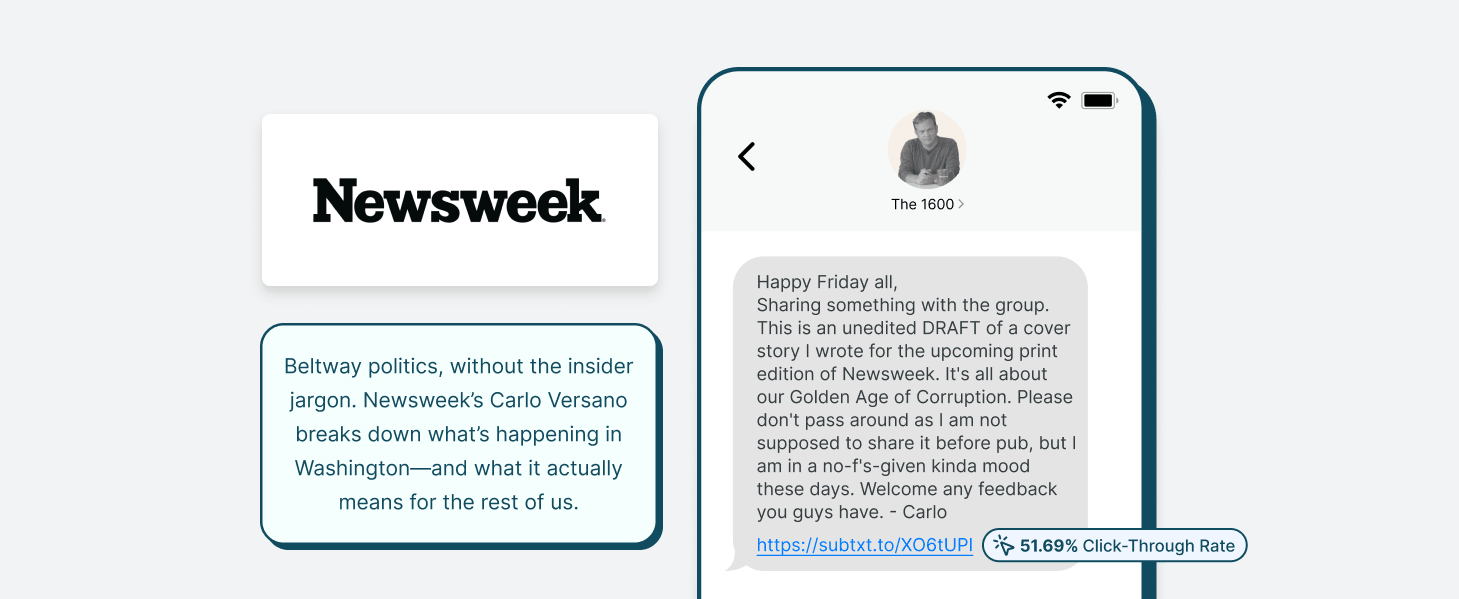
Why it works: Newsweek is using SMS as an access point, not just an alert system. The channel gives readers a way to participate in the coverage, ask questions, and connect with the journalist behind the newsletter.
That kind of access is hard to replicate on social media or in a crowded inbox. It makes the channel feel more personal, which helps explain why readers are responding and clicking at such strong rates.
For Newsweek, Subtext supports both audience development and editorial insight. It gives the team a clearer picture of what readers are interested in while creating a stronger path from engagement to loyalty.
Chris Quinn and Cleveland.com
For Chris Quinn, editor of Cleveland.com, SMS offered a way to bring local readers closer to the newsroom.
Chris already had a “From The Editor” newsletter, but he wanted the relationship to be more interactive. The goal was not only to send updates. It was to hear from Cleveland residents, invite questions, gather ideas, and give readers a better understanding of how the newsroom makes decisions.
That is especially important for local news organizations. Trust is built when readers feel like the newsroom is listening to the community, not just publishing at it.
Chris launched the “From the Editor” Subtext channel after seeing the success of other Cleveland.com Subtext campaigns, including Buckeye Talk. The channel gave him a way to text readers about stories in progress, local developments, newsroom priorities, and questions reporters were working through.
The two-way format quickly became valuable. Chris used Subtext to ask subscribers for feedback on local issues, newsroom ideas, and broader media topics. In one example, he asked readers whether they would be interested in a town hall moderated by local representatives, and more than 25% of subscribers replied.
The campaign has driven 31% audience engagement, strengthening the relationship between readers and the Cleveland.com brand.
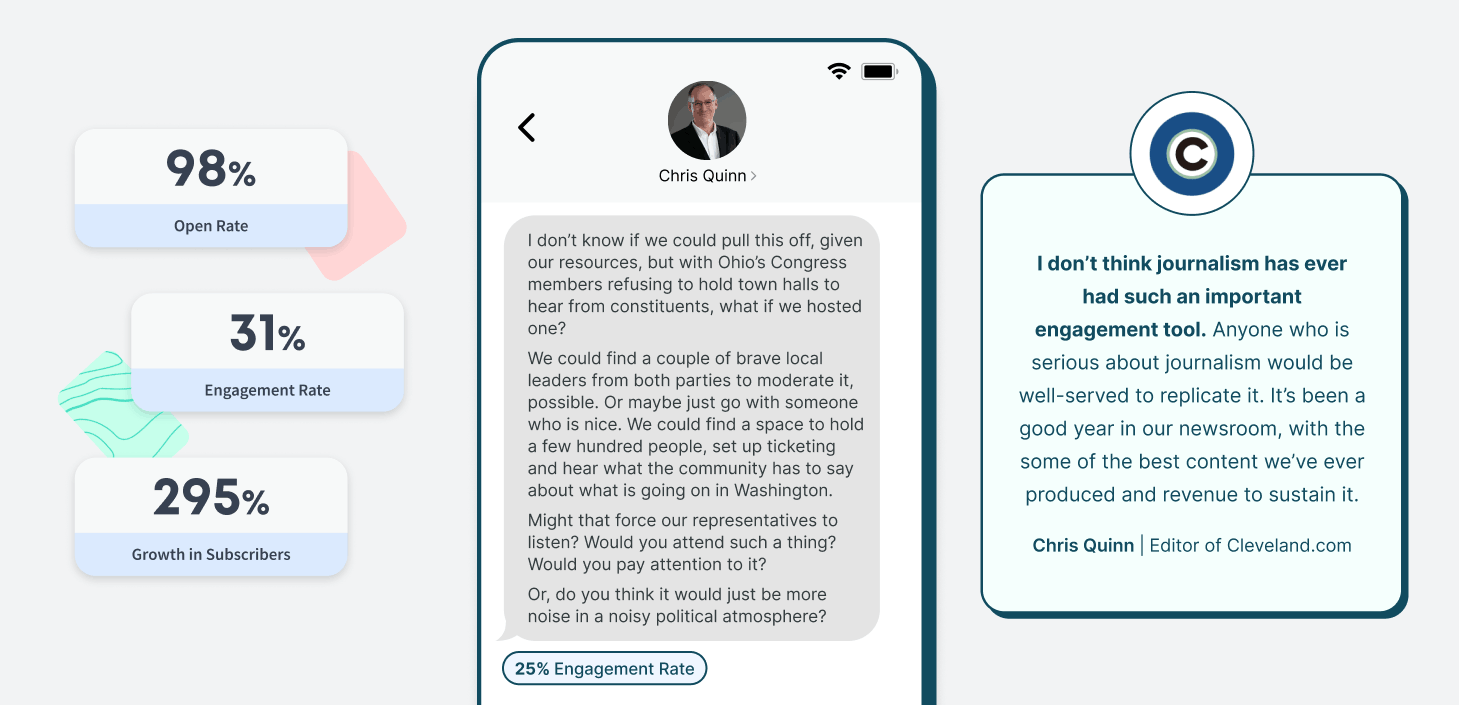
Why it works: Chris’s channel gives readers access to the editor, which changes the dynamic. Instead of only reacting to published stories, subscribers can raise questions, share concerns, and help surface the topics that matter in their community.
For Cleveland.com, that creates a stronger feedback loop between the newsroom and its audience. It also gives editors and reporters practical insight they can use when planning coverage, events, and community engagement.
The impact has extended beyond one campaign. Cleveland.com now offers four distinct Subtext channels for readers, reflecting a broader commitment to direct reader engagement.
For local publishers, that matters. Reader loyalty is not built only through reach. It is built through relevance, trust, and repeated interaction. SMS gives newsrooms a practical way to support all three.
What Newsrooms Can Learn From These SMS Strategies
Tangle, Newsweek, and Cleveland.com are different kinds of news organizations, but their Subtext strategies work for similar reasons.
Each channel has a clear purpose. Tangle uses SMS to involve readers in editorial decisions. Newsweek uses it to create access between readers and a political journalist. Chris Quinn uses it to bring local readers closer to the newsroom.
That clarity matters. Readers are more likely to subscribe and respond when they understand what they will get from the channel and why their participation matters.
Each organization also gives readers a reason to take action. The value is not just “get updates by text.” It is “help shape coverage,” “send your questions,” “talk to the editor,” or “get closer to the reporting.”
That is the difference between using SMS as a campaign tool and using it as audience infrastructure.
The engagement also creates useful first-party insight. Every reply, survey response, click, and signup source tells the newsroom something about what readers care about. Over time, that can inform coverage, newsletter strategy, events, subscriptions, retention, and product decisions.
That insight has revenue impact. When publishers know what their most engaged readers want, they can make smarter decisions about paid products, event promotion, membership strategy, subscription offers, sponsorship opportunities, and retention campaigns.
And unlike rented distribution channels, an opted-in SMS audience gives publishers a direct way to reach readers who have asked to hear from them. That makes SMS especially valuable as AI reshapes search, social platforms continue to shift, and email inboxes become more crowded.
That is why Subtext is built for more than mass messaging.
Newsrooms need tools that help them reach readers, but they also need tools that help them understand readers at scale. With Subtext, publishers can send timely updates, collect replies, run surveys, segment audiences, drive clicks, support events, and build stronger relationships with the people most likely to engage.
For news organizations, the opportunity is not just faster distribution. It is more scalable reader engagement, stronger loyalty, better audience insight, and more ways to connect that engagement back to revenue.
If your newsroom is looking for a more direct way to engage readers, gather feedback, and build loyalty, book a demo to see how Subtext can help.