For ecommerce brands, and for publishers and creators who run shopping or affiliate text lines, the holidays are the stretch that makes the year. For about eight weeks, your subscribers are actively looking for what to buy.
But a deal is only valuable if your audience sees it in time. During Black Friday week, inboxes fill up with dozens of promos a day, and social platforms decide which of your posts followers actually see. A text lands on the lock screen. Across Subtext campaigns, texts see a 98% open rate, and 95% of messages are opened within three minutes, according to our 2026 SMS Marketing Benchmark Report. When a price drop only lasts a few hours, that speed is the whole game.
Below are the fundamentals that work all year, followed by a timeline for Black Friday, Cyber Monday and the December run to the holidays.
Part 1: Get the Fundamentals Right Before You Decorate
Pick One Format and Stick to It
Three formats work well:
-
Daily deals: one standout deal at the same time every day
-
Flash alerts: sent when a price drops or a limited offer goes live
-
Curated roundups: a themed list like “editor picks under $50,” covering a lot of products in one text instead of five
Pick the one your team can actually keep up through December.
Why it works: Consistency sets expectations. When subscribers know a deal is coming at 10 a.m., they look for it, and it reads as something they signed up for rather than an interruption. A format that sputters out by week two tells people the line isn’t worth watching right when you need their attention most.
See format examples in our affiliate marketing guide.
Make Your List and Check It Twice: Tag Subscribers by Interest
Tag subscribers by what they care about. Ask at signup or welcome text (“What are you shopping for this year?”), send a quick Subtext survey before Black Friday, or invite them to text back a keyword like “kitchen” or “tech.” Then send category deals only to the people who want them.
Why it works: You’ll be texting more often than usual over the holidays, and every irrelevant send adds to the reason to unsubscribe. Segmenting lets you raise frequency for people who want a category without raising it for everyone. Someone who replied “kitchen” doesn’t need your sneaker drop.
Sound Like a Person, Not a Product Feed
-
Introduce yourself in your first holiday send.
-
Sign off with your name.
-
Add your own take on why the deal is worth it.
-
Include a product image, especially for fashion, beauty, home and gifts.
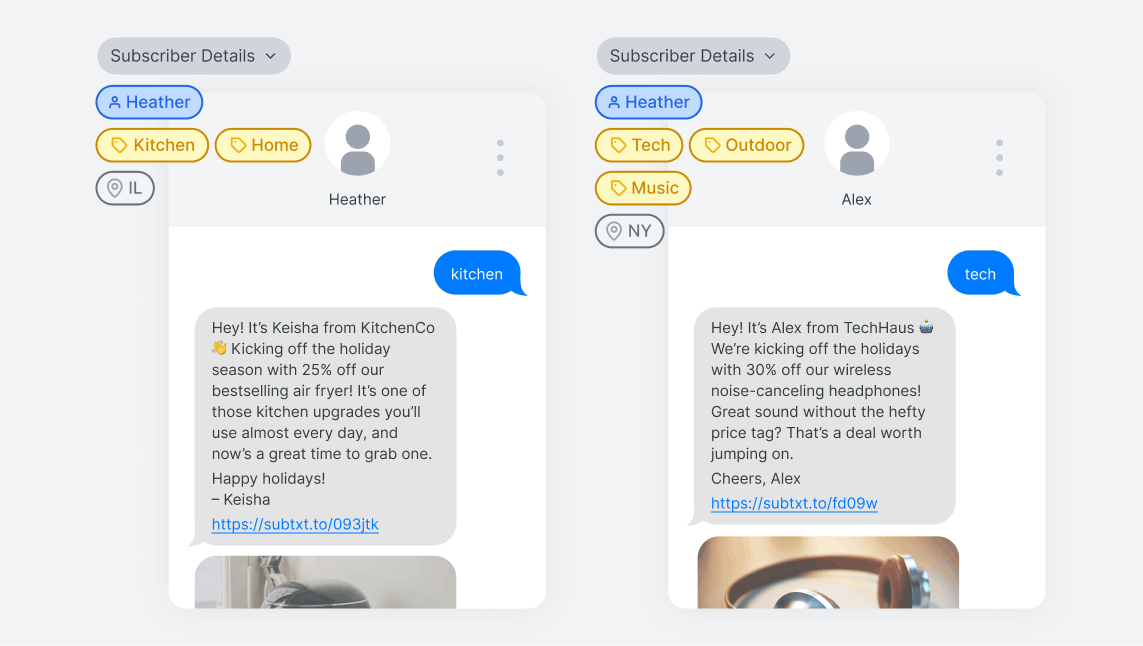
Why it works: During BFCM, subscribers can find the same deal in a dozen inboxes. What they can’t get anywhere else is your judgment. A name and a point of view turn a price alert into a recommendation from someone they trust. Images do the same job for visual categories: people decide on a sweater or a lamp by looking at it, not by reading a product name.
Get more tips in our E-Commerce Playbook.
Part 2: Black Friday and Cyber Monday (November 27 to November 30, 2026)
Two Weeks Out: Tell Subscribers What’s Coming
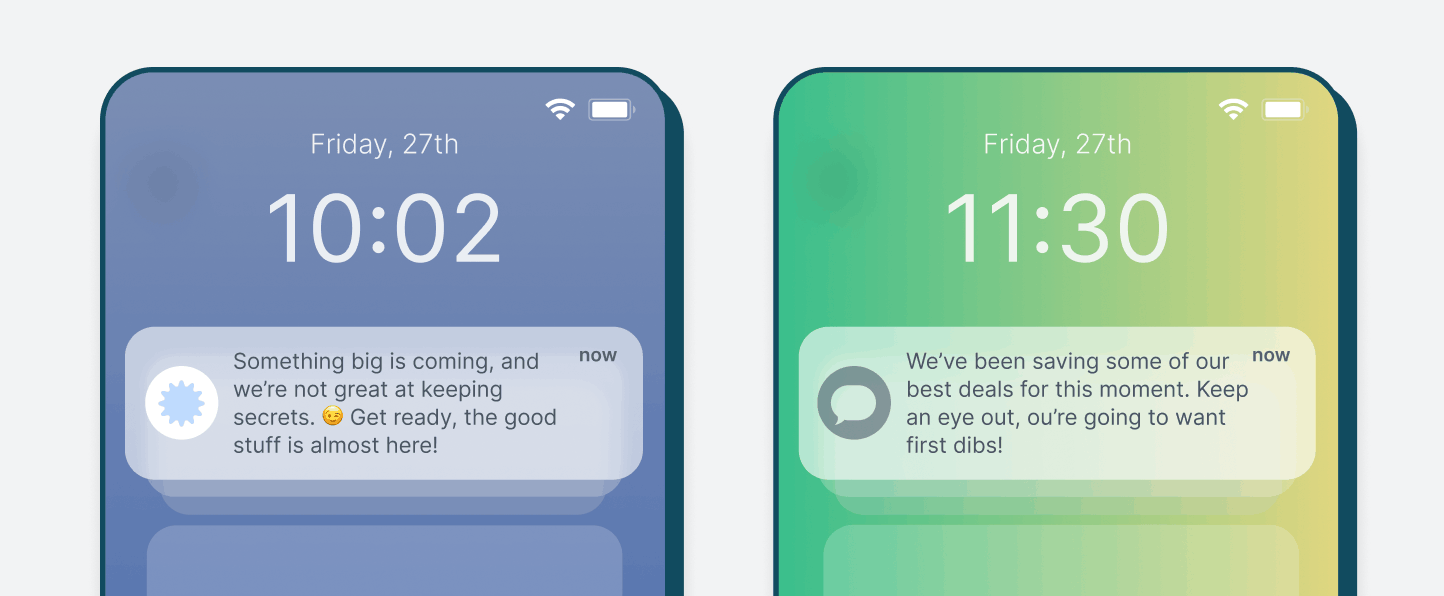
Let your audience know they’ll hear from you more often over the holiday weekend. If you’re reading this after mid-November, send that heads-up now.
Why it works: Unsubscribes usually come from texts that catch people off guard. Four texts in a day with no warning feels like something changed. The same four texts after “we’re sending the best deals all weekend” feel like what they signed up for.
Line Up Exclusives in Advance
Decide what your text subscribers get that your site visitors and email list don’t:
-
Early access before a sale goes public
-
A discount code that only works for your text line
-
A deal nobody else is offering
Why it works: If your texts just repeat your homepage, there’s no reason to stay subscribed. Exclusives give the text line its own value, and that value lasts past the holidays. Locking them in early also matters practically. Partners and merchandising teams are swamped the week of, so last-minute asks rarely land.
During the Four Days: No Intermissions ⚡
Mix your sends:
-
Flash alerts the moment a price drops
-
“Best deals right now” roundups
-
Category sends to your interest-based segments
-
Restock alerts on whatever sold out Friday morning
In every message, lead with the item and put the link second. And use A/B testing on your early sends: try leading with the price vs. leading with your take, or a short CTA vs. a longer one. Then carry the winner into the rest of the weekend.
Why it works: BFCM deals change by the hour, and people shop in bursts between family, travel and work. Mixing formats catches them at different moments without sending the same kind of text over and over. Flash alerts get people who are ready to buy, roundups get the ones who missed earlier sends, and restock alerts turn Friday’s sellouts into Monday sales. Testing on Friday matters because it’s your highest-volume weekend of the year. Even a small lift in clicks from a better opening adds up across every send through Monday.
Case Study: 22 Texts in Five Days on Prime Day
A tech publication running a deal-hunting text line on Subtext wanted to get the most out of Amazon Prime Day. Over five days, they sent 22 texts with affiliate deals across gaming, mobile, kitchen and home goods, leaning on lightning deal alerts.
The results:
-
15% overall click-through rate, with most texts at 10% or higher
-
20% to 32% CTR on the top three texts
-
Five of the top 25 most purchased Prime Day items were promoted through the text line, including one shared exclusively with SMS subscribers
For context, the case study cites click-through benchmarks for ecommerce and deal content of about 2.3% for email, 2.7% for search and 0.51% for display.
That’s more than four texts a day, and subscribers kept clicking. High frequency works when every text is a deal people actually want, and BFCM runs on the same playbook at a bigger scale.
Read the full Prime Day case study.
Open the Line Both Ways
One publication on Subtext ran a gift hotline: subscribers texted a single word describing who they were shopping for and got a handpicked recommendation back from the gift team. Keywords and auto-replies keep a program like this manageable as it grows.
Why it works: A reply is a stronger signal than a click. When someone texts “dad” or “teenager,” they’re telling you exactly what they need, and a personal answer converts in a way a broadcast can’t. The replies also show you what your audience is shopping for, and you can use that for your next roundup or gift guide.
Part 3: December, After the Wrapping Paper Settles
The Twelve Days That Pay 🎁
Most channels go quiet after Cyber Monday, and that’s a mistake. December shoppers aren’t hunting discounts for themselves anymore. “What do I get my dad?” is a very different question from “What’s cheap right now?”
Why it works: Shoppers with a specific person in mind care more about finding the right gift than the lowest price. They need a recommendation more than a discount, and a text line they trust is good at giving one. With fewer brands still texting, your messages also face less competition.
Build Gift Guides by Recipient, Not Category
-
For the person who has everything
-
Under $50
-
For the cook
-
For the teenager
Why it works: A guide labeled “Electronics” makes shoppers translate their question into a category. “For the teenager” answers the question they’re already asking, which shortens the path from text to purchase.
Collect Shipping Cutoffs Now
Compile carrier and retailer shipping deadlines ahead of time so you can send them the moment they matter.
Why it works: “Order by Thursday to get it by the 24th” is urgency people believe because it’s true. Few brands reliably share it, so your text line becomes the place subscribers rely on for it. Collecting the dates early means you’re not scrambling to verify them during the busiest week of the year.
Last-Minute Saves in the Final Week
-
Gift cards
-
Digital gifts
-
Anything that arrives without shipping
Why it works: Last-minute shoppers have the most urgency and the fewest options. Once shipping is off the table, most promotions stop being useful to them. A text that solves the “it won’t arrive in time” problem catches people right before they give up and buy whatever’s nearby.
Don’t Go Quiet on December 26
-
Gift card balances
-
Post-holiday clearance
-
Returns-driven markdowns
Why it works: People come out of the holidays with gift cards to spend, returns to make and time off to browse. Texting through the end of December also keeps the habit going, so you’re not winning back attention in January.
Then Ask
Send a short Subtext survey. Ask what subscribers wanted more or less of and whether the frequency felt right.
Why it works: You just ran your highest-volume stretch of the year, and the people who got those texts can tell you what worked better than any dashboard can. Their answers shape next year’s plan, and asking shows their input counts.
Your Holiday SMS Timeline at a Glance
| When | Focus | What to Send |
| Two weeks before Black Friday | Set expectations | Heads-up that sends will increase; lock in exclusives |
| Nov 27 to Nov 30 | Black Friday and Cyber Monday | Flash alerts, roundups, segment sends, restock alerts |
| Dec 1 onward | Gifting | Recipient-based guides, shipping cutoff reminders |
| Final week before the holidays | Last-minute saves | Gift cards, digital gifts, no-shipping options |
| Dec 26 onward | Post-holiday | Gift card balances, clearance, returns markdowns, survey |
Make This the Season Your Text Line Pays Off
The holidays bring in your biggest wave of attention, but what happens in January is the real test. Some people joined for a deal. Whether they stay depends on whether your texts felt useful or just loud. The brands that come out of the season with a stronger list are the ones that treated the text line as a relationship: they told people what was coming, sent things worth opening and asked what to do better.
Get that right and the holidays become more than a revenue spike. They become the start of an audience that keeps opening your texts all year.
Whatever you’re planning this season, the Subtext team can help you map it out. Schedule a demo.