SMS often starts as a simple communication channel.
A team wants to reach people quickly, so they launch a text campaign. They send updates, reminders, alerts, offers, or links. They get faster visibility than email and a more direct connection than social.
But as an audience program grows, the needs change.
Teams want subscriber data to sync across systems. They want messages triggered by real behavior. They want clicks, replies, opt-ins, and opt-outs to inform what happens next. They want to connect SMS engagement to retention, revenue, subscriptions, events, or customer experience.
At that point, SMS is no longer just a campaign channel.
It becomes part of the audience infrastructure behind how a team grows, understands, engages, and retains its audience.
That is where APIs and webhooks matter. They help teams connect text messaging to the systems they already use, automate high-value workflows, and make SMS part of a broader audience and revenue strategy.
What It Means for SMS to Become Audience Infrastructure
Audience infrastructure is the connected system behind how your organization manages audience relationships.
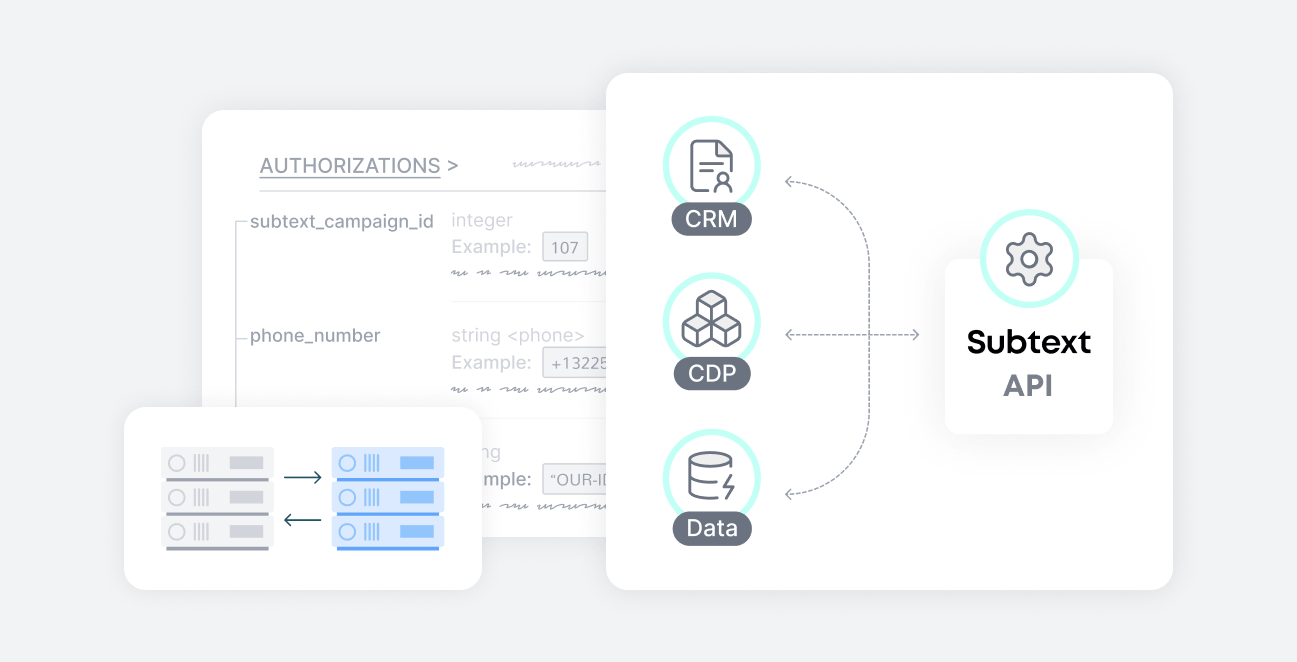
For many teams, that system includes a CRM, a CDP, a subscription platform, an ecommerce platform, an event registration tool, an analytics dashboard, a customer support workflow, a data warehouse, or an internal database.
SMS becomes part of that infrastructure when it stops operating as a separate channel and starts working with those systems.
That could mean a subscriber joins through a custom signup flow and is automatically added to the right SMS campaign. A paid subscriber lapses, and their SMS experience changes based on entitlement status. A fan chooses their favorite team, writer, or topic, and that preference is saved for future segmentation.
The point is not simply that developers can send texts.
The point is that SMS can become a connected layer in the larger audience relationship. It can help teams collect first-party data, personalize engagement, support retention, and understand what audiences actually want from the relationship.
That matters because the most valuable audience programs are not built on one-off sends. They are built on connected, direct relationships that get more useful over time.
Why Standalone SMS Workflows Can Become Limiting
A standalone SMS workflow can work well early on. A team can upload a list, send a message, monitor replies, and measure basic performance.
But as the strategy matures, standalone workflows often create friction.
Subscriber data may live in too many places. Segments may need to be updated manually. Replies may create operational complexity. Opt-in and opt-out status may need to stay synced across systems. Reporting may be disconnected from the actual business outcomes SMS is helping drive.
That becomes a problem for teams using SMS to support retention, revenue, loyalty, community, or customer experience.
If SMS is influencing renewals, subscriptions, event attendance, purchases, product engagement, or audience feedback, it needs to connect to the systems where those outcomes are already being measured.
Otherwise, teams risk treating SMS like a campaign tool when it is actually contributing to much bigger goals.
What APIs and Webhooks Actually Do
An API lets different systems exchange information and take action.
For SMS, that means your existing tools can interact with your messaging platform programmatically. Instead of manually updating every subscriber, tag, segment, or message, your systems can make those updates directly.
With Subtext’s API, teams can manage subscribers, update subscriber information, create and schedule broadcasts, add or remove tags, attach metadata, retrieve inbound and outbound messages, review replies, and analyze shortlink performance.
Webhooks add the real-time layer.
An API lets your system ask Subtext for information or tell Subtext to do something. A webhook lets Subtext notify your system when something happens.
That might include a new subscription, an opt-out, an inbound message, a shortlink click, or a delivery update.
Together, APIs and webhooks help teams move from one-off SMS campaigns to connected audience workflows. Instead of manually reacting after the fact, teams can build systems that respond to audience behavior as it happens.
Three Ways Connected SMS Creates More Value
1. Cleaner Subscriber Management
As audiences grow, subscriber management gets more complicated.
People may join through a signup page, keyword, embedded form, list import, custom registration flow, or API-connected product experience. They may belong to different campaigns, segments, subscription tiers, or interest groups.
Subtext’s API supports universal subscriber management, which means teams can manage subscribers programmatically, no matter where they came from.
That is especially valuable for teams with multiple audience entry points.
A publisher might collect SMS opt-ins from article pages, newsletters, subscription flows, and live events. A sports organization might collect fans from team-specific alerts, premium content offers, and game-day promotions. A brand might collect subscribers from checkout, product launches, loyalty programs, and event activations.
When subscriber data stays connected, teams can create a better experience and reduce manual work. They can also build a stronger owned audience database, with mobile numbers, engagement history, preferences, and audience signals that do not depend on rented platforms or algorithmic reach.
2. More Relevant Messaging
SMS performs best when it feels timely, useful, and personal.
That becomes much easier when texts are connected to audience behavior and preference data.
With tags and metadata, teams can segment subscribers based on interests, activity, account status, event attendance, purchase behavior, content preferences, or direct replies.
A newsroom can tag subscribers by topic interest. A sports publisher can tag fans by team or writer. An event organizer can tag attendees by ticket type or session interest. A membership business can tag subscribers by tier, renewal status, or benefit usage.
This matters because segmentation should not always be manual.
When someone tells you what they care about, becomes a paying customer, joins through a specific flow, or replies with a preference, that information can make the next message better.
That is the difference between sending more texts and sending better texts.
3. Automated Workflows That Support Retention and Revenue
The most valuable SMS moments are often tied to behavior.
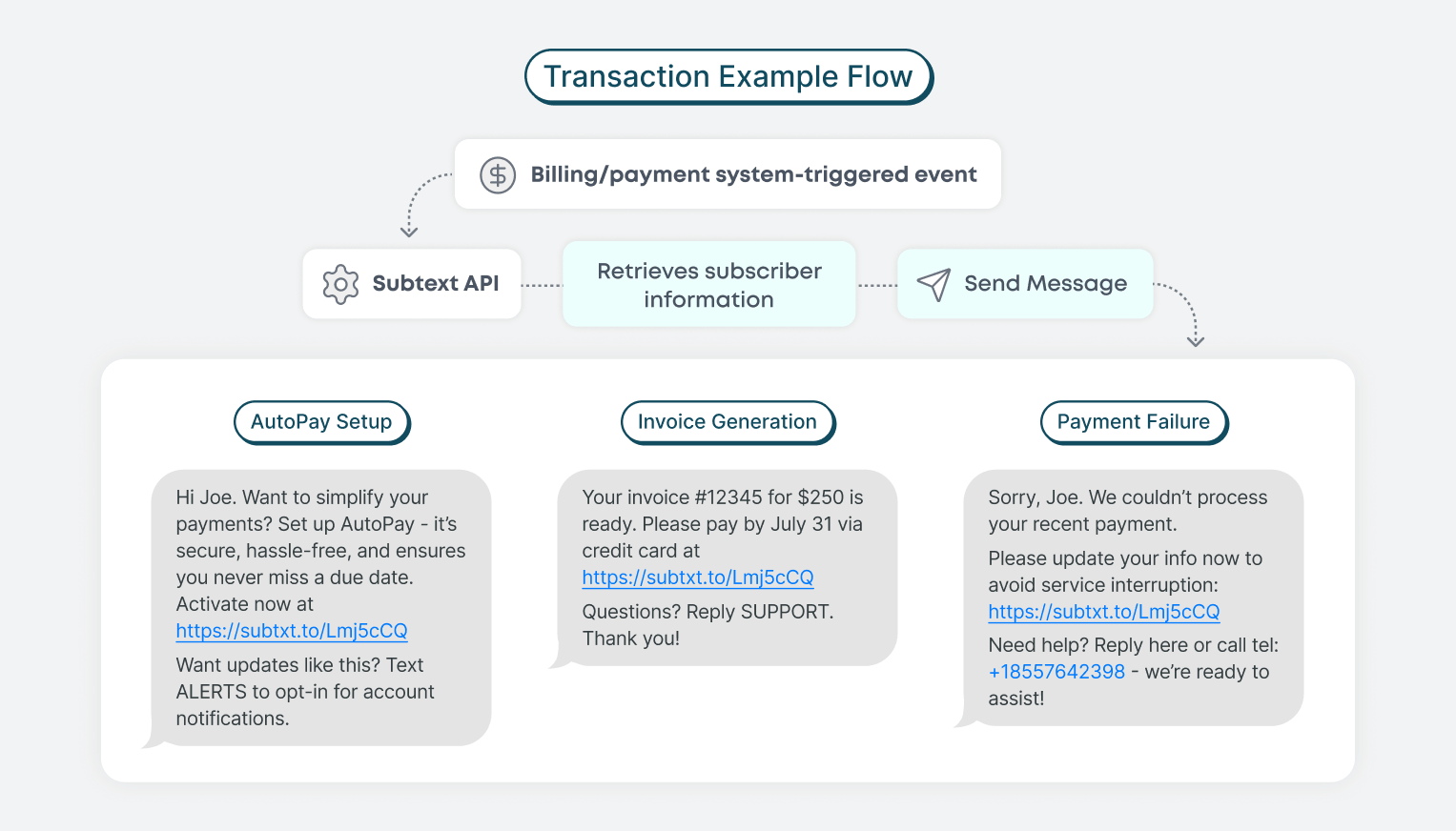
A subscriber joins. A customer abandons checkout. A payment fails. A renewal window opens. An event is about to start. A reader clicks a premium content link. A fan opts into a game-day alert. A customer replies, asking for help.
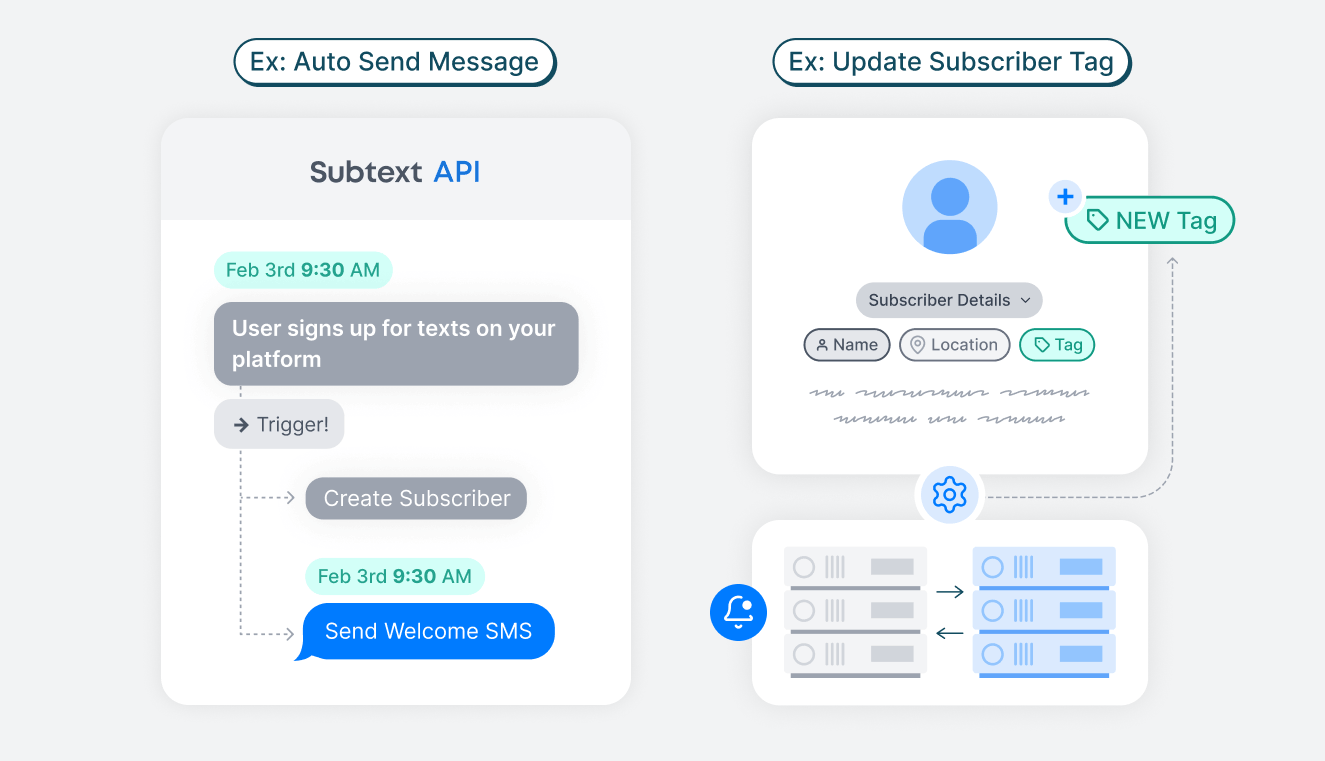
With API-connected SMS, those moments can trigger timely messages or internal workflows.
That can support use cases like onboarding, renewal reminders, win-back offers, cart abandonment, billing alerts, event updates, feedback requests, premium benefit activation, and retargeting based on clicks or replies.
The key is that these messages are not random blasts.
They are tied to moments where the audience relationship already has context.
That context is what makes SMS feel useful instead of noisy. It also makes the channel more defensible for teams that need to show how audience engagement supports retention, conversion, loyalty, and revenue.
How This Changes the Role of SMS
When SMS connects to the rest of your audience stack, it becomes easier to use the channel strategically.
Instead of treating SMS as a place to send one-off updates, teams can use it to support the moments that matter most in the audience relationship: a new subscriber joining, a member renewing, a reader showing interest in a topic, a fan opting into a specific alert, or an attendee needing timely event information.
It also gives teams a clearer view of what people are actually engaging with. Clicks, replies, opt-ins, tags, and preferences can help inform future messaging, audience segments, and broader retention or revenue efforts.
That does not mean every text needs to be automated or every reply needs to trigger a complex workflow. The value is in connecting SMS to the right systems so teams can act on audience behavior when it matters.
The technology matters, but the outcome matters more: a more connected, responsive, and measurable way to engage the people who matter most to your business.
What to Consider Before Connecting SMS to Your Stack
Before building API-connected SMS workflows, teams should get clear on the strategy.
Start with the audience experience. What should subscribers receive by text? Why is SMS the right channel for those messages? What should feel timely or useful enough to belong in someone’s messaging app?
Then look at the data. What systems need to send information into SMS? What subscriber fields, tags, or metadata should be captured? What engagement signals need to flow back out?
It also helps to define ownership. Who owns message strategy? Who owns implementation? Who monitors replies? Who reviews reporting? Who decides when a workflow should change?
A strong SMS integration strategy should answer a few core questions:
-
Where will subscribers opt in?
-
What data needs to stay synced?
-
Which audience behaviors should trigger a workflow?
-
What happens when someone replies?
-
What happens when someone opts out?
-
Which metrics define success?
The goal is not to automate every interaction.
The goal is to connect the right infrastructure so teams can deliver more relevant, timely, and scalable audience experiences.
How Subtext Helps
Subtext’s API and webhooks help teams build connected SMS experiences without managing carriers, compliance, or messaging infrastructure themselves.
Teams can use Subtext to connect SMS to the systems they already use, manage subscribers and tags, support custom signup flows, send and schedule broadcasts, retrieve messages and replies, analyze shortlink engagement, and trigger real-time workflows from audience behavior.
That combination matters.
The API helps your systems take action. Webhooks help your systems react.
Together, they help SMS operate as part of your broader audience engagement strategy instead of sitting off to the side.
For teams focused on growth, retention, engagement, and revenue, that is a major shift.
Subtext is not just a place to send text messages. It is a platform for building direct audience relationships that can connect to the systems your team already uses.
SMS Is More Valuable When It Is Connected
SMS has always been powerful because it is direct.
But direct access alone is not enough.
As audience programs mature, teams need SMS to be connected, measurable, automated where it makes sense, and responsive to real subscriber behavior.
That is what APIs and webhooks make possible.
They help teams move from manual sends to connected workflows. From disconnected lists to synced subscriber data. From one-off campaigns to lifecycle messaging. From channel-level metrics to broader audience and revenue insights.
When SMS becomes part of your audience infrastructure, it can do more than reach people quickly.
It can help you understand them, serve them, retain them, and build stronger direct relationships over time.
Ready to Make SMS Part of Your Audience Stack?
Subtext’s API and webhooks help teams connect SMS to the systems they already use, automate high-value workflows, manage subscriber data, and act on real-time audience engagement.
If your team is ready to build more connected, scalable, and measurable SMS experiences, Subtext can help.
Talk to an SMS expert to see how Subtext’s API and webhooks can support your audience engagement strategy.