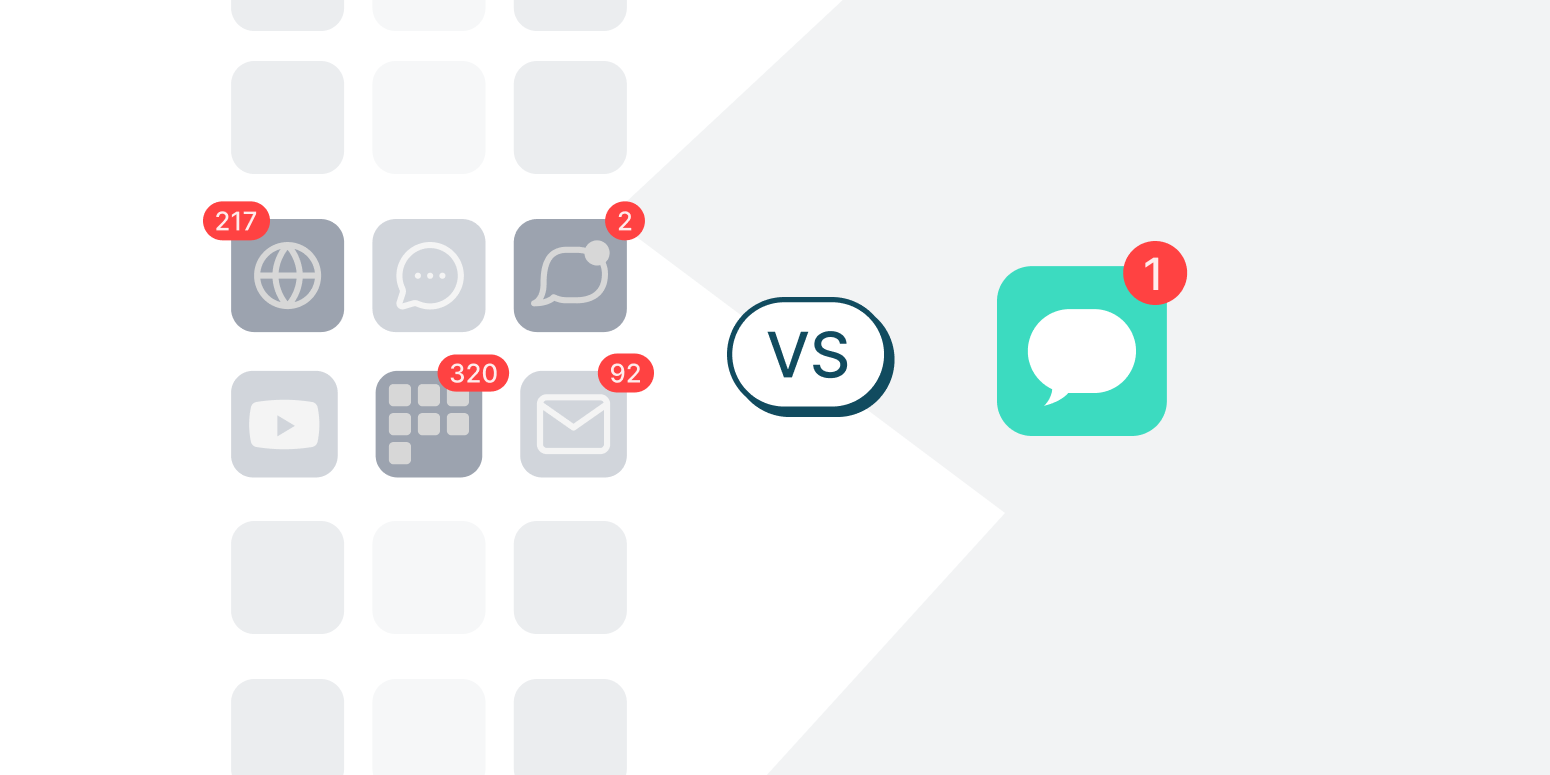
SMS-Only Platforms vs. Multichannel Marketing Suites: Why Purpose-Built SMS Wins for Audience Engagement
Published by Subtext on
May 8, 2026
SMS-only platforms and multichannel marketing suites both help teams communicate with their audiences, but they are not built with the same level of focus.
A multichannel marketing suite treats SMS as one channel inside a broader system. That can be useful for teams that want to manage email, SMS, push, and other channels from one dashboard. But because these platforms are built to support many channels at once, SMS often has to fit into workflows, reporting, and support models that were not designed specifically for text messaging.
An SMS-only platform is different. It is built specifically for SMS. Every part of the platform, from compliance and deliverability support to two-way messaging, audience segmentation, automation, APIs, webhooks, and integrations, is designed around helping teams get more value from texting.
That focus matters. SMS has its own rules, carrier requirements, consent standards, audience expectations, and engagement patterns. Companies that focus specifically on SMS also build deeper institutional knowledge around the channel, including best practices, compliance requirements, deliverability considerations, audience growth strategies, and what actually drives engagement over text.
For teams that rely on texting to build direct relationships, drive retention, increase revenue, or activate an owned audience, a dedicated SMS platform like Subtext is usually the stronger choice. And because Subtext offers APIs and webhooks, teams do not have to choose between SMS specialization and system flexibility. They can get the benefits of a purpose-built SMS platform while still connecting texting into the tools, workflows, and data systems they already use.
Why SMS-Only Platforms Have the Advantage
The biggest benefit of an SMS-only platform is focus.
SMS is not a secondary feature inside the product. It is the product.
That means the platform is designed around the realities of text messaging: opt-ins, opt-outs, 10DLC registration, carrier requirements, message deliverability, reply handling, segmentation, audience growth, and subscriber experience.
Multichannel suites can help teams coordinate campaigns across several channels, but they are often built around broad marketing operations. SMS has to share attention with email, push, social, ads, landing pages, and other tools.
For teams that want SMS to play a meaningful role in engagement, retention, or monetization, that difference matters. A dedicated SMS platform can go deeper because the entire product and team are focused on one channel.
Subtext is built around that advantage. Instead of treating SMS as an add-on, Subtext helps teams build direct audience relationships through a channel they own, with hands-on support from SMS experts who understand the compliance, deliverability, and engagement details that make texting work.
What Is an SMS-Only Platform?
An SMS-only platform is a marketing and communication tool built specifically for text messaging.
Instead of adding SMS into a larger marketing suite, these platforms focus on the infrastructure, workflows, compliance needs, and engagement patterns that make texting effective.
That usually includes:
-
SMS and MMS messaging
-
Two-way conversations
-
Audience segmentation
-
Keyword-based opt-ins
-
Automated replies and workflows
-
Compliance and opt-out management
-
10DLC registration support
-
Subscriber data and engagement insights
-
APIs, webhooks, and integrations
The advantage is depth. SMS is a high-attention channel, but it also requires thoughtful execution. Teams need to manage consent, send relevant messages, handle replies, maintain compliance, and protect the subscriber experience.
A platform focused solely on SMS is better equipped to help teams manage those details.
Subtext fits this model. It is built for organizations that want to use SMS as an owned audience channel, not just another outbound campaign tool. Teams use Subtext to build direct relationships, manage conversations, create audience groups, support compliance, and connect SMS to the rest of their tech stack through integrations and API capabilities.
What Is a Multichannel Marketing Suite?
A multichannel marketing suite combines several marketing channels into one platform. These tools often include email, SMS, push notifications, social advertising, landing pages, customer profiles, and campaign reporting.
The main advantage is convenience. Teams can manage multiple channels from one place, coordinate campaigns across email and SMS, and reduce the number of vendors in their stack.
That can work well when SMS is a supporting channel.
The tradeoff is that SMS may not get the same level of specialization. In many all-in-one tools, texting is treated as an extension of email automation or lifecycle marketing. That can be enough for basic sends, but it may limit teams that need deeper reply management, hands-on compliance guidance, audience ownership, or advanced SMS-specific engagement.
SMS-Only vs. Multichannel Marketing Suites: Key Differences
| Category | SMS-Only Platforms | Multichannel Marketing Suites |
| Product Focus | Built specifically for SMS | Built to support many channels, with SMS as one feature |
| SMS Expertise | Deep SMS strategy, compliance, and deliverability knowledge | Broader marketing support, often less SMS-specific |
| Two-Way Messaging | Designed for replies, conversations, and audience interaction | Often optimized for outbound campaign flows |
| Compliance | Purpose-built around opt-ins, opt-outs, 10DLC, and SMS rules | Broader compliance coverage, but less specialized |
| Subscriber Experience | Built around SMS-specific expectations and engagement patterns | SMS may be adapted into workflows designed for other channels |
| Data & Segmentation | Focused on SMS signals like replies, preferences, engagement, and audience groups | Centralized profiles, but SMS-specific signals may be less actionable |
| Integrations | Connects SMS into the systems teams already use | Often encourages teams to work inside the suite |
| Best Fit | Teams that want SMS to drive engagement, retention, and revenue | Teams that want basic SMS alongside other channels |
The simplest way to think about it: multichannel suites help teams manage more channels in one place. SMS-only platforms help teams get more value from SMS.
The Benefits of SMS-Only Platforms
1. SMS-only platforms are designed around the channel, not adapted to it
The strongest reason to choose an SMS-only platform is that it is built around SMS from the ground up.
Text messaging is not email with a shorter character count. It has different compliance requirements, different subscriber expectations, different delivery considerations, and a more personal feel. The experience has to be timely, relevant, and easy to respond to.
Multichannel suites often add SMS to systems originally designed for email or broad campaign automation. That can work for simple sends, but it may limit how much control teams have over the SMS experience.
SMS-only platforms are built for the details that make texting work: consent, opt-outs, reply management, audience groups, registration, message timing, and subscriber engagement.
For Subtext, that focus is central. The platform is designed specifically to help organizations build stronger direct relationships through SMS, with tools and support that reflect how the channel actually works.
2. Teams get specialized SMS expertise, not general marketing support
When SMS is one feature inside a larger marketing suite, support teams often have to cover many different channels and use cases.
With an SMS-only platform, the support is more specialized. The team understands the operational realities of texting, from 10DLC registration and opt-in language to deliverability best practices, audience growth, and reply-driven engagement.
That expertise matters because SMS mistakes can be costly. A weak opt-in flow, poor registration setup, unclear message strategy, or overly broad sending approach can hurt performance quickly.
Subtext has been focused on SMS since 2019, giving teams access to experts who understand how to build compliant, scalable, audience-first SMS programs.
3. SMS-only platforms create better two-way experiences
SMS works best when it feels direct and personal. That is difficult to achieve if the platform treats texting as another outbound campaign channel.
SMS-only platforms are better suited for two-way engagement because they are built around replies, conversations, audience signals, and subscriber preferences.
That matters for publishers, creators, sports teams, entertainment brands, and other audience-driven organizations because replies are not just responses. They are indicators of interest, trust, and intent.
Subtext helps teams manage those interactions in a way that feels human, not automated for the sake of automation. Teams can use SMS to ask questions, gather feedback, send targeted updates, and build more direct relationships with the people who have opted in to hear from them.
4. SMS-only platforms are stronger for compliance and 10DLC support
SMS compliance is too important to treat as a generic marketing requirement.
Teams need compliant opt-in flows, clear disclosures, opt-out handling, consent records, and the right registration setup. In the U.S., 10DLC registration is a major part of that process.
Because SMS-only platforms focus solely on texting, they are typically better equipped to support these requirements in depth.
Subtext does not just point teams to documentation. Subtext provides hands-on support from SMS experts to help teams get set up correctly, including guidance around compliance and 10DLC registration.
That matters because compliance is not just a box to check. It affects launch timelines, deliverability, subscriber trust, and the long-term health of an SMS program.
5. SMS-only platforms help teams build owned audience relationships
The value of SMS is not just message delivery. It is direct audience access.
Unlike social platforms, SMS gives teams a permission-based connection to people who have actively chosen to hear from them. That makes it one of the strongest channels for building owned audience relationships.
SMS-only platforms are better aligned with that goal because they are designed to help teams grow, segment, engage, and understand their SMS audience over time.
Subtext supports owned audience strategies with audience groups, two-way messaging, data collection, paid community capabilities, and integrations that help teams turn subscriber attention into long-term value.
For teams that care about retention, loyalty, and monetization, that direct relationship is the point.
6. SMS-only platforms give teams more control over the subscriber experience
Texting is personal. A message shows up in the same place people hear from friends, family, coworkers, and communities they care about.
That is why SMS can be so effective, but it is also why the subscriber experience matters. Generic blasts, unclear expectations, or irrelevant messages can lead to opt-outs quickly.
SMS-only platforms give teams more control over that experience. They can build audience groups, tailor messages by interest or behavior, manage replies, and create SMS-specific workflows that feel more personal.
With Subtext, teams can create targeted audience groups, send more relevant messages, and use subscriber responses to better understand what people care about. The result is not just more sending. It is better engagement.
7. SMS-only platforms offer better flexibility for SMS-first teams
One common argument for multichannel suites is that they reduce integration work. That can be true if a team wants to keep everything inside one system.
But many sophisticated teams already have a preferred stack. They may use separate tools for CRM, subscriptions, ecommerce, content management, analytics, membership, or customer support.
For those teams, the better question is not “Can one platform do everything?” It is “Can our SMS platform connect to the systems that already run our business?”
This is where a dedicated SMS platform with flexible integration options can be more valuable than a closed all-in-one suite.
Subtext’s API and webhook capabilities help teams connect SMS to the rest of their workflow, making it easier to trigger messages, sync data, automate processes, and build custom audience experiences without forcing SMS into a generic campaign builder.
When a Multichannel Marketing Suite May Be Enough
A multichannel marketing suite can make sense when SMS is a smaller part of the strategy.
For example, it may be enough if your team only sends occasional promotional texts, does not need many replies, and cares more about managing every channel from one dashboard than optimizing SMS performance.
That convenience can be useful, but it comes with tradeoffs. SMS may have fewer advanced workflows, less specialized compliance support, less flexible reply management, and fewer tools built specifically for subscriber engagement.
For teams that simply need SMS as a supporting channel, those tradeoffs may be acceptable. For teams that want SMS to drive measurable engagement, retention, or revenue, a dedicated SMS-only platform is usually the better fit.
When an SMS-Only Platform Is the Better Choice
An SMS-only platform is usually the stronger choice when texting plays a central role in your audience strategy.
It is especially valuable if your team needs:
-
Real-time audience communication
-
Two-way conversations
-
Strong compliance and 10DLC support
-
Audience segmentation
-
Subscriber preference collection
-
Paid or premium text communities
-
MMS or voice capabilities
-
Integrations with existing systems
-
API or webhook flexibility
-
Expert SMS guidance
This is where Subtext is built to stand out. It gives teams the infrastructure, support, and flexibility to build SMS programs that are more personal, more measurable, and more connected to long-term audience value.
Why Subtext Is Built for Teams That Want to Do SMS Well
Subtext is an SMS-first platform built for organizations that see texting as a strategic audience channel, not a side feature inside a larger marketing suite.
Because Subtext focuses specifically on SMS, the platform is designed around the details that matter most: audience growth, two-way engagement, segmentation, compliance support, 10DLC registration, subscriber data, paid communities, MMS, voice capabilities, API access, and integrations.
That focus gives teams more than a tool for sending messages. It gives them a partner for building a stronger SMS program.
Subtext has been in the SMS marketing space since 2019, helping publishers, creators, media companies, sports organizations, entertainment brands, and other audience-driven teams use texting to build direct relationships with their audiences.
For teams that want the simplicity of a platform built around one channel and the depth of SMS-specific expertise, Subtext is a stronger choice than a general marketing suite.
If SMS Matters, Choose a Platform Built for SMS
Multichannel marketing suites are useful when SMS is just one small part of a broader campaign mix.
But if SMS is central to how your team engages, retains, or monetizes its audience, a dedicated SMS-only platform is usually the better choice.
That is because SMS-only platforms are built specifically for the channel. They focus on the compliance requirements, delivery considerations, two-way interactions, audience data, and subscriber experience that make texting different from every other marketing channel.
Subtext gives teams that SMS-first foundation. With specialized tools, hands-on expert support, compliance guidance, 10DLC support, integrations, and audience engagement features, Subtext helps organizations build SMS programs that are more direct, more personal, and more valuable over time.
Book a demo to see how Subtext can help your team build a stronger SMS program.