Two-way messaging lets marketers do something one-way channels can’t: have an actual conversation. Instead of blasting promotions and hoping for clicks, two-way SMS creates space for replies, follow-ups, and real signals about intent.
That’s why texting has become such a durable marketing channel. Messages get opened. People respond. And when the experience is handled well, those conversations turn into engagement, loyalty, and revenue—without relying on algorithms or crowded inboxes.
The best two-way messaging services today include Subtext, Twilio, EZ Texting, TextMagic, SlickText, Podium, and Textedly. All support two-way SMS, but they’re built for very different kinds of teams. Some are marketer-first. Others are developer-led. A few prioritize speed and simplicity over depth.
This guide focuses on two-way messaging services built primarily for marketing use cases, and how to choose the right one based on how your team actually works.
What Counts as "Two-Way" SMS?
Two-way messaging means subscribers can reply, and those replies trigger something: an auto-reply, a poll response, a support handoff, or an update to a CRM record. It covers four core pieces:
-
Inbox – a shared view where teams read and respond to incoming texts
-
Auto-replies – automated responses to common questions or keywords
-
Polls and surveys – structured prompts that turn replies into usable data
-
Human handoff – routing anything that needs a real person to a live agent
This matters because replies are first-party signals. Every response can segment an audience, personalize a future message, or measure how engaged someone actually is. Teams that treat two-way SMS as a strategy, not just a feature, usually start with one or two simple reply flows (a poll, a HELP keyword) and expand from there.
How Marketers Use Two-Way SMS Messaging
For marketers, two-way SMS solves a familiar problem: getting closer to the audience without fighting an algorithm or an inbox. When replies are part of the channel, campaigns stop being static and start adapting in real time.
Common ways marketers use two-way SMS include:
-
Running conversational promotions and limited-time offers
-
Qualifying leads and capturing opt-ins
-
Sending event reminders and real-time updates
-
Collecting feedback or questions through polls, surveys, and replies
-
Gathering user-generated content (UGC) through replies and prompts
-
Routing support or service-related questions
The real value of two-way SMS isn’t the reply itself—it’s what that reply reveals. Every response can signal intent, trigger automation, or update a customer profile. When messaging is connected to CRM or subscription systems, SMS becomes one of the clearest, highest-intent touchpoints in the stack.
Two-Way Messaging in Action
A few short templates show how this works in practice:
Poll or content vote
Outbound: "Which show do you want early access to? Reply A for Show 1, B for Show 2."
Follow-up: "Thanks! Click here to give us your email."
Support handoff
Inbound: "Reply HELP for live support."
Auto-reply: "We've received your request. A team member will respond within [X] hours."
UGC prompt
Outbound: "What's one story you want us covering this week? Reply back and we might feature it."
Follow-up: "Love it, we're adding this to our list for the next issue."
As programs scale, compliance and deliverability start to matter just as much as engagement. TCPA consent capture and 10DLC registration aren’t edge cases—they’re table stakes for making sure messages actually reach the people who asked to receive them.
In practice, marketers tend to care most about a few things: automation that reacts to replies, integrations that don’t break, compliance that stays out of the way, and reporting that shows what’s working.
| Platform | Starting Price/Model | Best for Marketers Who Need |
Notable Strengths |
| Subtext | Custom pricing | Owned audiences, first-party data, and monetization | Flexible API, Advanced Segmentation, Automation |
| Twilio | Pay-as-you-go (~$0.0079/SMS) | Custom, developer-built workflows | Programmable APIs, global reach |
| EZ Texting | From ~$20/month | Simple campaign execution | Ease of use, MMS, unlimited inbound |
| TextMagic | Pay-as-you-go (~$0.049/SMS) | Alerts and notifications | Email-to-SMS, bulk messaging |
| SlickText | Bundled tiers | Fast campaign launches | Visual workflows, templates |
| Podium | Quoted plans | Local and service communication | Shared inbox, reviews, payments |
| Textedly | From $35/month | Budget-friendly outreach | Automation, MMS, Zapier |
The “best” platform depends on what you value most: speed, control, cost, or long-term audience ownership.
Subtext
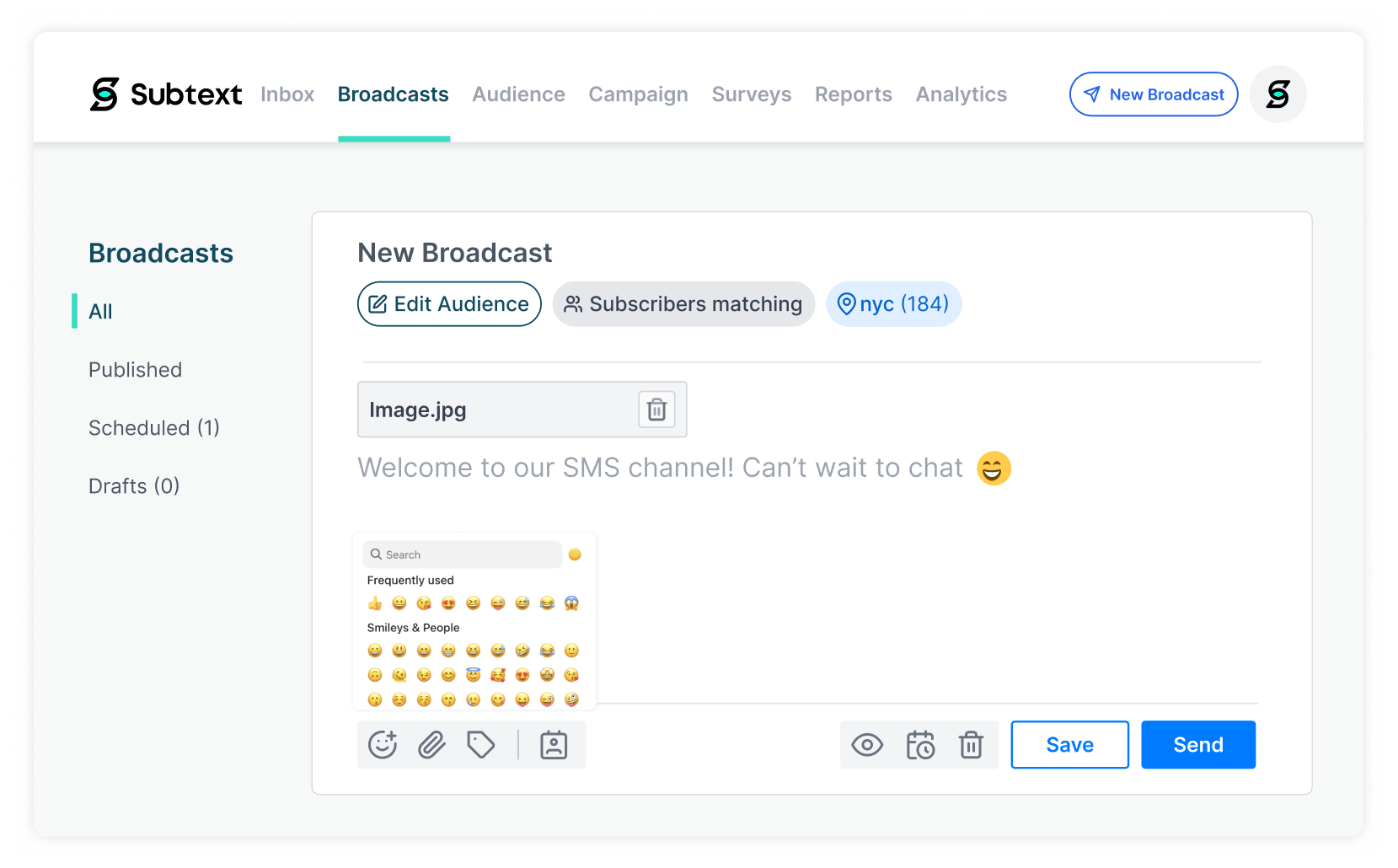
Subtext is built for marketers who want direct, ongoing relationships with their audiences. Rather than treating SMS as a one-off campaign tool, Subtext emphasizes segmentation, reply-driven workflows, and integrations that make two-way messaging part of a broader marketing stack.
Teams use Subtext to engage audiences in real time, respond to intent as it shows up in replies, and build durable communication channels they own. Native integrations with CRM and subscription systems help unify audience data and make SMS interactions easier to measure alongside other marketing touchpoints.
Some teams also choose to monetize their SMS programs over time, and Subtext supports those use cases through sponsorships, affiliate workflows, and subscriptions. More commonly, however, Subtext is used to facilitate two-way engagement that helps marketers deliver personalized messages and collect high-quality first-party data directly from their audiences. Replies, preferences, and behaviors captured through conversations enrich audience profiles and inform segmentation, automation, and downstream marketing decisions, with monetization remaining an optional extension rather than a core requirement.
Compliance and deliverability are built into everyday workflows. TCPA consent capture, 10DLC guidance, and sender safeguards help marketers scale two-way messaging responsibly while protecting reach and brand trust.
Best for: Marketing, media, publishers, sports, and event teams
Standout features: Segmentation, reply-based automation, monetization tools
Compliance: TCPA and 10DLC support built in
Impact: Strong engagement with opted-in audiences and long-term retention
If two-way SMS is becoming a core marketing channel, Subtext is built to support that shift.
Twilio
Twilio takes a very different approach. It’s a developer-first communications platform that gives teams building blocks—APIs, webhooks, and infrastructure—to create custom messaging systems.
That flexibility is powerful, especially for global or highly technical teams. But it also means marketing teams usually need engineering support to launch, maintain, and evolve two-way SMS programs. Pricing is usage-based, with costs varying by destination, number type, and volume.
Best for: Teams that want to build everything themselves
Strengths: Customization, global reach, channel flexibility
Trade-offs: Ongoing engineering investment
Twilio makes sense when control matters more than speed or simplicity.
EZ Texting
EZ Texting is designed for teams that want to get campaigns live quickly without developers. It supports list growth, MMS, scheduling, and basic reply-based automation in a clean, approachable interface.
Plans start around $20 per month, and unlimited inbound messages help keep reply costs predictable.
Best for: SMB marketing teams
Strengths: Ease of use, MMS, fast setup
EZ Texting works well for teams getting started with two-way SMS.
TextMagic
TextMagic focuses on straightforward, pay-as-you-go two-way messaging. It’s commonly used for alerts, reminders, and transactional updates rather than complex marketing workflows.
With tools like email-to-SMS, bulk imports, and a mobile app, it’s easy to launch quickly without long-term commitments.
Best for: Notifications and simple two-way communication
Strengths: Flexible pricing, low setup friction
TextMagic is a solid option when simplicity matters most.
SlickText
SlickText is built for speed. Templates, visual workflows, and autoresponders make it easy to launch and iterate on SMS campaigns without much setup.
It’s less focused on deep integrations or monetization, but effective for list growth and rapid testing.
Best for: Fast-moving marketing teams
Strengths: Visual automation, templates
SlickText shines when time to launch is the priority.
Podium
Podium blends two-way messaging with reviews, payments, and web chat. It’s widely used by service-based businesses that want customer communication in one place.
While it’s strong operationally, it’s less focused on marketing automation or audience monetization.
Best for: Local and service businesses
Strengths: Messaging tied to reviews and payments
Podium connects conversations directly to service outcomes.
Textedly
Textedly offers a budget-friendly way to run two-way SMS with automation, MMS, and Zapier integrations. Entry plans start at $35 per month and support unlimited contacts.
It’s a practical choice for small teams that want basic functionality without a large upfront investment.
Best for: Cost-conscious small businesses
Strengths: Affordability and integrations
Textedly works well as an entry-level platform.
Measuring Two-Way Messaging Success
Reply volume alone doesn't show whether two-way messaging is working. Track three metrics instead:
-
Reply rate – the share of messages that get a response
-
Average response time – how quickly your team or automation closes the loop
-
Conversion from replies – the share of replies that lead to a desired action, like claiming an offer or completing a signup
These numbers show whether two-way messaging is generating real engagement, not just receipts.
Choosing the Right Two-Way Messaging Platform
Two-way messaging is one of the most direct channels marketers have. The right platform doesn’t just make replies possible—it supports owned audiences.
Not every team needs the same level of automation or monetization. But when two-way messaging becomes a core part of your strategy, platform choice matters a lot more.
Subtext is built for teams that want to activate and monetize their audiences directly. With segmentation, reply-driven automation, built-in compliance support, and revenue tools, it helps marketers move beyond message delivery to sustained engagement.
If you’re evaluating two-way messaging as a long-term channel, it’s worth exploring how Subtext supports owned audiences and measurable outcomes.
Learn more about how Subtext works, or see how teams switch to Subtext to build deeper, more durable audience relationships through two-way messaging.