Content fatigue is real, and let's face it, claiming your audience's attention isn't getting any easier. As they scroll through posts across different platforms, even the most loyal followers can struggle to stay engaged.
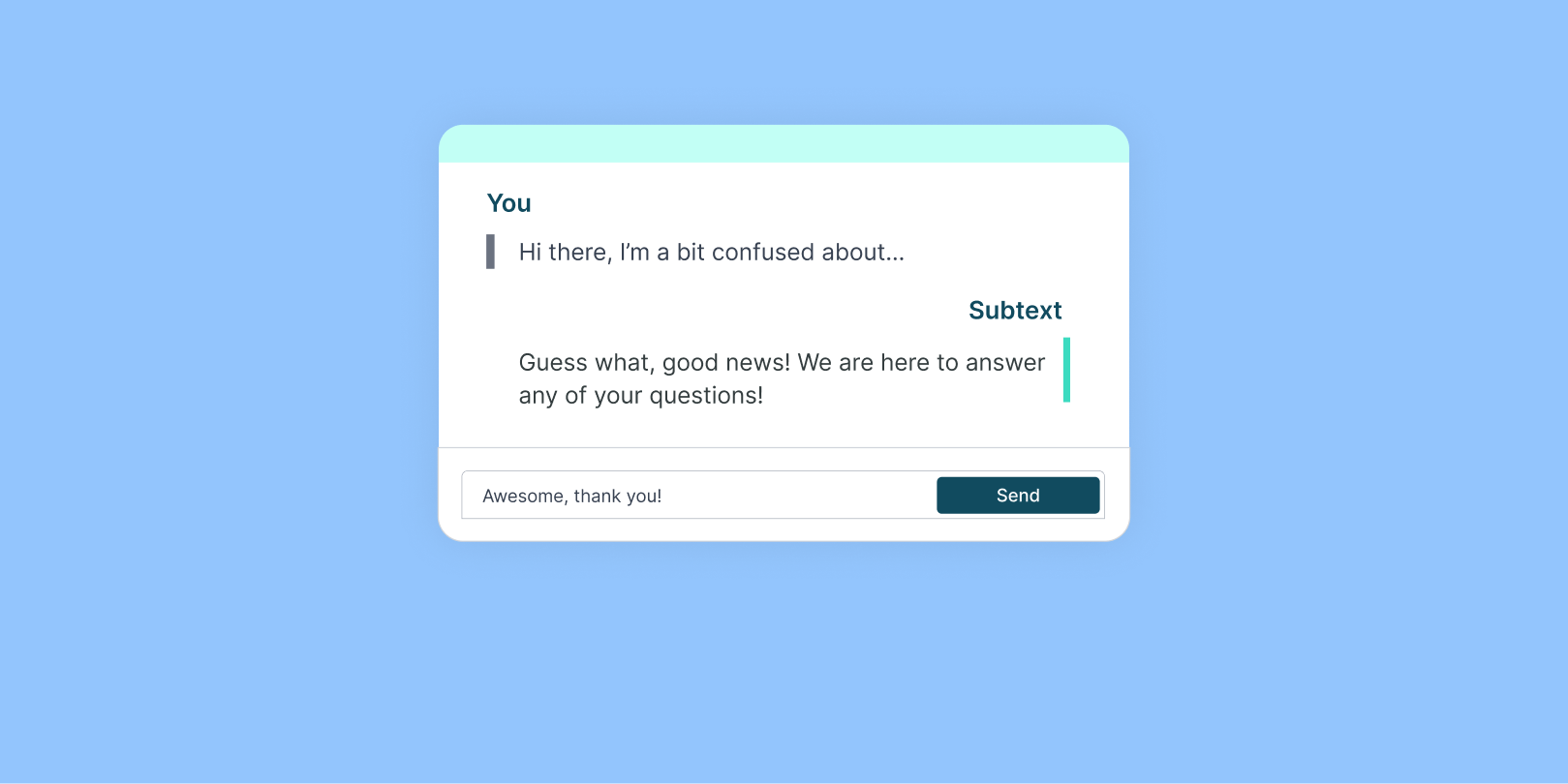
That's why savvy creators and brands are turning to technology that predates any algorithm-driven social platform: text messaging. Two-way SMS communication is a messaging approach that enables real-time, back-and-forth text conversations between senders and recipients, transforming one-way broadcasts into interactive dialogues. This creates something increasingly rare: genuine conversation.
Key benefits of two-way SMS communication:
- Real-time feedback collection directly from your audience
- Higher engagement through interactive polls and surveys
- Frictionless customer support via text
- Reduced subscriber churn by up to 50%
- Stronger community bonds through authentic dialogue
To make the most of any SMS strategy, it's critical to approach it to combat impersonal, one-way content delivery and open up dialogues that feel refreshingly human in the digital landscape.
Why Two-Way SMS Communication Matters
Broadcasting messages to a passive audience is a fading practice, and for good reason. Modern audiences crave interaction, participation, and the oh-so-important feeling that their voice matters. A widespread paradigm shift is long overdue, which means forward-thinking creators and brands can get ahead of the game through the simple power of text conversations.
From Monologue to Dialogue
When you implement two-way SMS, you’re not only sending messages. You’re starting conversations. This fundamental difference evolves the subscriber experience from consumption to participation.
Consider the difference between sending an announcement and posing a question. The former will likely be skimmed and forgotten, whereas the latter can spark hundreds of thoughtful responses. This approach creates a real-life community where subscribers feel heard and valued—a community they’re much more likely to remain part of long-term.
One-Way vs. Two-Way SMS Communication
| Feature | One-Way SMS | Two-Way SMS |
| Direction | Sender to recipient only | Back-and-forth dialogue |
| Engagement | Passive consumpton | Active participation |
| Feedback | No direct response capability | Real-time subscriber input |
| Subscriber Retention | Higher churn rates | Up to 50% churn reduction |
| Relationship Building | Transactions | Conversational and personal |
The Benefits of Real-Time Engagement
Two-way SMS communication delivers numerous advantages that one-way broadcasting cannot match.
A Vehicle for Subscriber Feedback
You can't read your audience's mind, but you can do the next best thing: ask them directly.
When subscribers can respond to your messages with their thoughts and questions, you gain crystal-clear insights where you might otherwise remain in the dark. Real-time feedback eliminates the guesswork from your content strategy. Instead of predicting what might resonate, you receive immediate confirmation from the source that matters most: your actual audience.
Making content decisions based on concrete feedback rather than assumptions allows you to pivot quickly (and confidently) toward what engages your community.
Interactive Polls and Surveys Made Simple
Traditional surveys feel like homework. Two-way SMS surveys feel like a conversation.
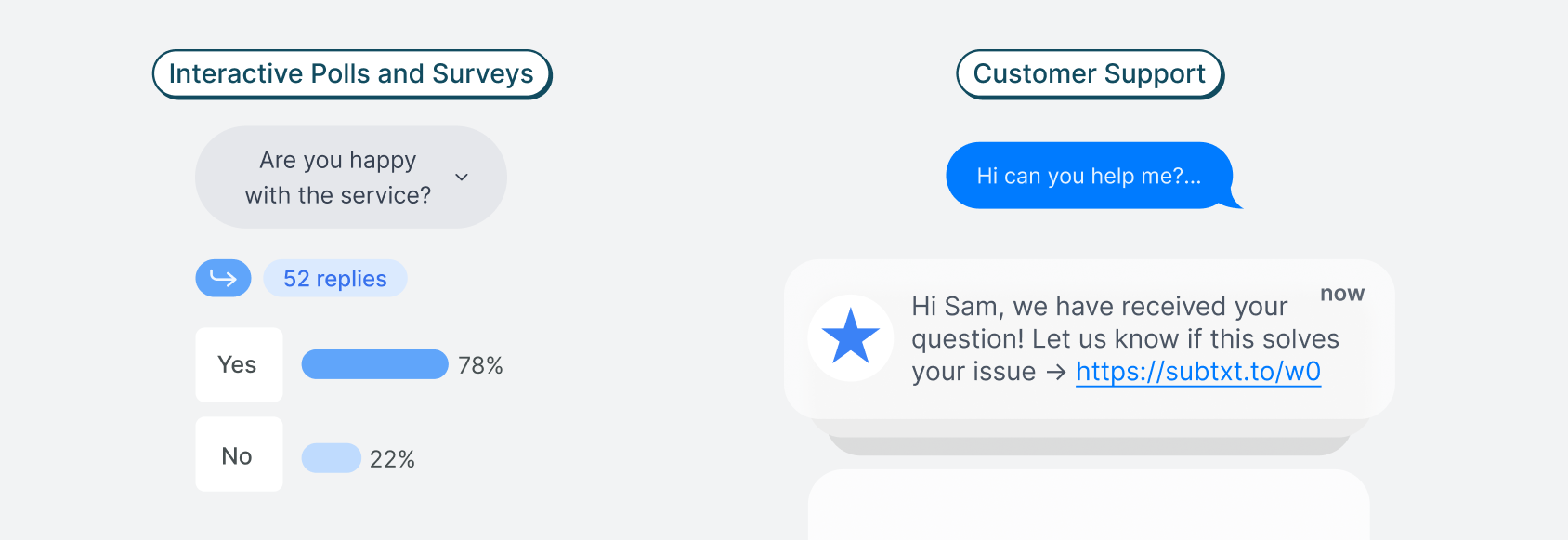
Gathering insights becomes part of an ongoing conversation through SMS. Your 'reply with your choice' questions integrate naturally into the subscriber relationship, avoiding the formality and friction that typically plague traditional survey methods.
SMS surveys conversational nature encourages higher participation rates, giving you a broader range of perspectives to inform your decisions.
Customer Support Without the Friction
Nobody enjoys navigating help center menus or waiting for email responses. Two-way SMS eliminates these pain points entirely.
When a subscriber has a question or issue, they can simply text back—no new apps, no account logins, no searching for contact forms. This simplicity creates a support experience that feels more personal and immediate.
By providing a direct communication channel for resolving issues, two-way SMS improves customer satisfaction while maintaining the human touch that automated systems often lack.
Best Practices for Effective Two-Way SMS Messaging
Take your conversational SMS strategy from good to great with these field-tested approaches.
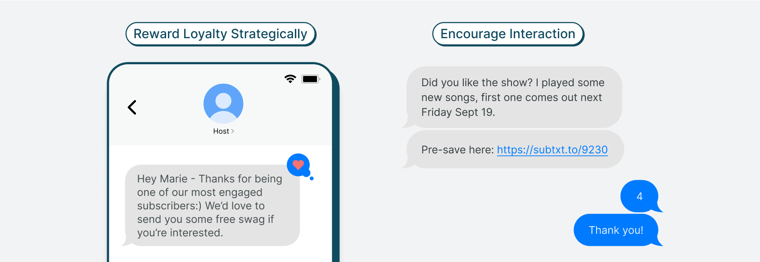
- Invite participation with simple questions that require only a one-word response. Try: "Reply YES if you'd like more content like this" or "Rate today's newsletter from 1-5."
- Create value through interaction by framing questions so participants benefit from answering, whether through exclusive content, early access, or influencing your future direction.
- Maintain authenticity by adding personalized elements to responses that show there's a human, not an algorithm, listening on the other end.
- Write conversationally as if you're texting a friend, while still maintaining professional boundaries. Avoid corporate-speak that creates distance.
- Leverage subscriber data to tailor messages to specific segments or individuals. Even simple personalization, like using first names, boosts engagement.
- Reference past interactions when relevant to show you value and remember your exchanges with subscribers.
- Offer exclusivity by giving subscribers first access to content, events, and offerings before releasing them to wider audiences.
- Recognize milestone moments by celebrating subscriber anniversaries, birthdays, or participation thresholds with exclusive messages and offers.
Driving Engagement Through Conversation
The quick response times and one-to-one feeling of two-way SMS create prime conditions for developing lasting audience bonds. This interactive approach consistently shows measurable impact where it counts.
Effective SMS strategies can reduce subscriber churn by as much as 50%, a dramatic improvement over one-way communication methods. The key to these impressive outcomes is consistency. Prioritize regular opportunities for feedback, ongoing interactive elements, and that personal, conversational tone that makes participatory SMS so effective.
Keeping It Personal While Managing Your Subscriber Base
The key to effective two-way SMS lies in understanding messaging approaches:
- P2P (Person-to-Person) messaging: Direct text conversations between individuals, creating authentic one-on-one exchanges that feel personal and immediate.
- A2P (Application-to-Person) messaging: Automated messages sent from a software application to recipients, enabling efficient communication at scale.
The most successful SMS strategies often blend both techniques—using P2P for that personal touch and A2P for scale—so you create systems that feel personal yet manageable as your audience grows.
Two-Way SMS Communication as a Bridge to Better Engagement
Instead of broadcasting into the void, you can spark genuine dialogue with a solid two-way SMS communication strategy. Don't wait for engagement to decline. Seize the approach now and watch as your audience becomes more responsive, connected, and loyal.
The most impactful two-way SMS approaches share success factors:
- Messages that feel genuine
- Responses that arrive quickly
- Regular chances for subscribers to participate
- Messages that reflect each person's unique relationship with your brand
Let Subtext help you build the community your brand has been missing. Book your demo now to see how our two-way, interactive SMS platform creates authentic connections that strengthen relationships and drive results.
Frequently Asked Questions
What is two-way SMS communication?
Two-way SMS communication is a messaging approach that enables real-time, back-and-forth text conversations between senders and recipients. Unlike one-way broadcasts, it allows subscribers to respond directly, creating interactive dialogues rather than passive content consumption.
How does two-way SMS improve engagement?
Two-way SMS improves engagement by transforming subscribers from passive recipients into active participants. When audiences can respond, share feedback, and participate in polls, they feel heard and valued—leading to stronger loyalty and up to 50% reduction in subscriber churn.
What's the difference between P2P and A2P messaging?
P2P (Person-to-Person) messaging involves direct text conversations between individuals, while A2P (Application-to-Person) messaging sends automated messages from software applications to recipients. Effective SMS strategies combine both: P2P for personal connection and A2P for scalable communication.