Audience Segmentation for Creators: SMS Strategies That Grow Revenue
Published by Subtext on
Jun 8, 2026
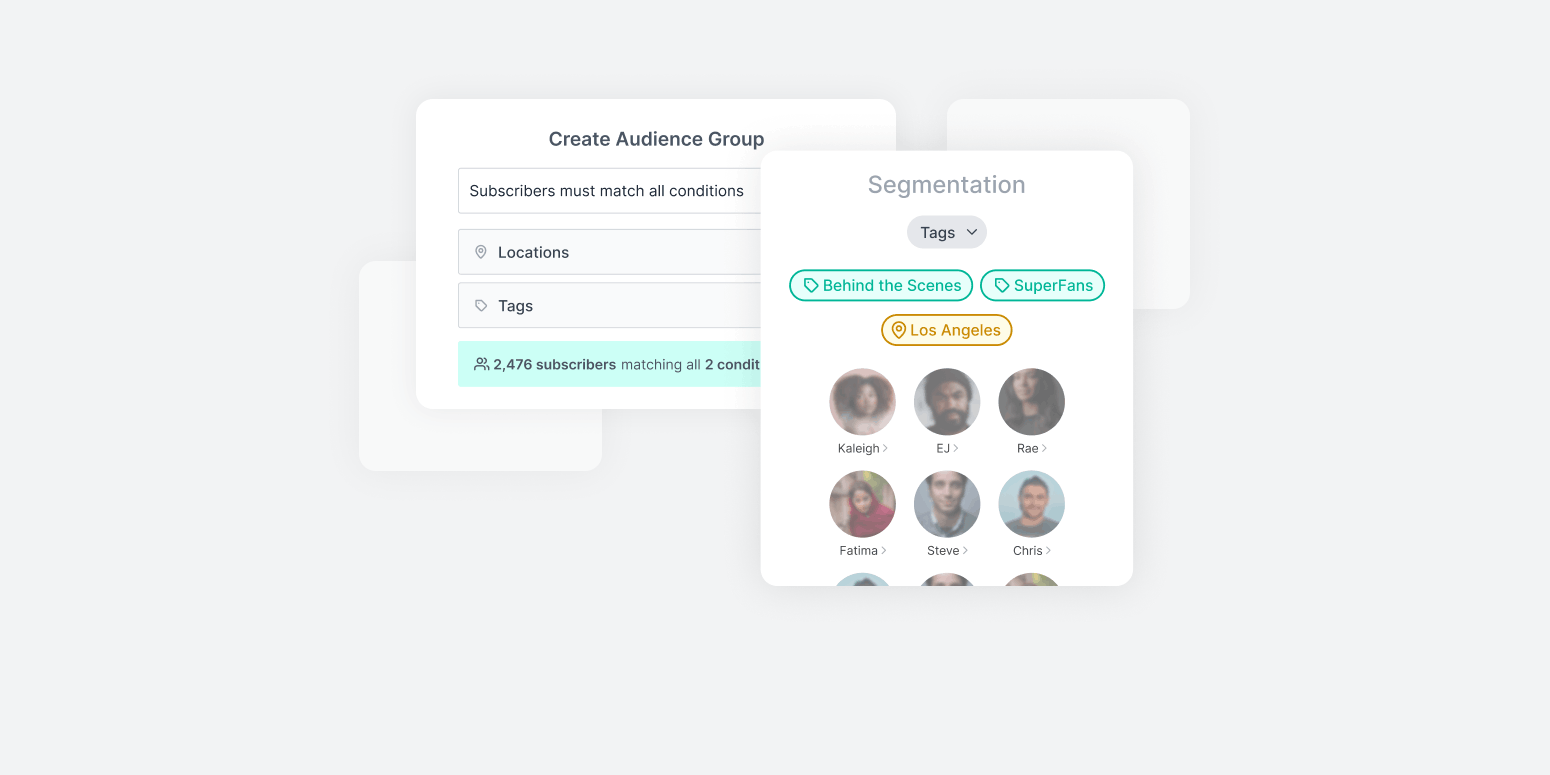
Audience segmentation helps creators turn a general SMS list into a more intentional audience channel. By grouping subscribers based on behavior, interests, location, loyalty, content preferences, or stage in the fan journey, creators can send messages with a clearer purpose.
That matters because SMS is direct. When someone gives a creator their phone number, they are signaling a higher level of trust and interest than a passive social follow. Segmentation helps protect that relationship by making each message feel useful, timely, and worth receiving.
For creators, the goal is not just to organize contacts. It is to understand the audience better, build stronger fan relationships, and turn attention into action, whether that means event attendance, paid memberships, newsletter subscriptions, content engagement, sponsorship value, community growth, or product revenue.
With Subtext, creators can put that strategy into practice through features like Audience Groups, two-way messaging, performance analytics, and A/B testing tools that help them understand what different subscribers actually respond to.
What Is SMS Audience Segmentation?
SMS audience segmentation is the process of dividing a text subscriber list into smaller groups based on shared traits, behaviors, preferences, or engagement patterns.
For creators, common segments might include new subscribers, VIP fans, local audiences, event attendees, paid members, newsletter subscribers, content-specific audiences, inactive subscribers, or people interested in specific topics, formats, events, or offers.
A creator with one broad SMS list might send the same announcement to everyone. A creator using segmentation might send early access to VIP fans, a local event reminder to subscribers in one city, a bonus content prompt to paid members, and a different follow-up to people who replied to a recent poll.
The why is simple: audiences are not all in the same place. Some subscribers are ready to buy. Some are deciding whether to join a paid community. Some only care about local events. Others want commentary, behind-the-scenes content, education, updates, or exclusive access. Segmentation helps creators match messages to those different audience contexts.
Why Audience Segmentation Matters for Creators
Creators often build audiences across platforms they do not fully control. Social algorithms change, email inboxes get crowded, and engagement can be inconsistent. SMS gives creators a more direct way to reach invested fans, but segmentation is what makes that access sustainable.
When creators segment their SMS audience, they can:
-
Improve clicks, replies, and conversions
-
Reduce unsubscribes caused by irrelevant outreach
-
Promote the right content, events, memberships, offers, or opportunities to the right people
-
Identify their most engaged fans
-
Understand what different Audience Groups value, then use insights like replies, CTR, and A/B testing results to refine future campaigns
-
Build stronger owned relationships over time
Segmentation also helps creators avoid one of the biggest SMS mistakes: treating every subscriber the same. With Subtext’s Audience Groups, creators can organize subscribers around interests, behaviors, location, engagement, or membership status, then use campaign performance and A/B testing insights to learn which messages resonate with each group.
A new subscriber does not need the same message as a longtime fan. A local event attendee does not need the same update as someone across the country. A paid member may be interested in exclusive content, while a casual follower may need more context before taking the next step.
The more clearly creators understand those differences, the easier it is to send SMS campaigns that feel valuable instead of disruptive.
Best Practices for SMS Audience Segmentation
1. Start With a Clear Goal for Each Segment
Every segment should have a purpose. Before creating audience groups, decide what each one is meant to help you do.
Common creator goals include driving event attendance, increasing paid memberships, promoting new content, growing a newsletter or community, gathering audience feedback, rewarding loyal fans, supporting sponsorship campaigns, re-engaging inactive subscribers, or selling products, courses, or digital downloads.
Why this matters: Segmentation only works when it is tied to action. A segment should help you decide what to send, when to send it, and what outcome you want to drive.
For example, a creator might build a VIP segment to share early access to an event or private community. A newsletter creator might segment subscribers by topic interest so they can send more relevant content prompts, paid subscription offers, or audience questions.
2. Collect Useful First-Party and Zero-Party Data Early
Strong segmentation starts with good data. First-party data includes how subscribers engage with your messages, such as clicks, replies, signups, event attendance, membership status, purchases, or content interactions.
Zero-party data is information subscribers intentionally share with you, such as their location, interests, preferences, favorite team, content interests, or what kind of updates they want.
Why this matters: creators should not have to guess what their audience wants. When subscribers share preferences directly, creators can build segments around real audience intent instead of assumptions.
Creators can collect this information during opt-in or through follow-up messages:
“Reply with your city so I can send you local event updates.”
“Want updates about live events, bonus content, community discussions, or new releases?”
“Reply MEMBER if you want details on joining the paid community.”
Subtext supports this kind of audience-building by making SMS conversational, not just promotional. Creators can use replies, keywords, polls, Audience Groups, and direct feedback to collect preference data, identify high-intent subscribers, and build segments that evolve as the audience responds.
3. Keep Your First Segments Simple
Creators do not need dozens of segments to get started. Too many segments can make SMS harder to manage and harder to measure.
A strong starting model might include:
| Segment | Best Use |
| New subscribers | Welcome messages and expectation-setting |
| VIP fans | Early access, exclusive updates, loyalty moments |
| Local subscribers | Event reminders and city-specific updates |
| Paid members | Member updates, exclusive content, retention prompts |
| Inactive Subscribers | Re-engagement prompts or preference checks |
| Topic-based subscribers | Content-specific updates or niche campaigns |
Why this matters: simple segments are easier to activate, test, and improve. Start with the groups most closely tied to your goals, then refine them based on what subscribers click, attend, join, reply to, or ignore.
4. Segment by Engagement Level
Engagement is one of the most useful ways for creators to understand their SMS audience. Some subscribers click often, reply regularly, attend events, join communities, or share feedback. Others may have opted in but rarely engage.
Creators can segment by frequent clickers, frequent responders, event attendees, paid members, community participants, newsletter subscribers, inactive subscribers, or people who have not clicked or replied recently.
Why this matters: engagement level helps creators match message intensity to subscriber interest. Highly engaged fans may welcome early access, VIP updates, or direct asks. Less active subscribers may need a lighter prompt, a preference check, or a reason to re-engage.
For example:
“Still want updates from me here? Reply YES and I’ll keep sending the good stuff. You can also reply with what you want more of: events, community, behind-the-scenes, or new content.”
Subtext gives creators visibility into clicks and replies, helping them identify active segments, spot disengaged subscribers, and adjust messaging before fatigue turns into opt-outs.
5. Use Location-Based Segmentation for Events and Local Relevance
Location is especially useful for creators who host live events, tour, appear at conferences, cover local topics, or partner with local businesses.
A creator can use geographic segmentation to send event announcements by city, reminders to people near a venue, regional sponsor messages, local community updates, city-specific content recommendations, or time-zone appropriate updates.
Why this matters: location-based segmentation keeps messages practical. Subscribers are more likely to act on updates that are relevant to where they live, and creators avoid sending event or location-specific messages to people who cannot use them.
6. Create VIP or Superfan Segments
Most creators have a smaller group of fans who are more engaged, more loyal, and more likely to take action. A VIP segment might include subscribers who reply often, click consistently, attend events, join paid memberships, participate in community prompts, refer others, or opt into exclusive updates.
VIP segments can be used for early access, member-only updates, private content previews, exclusive Q&As, community announcements, loyalty rewards, behind-the-scenes notes, or feedback requests.
Why this matters: creators often generate outsized value from their most engaged supporters. A VIP segment helps recognize that loyalty while giving superfans more reasons to stay connected.
The key is to make the segment feel valuable. VIP messaging should not just be a sales list. It should make subscribers feel closer to the creator and more connected to the community.
7. Segment by Interest or Content Preference
Many creators have audiences with different interests. A sports creator might cover multiple teams. A food creator might have subscribers interested in recipes, restaurant recommendations, events, or product drops. A media creator might have audiences interested in politics, culture, local news, or entertainment.
Interest-based segmentation helps creators avoid sending every update to everyone.
Creators can collect preferences by asking subscribers directly:
“Which updates do you want from me? Reply A for events, B for community, C for behind-the-scenes, or D for everything.”
“Tell me which team you follow and I’ll send the most relevant updates.”
Why this matters: interest-based segments help creators serve different parts of their audience without watering down the SMS channel. They also reveal what the audience cares about most, which can inform future content, programming, memberships, sponsorships, and paid offerings.
8. Use Behavioral Triggers When Timing Matters
Behavior-based segmentation helps creators respond to what subscribers actually do. Useful triggers might include clicking a content link, joining a waitlist, RSVPing to an event, registering for a webinar, attending a live event, joining a membership, replying to a poll, or starting but not completing a signup or purchase.
Why this matters: behavior is a strong signal of intent. Someone who clicked a registration link, joined a waitlist, replied to a poll, or RSVP’d to an event has already shown interest. A timely follow-up can help turn that interest into attendance, membership, a reply, a share, or a deeper relationship.
Subtext helps creators use replies, click-through rates, and audience actions to decide what to send next instead of treating campaign performance as a static report.
9. Match Message Frequency to Each Segment
Segmentation is not only about what you send. It is also about how often you send it.
Your most engaged fans may welcome more frequent updates. Less active subscribers may need a lighter cadence. Event-based segments may need a short burst of reminders around a specific date, while general subscribers may only need occasional updates.
Why this matters: SMS is a high-attention channel, which makes frequency especially important. Even a strong message can become frustrating if it is sent too often or to the wrong segment.
Creators should monitor click-through rate, reply rate, conversion rate, opt-out rate, unsubscribe patterns, and engagement by segment. Subtext’s analytics help creators adjust segmentation, pacing, and content based on real engagement instead of guesswork.
10. Use Two-Way Messaging to Keep Segments Fresh
Audience segments should not stay static forever. Subscriber interests change. Fans move cities. People become more or less engaged, or more or less interested, in different parts of a creator’s work.
Creators can use SMS to ask what topics subscribers want more of, where they live, whether they want event or community updates, what formats they prefer, how often they want to hear from you, or whether they want to join a VIP or member group.
Why this matters: Segmentation should reflect how the audience changes. Two-way messaging gives creators a direct feedback loop, so subscriber data becomes more useful over time.
That is where Subtext is different from basic SMS tools. It is built for direct audience engagement, not just one-way blasts. Creators can use conversations, replies, segmentation, analytics, and support from SMS experts to build smarter audience strategies over time.
Examples of SMS Segments for Creators
New Subscriber Segment
Use this segment to welcome new people and set expectations.
Example message:
“Hey, it’s [Name]. Glad you’re here. I’ll text you with new updates, behind-the-scenes notes, event reminders, and the occasional early-access link. Reply with your city so I can send you local updates too.”
Why it works:
It confirms the relationship, explains what subscribers can expect, and collects useful segmentation data right away.
VIP Fan Segment
Use this segment for subscribers who are highly engaged or high-value.
Example message:
“You’re getting this first because you’re one of the most active people here. I’m opening up a small VIP group for early updates, Q&As, and first access. Want in?”
Why it works:
It makes loyal subscribers feel recognized and gives them a clear reason to stay engaged.
Local Audience Segment
Use this segment for city-specific events, appearances, or offers.
Example message:
“Chicago friends, I’m doing a live event next Friday. Details are here: [link]. Wanted you to hear about it before I post everywhere else.”
Why it works:
It keeps location-specific messages useful and creates a sense of direct access.
Paid Member or Subscriber Segment
Use this segment to support retention and make paying supporters feel valued.
Example message:
“Member note: I just added a bonus breakdown from this week’s episode. You can find it here: [link].
Reply with what you want me to cover next.”
Why it works:
It reinforces the value of membership while inviting direct feedback.
Inactive Subscriber Segment
Use this segment to re-engage subscribers who have not clicked or replied recently.
Example message:
“Still want updates here? Reply YES and I’ll keep you on the list. You can also reply EVENTS, COMMUNITY, or CONTENT to choose what you hear about most.”
Why it works:
It gives subscribers control while helping the creator clean and improve their list.
Common SMS Segmentation Mistakes to Avoid
Creating Too Many Segments Too Quickly
Over-segmentation can make campaigns harder to manage. Start with a few meaningful groups before building more complex audience logic.
Sending Every Segment the Same Message
If every segment gets the same message, segmentation is not doing much work. Tailor the message, timing, or CTA based on what makes that group different.
Treating Segmentation as Only a Sales Tool
Creator segmentation should support more than transactions. It can help drive event attendance, community participation, content engagement, paid subscriber retention, feedback collection, and long-term loyalty.
Ignoring Replies
Replies are one of the clearest signals subscribers can give you. Creators should use audience responses to improve segments, content, and future campaigns.
Forgetting Consent and Opt-Outs
SMS is permission-based. Creators need clear opt-ins, easy opt-outs, and a thoughtful approach to message frequency. Subtext helps teams manage opt-in and opt-out workflows while supporting compliant, audience-friendly texting.
That support matters because SMS has its own consent expectations, carrier requirements, and audience norms. Subtext combines tooling with customer support expertise, so creators are not left to figure out best practices, compliance considerations, or audience strategy on their own.
Measuring Only Total List Performance
Overall campaign performance can hide important differences between segments. Measure performance by group to understand what is actually working.
How to Measure SMS Segmentation Performance
To understand whether segmentation is improving results, creators should track performance by audience group.
| Metric | What It Shows |
| Click-through rate | Whether subscribers are interested enough to take action |
| Reply rate | Whether messages are encouraging conversation |
| Conversion rate | Whether SMS is driving signups, purchases, registrations, memberships, or other goals |
| Attendance or participation | Whether messages are moving people into events, communities, or live moments |
| Revenue per message | How much value each send is generating |
| Unsubscribe rate | Whether message relevance or frequency needs adjustment |
| Segment growth | Whether key audience groups are expanding over time |
The goal is not just to prove that SMS works. The goal is to understand which audiences are most engaged, which messages drive action, and where there is room to improve.
Subtext gives creators the tools to track SMS engagement and refine their approach over time. With segmentation, analytics, two-way messaging, and support from a team that understands SMS strategy, creators can build a more intentional owned audience channel.
Why Subtext Works for Creator Segmentation
Creators need more than a basic texting tool. They need a platform that helps them understand their audience, communicate personally, and turn engagement into stronger relationships and measurable outcomes.
Subtext helps creators segment and engage audiences through two-way SMS conversations, audience replies, and preference collection, keyword-based engagement, subscriber segmentation, campaign performance tracking, click and response analytics, opt-in and opt-out workflows, and support from SMS experts who understand audience engagement strategy.
That combination matters because segmentation is not just a technical exercise. It is a relationship strategy.
Subtext helps creators put that strategy into practice by connecting audience signals to action. Replies can inform preferences. Clicks can show intent. Segments can shape who gets which message. Analytics can show what is working. Customer support can help creators refine their approach, avoid common SMS mistakes, and build campaigns that respect the audience relationship.
The more creators understand their subscribers, the more useful and personal their messages become. And the more relevant those messages are, the more likely subscribers are to click, reply, attend, join, subscribe, share, buy, or stay connected.
The Bottom Line: Better Segmentation Builds Stronger Creator Communities
SMS audience segmentation helps creators move beyond one-size-fits-all messaging by giving every message a clearer audience, purpose, and reason to be sent.
The best approach is to start simple, collect useful audience data, test what works, and keep refining segments over time. With the right SMS platform, segmentation becomes more than a list-management tactic. It becomes a way to build a stronger owned audience, deepen fan relationships, and create more valuable moments of engagement.
Subtext helps creators turn SMS into a direct audience engagement channel with the segmentation, analytics, two-way communication, and expert support needed to make every message more relevant.
Ready to build a smarter SMS strategy for your audience? Book a Subtext demo to see how creator segmentation can help you engage fans, drive action, and grow your owned community.