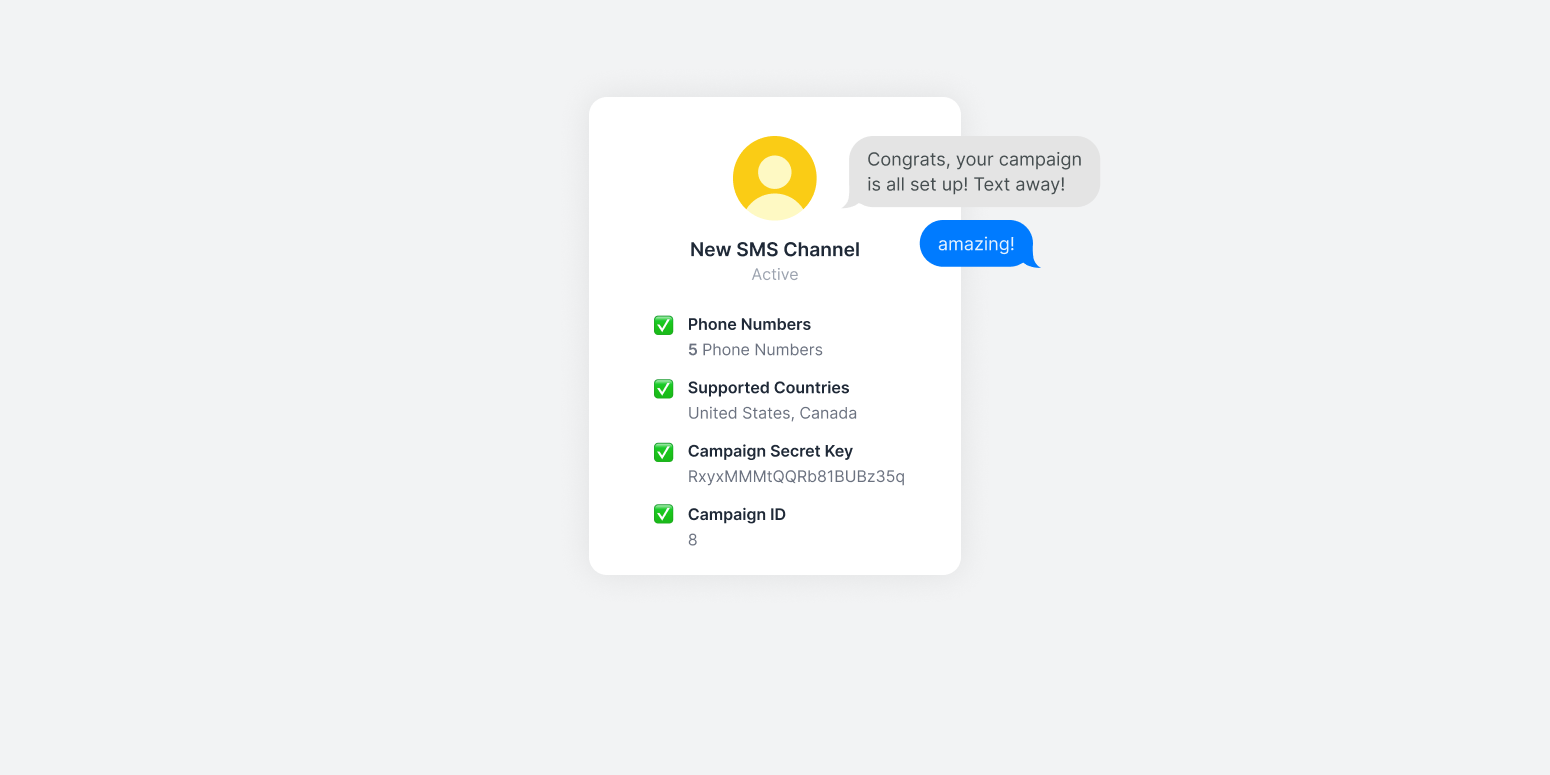
If you want to send A2P text messages in the U.S., 10DLC registration comes with the territory. Carriers use it to verify your brand, review your use case, and approve your messaging before you start sending over standard 10-digit numbers.
Some platforms give you a form and a checklist and leave your team to figure out the rest. Others help you get registered correctly, move faster, and avoid the kind of compliance issues that can slow down launch or create problems later.
That difference matters more than most teams expect. 10DLC is not just paperwork. It affects how quickly you get live, how much internal lift the process takes, and how confidently you can build from there.
The best platforms do more than help you get approved. They help you protect deliverability, maintain subscriber trust, and build texting into a channel you can actually rely on.
10DLC Registration Checklist
Last updated: August 2026
Before you start the 10DLC registration process, here's what to have ready and what to expect. This checklist is platform agnostic since exact intake steps vary by provider.
What to prepare:
-
A verified business identity (EIN or equivalent business registration number)
-
A dedicated business phone number
-
Your brand profile: legal business name, address, and industry or vertical
-
Sample messages that represent what you'll actually send subscribers
-
Documentation of your opt-in flow and consent language
The typical process:
-
Submit your brand profile to The Campaign Registry (TCR) through your SMS provider
-
Register your messaging campaign and select a use case category
-
Submit sample messages and opt-in documentation
-
Wait for carrier vetting and approval
-
Once approved, your numbers are provisioned for 10DLC sending
Timeline and Costs
Timelines and costs vary by provider. Some platforms include 10DLC registration in your subscription price, while others charge separate carrier and registration fees on top of usage costs. Before you commit to a platform, ask directly: Is registration included or billed separately? What's the typical approval timeline? Can they expedite registration for an urgent launch?
At A Glance: The Best SMS Platforms for 10DLC Registration
| Platform | Best Fit | Registration Experience | Key Strength | Main Tradeoff |
| Subtext | Teams that want compliant scale with hands-on support | White-glove | High-touch guidance, strong two-way engagement, compliance-first onboarding | Less suited for teams that want a purely DIY developer tool |
| ClickSend | Cost-conscious teams with straightforward sending needs | Guided | Simple setup and predictable pricing | Less depth for advanced audience segmentation and enterprise workflows |
| Twilio | Technical teams building custom messaging infrastructure | Self-serve | Flexible APIs and deep customization | Your team owns more of the compliance and operational lift |
| SMS Global |
International senders and pay-as-you-go use cases | Basic guided | Flexible usage model and broad geographic reach | Lighter onboarding and compliance support |
| Heymark | Service, sales, and support teams using collaborative inboxes | Guided | Shared inbox workflows with guided registration | Less flexible for highly custom technical implementations |
| Textline | Regulated teams that prioritize controls and business texting continuity | Guided | Strong operational controls and business-number use cases | Not the best fit for teams focused primarily on media-style audience engagement |
1. Subtext
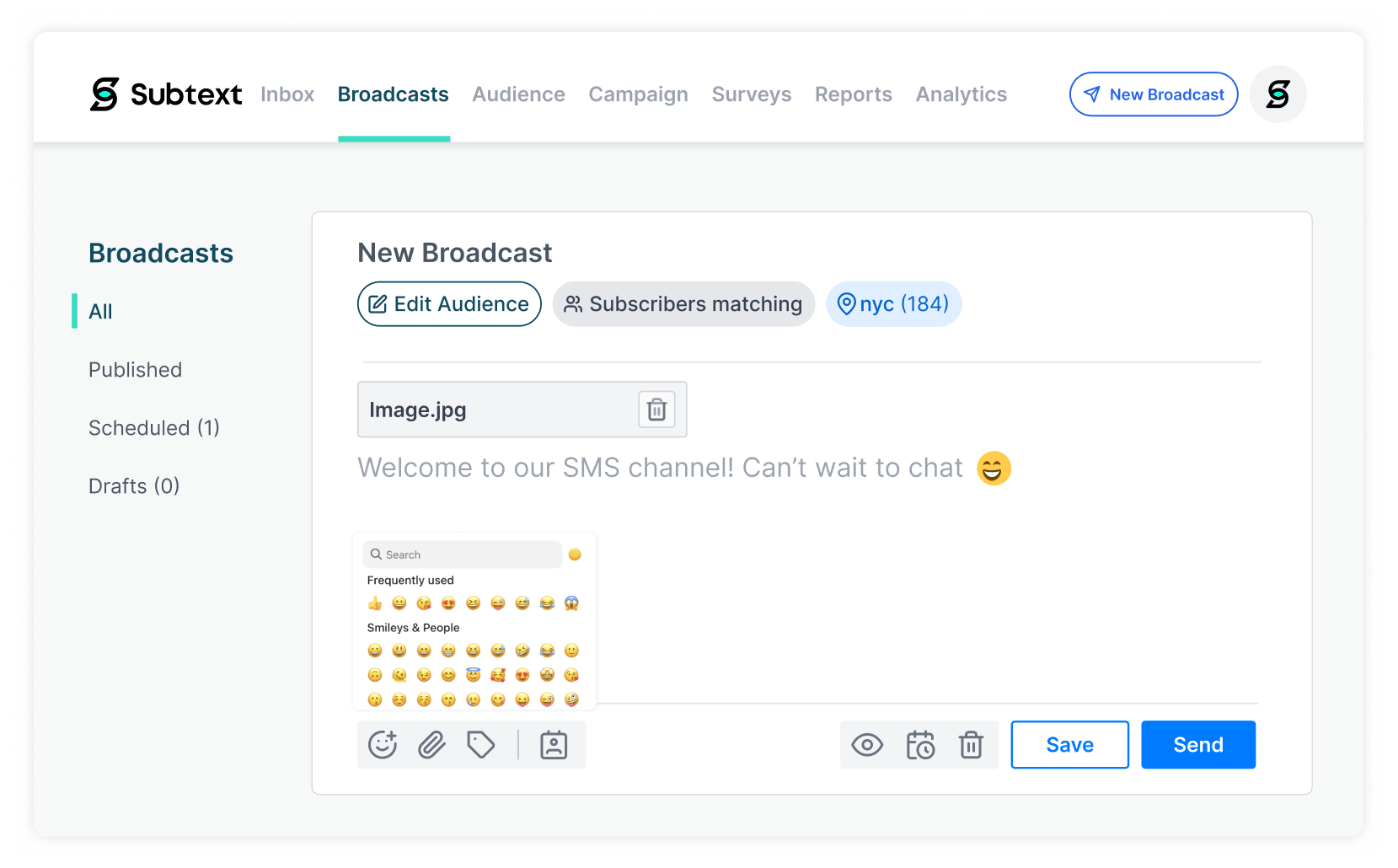
Subtext is built for teams that want 10DLC handled properly and a stronger SMS program once they’re live.
A lot of platforms can support registration. Subtext is different in how much of the process it helps carry. The team collects the required forms from you and handles registration materials, opt-in language, filings, and the details that can slow approvals or create issues later if they’re handled poorly.
That matters most for organizations where texting is tied to trust. If SMS is an audience channel, not just a broadcast tool, getting through registration is only part of the job. You also need a platform that helps you protect deliverability, manage replies, segment subscribers, and build a program people want to stay subscribed to.
Subtext is a strong fit for publishers, creators, brands, and membership organizations that want a more hands-on path to launch and a platform built for ongoing audience engagement.
Why Teams Choose Subtext:
-
White-glove support through registration and onboarding
-
Built for two-way audience engagement, not just message delivery
-
Segmentation, replies, and analytics in one platform
-
A team of SMS marketing experts
-
Less internal lift during setup and launch
- Handles filing? Yes. Subtext collects the required forms and manages registration materials, opt-in language, and filings for you. Registration and carrier fees are included in your platform subscription, with no separate 10DLC fee. Most clients are live within about two weeks of signing up, and Subtext can often move faster for urgent launches.
Best fit: Publishers, creators, brands, and membership organizations that want a more guided launch and a stronger long-term SMS program.
2. ClickSend
ClickSend focuses on value and predictability: transparent rates near $0.01 per text, unlimited contacts, and an entry plan around $22 /month, making budgeting straightforward for high‑volume or cost‑sensitive teams pricing reference. Its bundled TCPA and 10DLC tools streamline consent capture and campaign filings, which helps resource‑constrained teams launch quickly without building compliance workflows from scratch. While not the most customizable option, ClickSend’s simplicity plus predictable spend makes it a sensible pick for large contact lists and frequent broadcasts.
-
Best for: Budget‑minded brands that still need compliant onboarding
-
10DLC support: Guided forms, built‑in compliance prompts, basic review
-
Compliance tools: TCPA checklists, opt‑in workflows, link to required artifacts
-
Pricing: ~$22/month starter; $0.01/SMS; unlimited contacts pricing reference
-
Secondary keywords: budget SMS platform; TCPA compliance; per‑message cost
-
Limitation: Fewer advanced segmentation and enterprise admin controls
- Handles filing? Guided. ClickSend provides forms and built-in compliance prompts, but you review and submit the filing yourself.
Key takeaway: ClickSend offers a low‑cost, predictable pricing model with built‑in 10DLC tooling, ideal for budget‑focused teams that still require guided compliance.
3. Twilio
Twilio is ideal for technical teams that want granular API control, custom routing, and international reach, accepting the trade‑off that they’ll own more of the 10DLC process. U.S. SMS often starts around $0.0083/message with add‑on fees and carrier pass‑throughs, which can be cost‑efficient at scale for teams that automate filings and monitoring internally Twilio pricing. Twilio publishes extensive A2P 10DLC documentation covering brand vetting, use‑case declarations, and throughput impacts, but non‑technical teams may find the setup and ongoing maintenance demanding compared with guided platforms Twilio A2P 10DLC docs.
-
Best for: API‑based SMS; developer‑first SMS platform; global SMS platform
-
10DLC support: DIY filings and updates via console/API; rich docs
-
Compliance tools: Registrations, webhooks, logs; you configure guardrails
-
Limitation: Requires technical ownership of filings, artifacts, and changes
-
Pricing note: Unit rates plus carrier fees and registration costs apply
- Handles filing? No. Filings and ongoing updates are self-serve through the console or API. Your team owns the process end to end.
4. SMSGlobal
SMSGlobal appeals to teams that prefer pay‑as‑you‑go flexibility and global reach over bundled, heavy feature sets. With coverage in 200+ countries and straightforward onboarding, it’s a strong fit for intermittent or international senders who occasionally message U.S. audiences and need basic 10DLC prompts rather than intensive guidance coverage reference. While power users may outgrow its compliance tooling and analytics, the PAYG model keeps costs aligned with actual usage and simplifies procurement for multi‑region teams.
-
Best for: International SMS; pay‑as‑you‑go SMS; flexible SMS pricing
-
10DLC support: Basic guidance for brand/campaign submissions
-
Compliance tools: Opt‑in capture basics, unsubscribe handling, logs
-
Pricing: PAYG; rates vary by country coverage reference
-
Ideal when: You send sporadically in the U.S. and more abroad
-
Limitation: Lighter compliance workflows vs. enterprise platforms
- Handles filing? No. Basic prompts guide brand and campaign submissions, but the process is primarily self-managed.
Key takeaway: SMSGlobal is a flexible, PAYG solution ideal for globally‑distributed teams that need occasional U.S. 10DLC support without heavy compliance overhead.
5. Heymarket
Heymarket pairs a guided 10DLC registration flow with a conversational, team‑friendly inbox, removing technical guesswork for marketing and CX teams. The in‑app wizard walks you through brand verification, use‑case selection, and opt‑in requirements, then centralizes responses across shared inboxes—useful for regulated workflows in finance, healthcare, or distributed sales where audit trails matter source. While less API‑heavy than developer platforms, it accelerates compliant launches for teams that value clarity and collaboration.
-
Best for: Guided 10DLC onboarding; team inbox SMS; compliance features for SMS
-
10DLC support: Step‑by‑step wizard with artifact capture
-
Compliance tools: Opt‑in storage, permissions, role controls
-
Use cases: Regulated industries, multi‑rep sales, service operations
-
Limitation: Less customization than pure API providers
-
Pricing: Tiered plans; check for seat/inbox needs source
- Handles filing? Guided. An in-app wizard walks you through brand verification and use-case selection, though you complete the submission yourself.
Key takeaway: Heymarket streamlines 10DLC registration through an in‑product wizard, making it perfect for non‑technical teams that need collaborative inbox features and audit‑ready compliance.
6. Textline
Textline specializes in regulated industries, offering HIPAA and SOC 2‑oriented controls, per‑number billing, and text‑enablement for landlines, VoIP, and Microsoft Teams numbers. This “bring your business numbers” approach supports continuity and compliance while keeping costs predictable for teams organized around lines rather than message volumes overview reference. The platform’s compliance features are deeper than typical SMB tools, making it a compelling fit for healthcare, financial services, and professional services with sensitive workflows.
-
Best for: HIPAA‑compliant SMS; business texting platform; per‑number SMS pricing
-
10DLC support: Guided filings; help with number mapping and continuity
-
Compliance tools: HIPAA/SOC 2 controls, audit logs, data policies
-
Pricing: Per‑number plans; predictable per‑line billing; optional add‑ons for usage and seats overview reference
-
Use cases: Healthcare, financial services, and professional services that need auditability and to text‑enable existing landline/VoIP/Teams numbers
-
Limitation: Less suited for ultra‑high‑scale broadcast marketing or developer‑heavy, API‑only workflows
- Handles filing? Guided. Textline offers assisted filings along with support for number mapping and business-line continuity.
Key takeaway: Textline blends per‑number pricing with HIPAA/SOC 2 safeguards and number continuity, making it a strong choice for regulated teams that must keep existing business lines while meeting 10DLC requirements.
What Actually Matters in a 10DLC-Ready SMS Platform
A lot of vendors can help you submit a registration form. Far fewer help you launch a program that is built to last.
When you evaluate 10DLC-ready SMS platforms, look for more than basic registration support. The most important questions are:
1. How much of the registration burden stays on your team?
Some platforms provide documentation and leave the rest to you. Others guide the process or handle most of it directly. That difference affects launch speed, approval quality, and how much time your team spends managing compliance instead of building the program.
2. Does the platform help you document consent clearly?
10DLC is not just about forms. It is about proving that your opt-in flows, disclosures, and messaging behavior align with carrier requirements. A platform that helps teams operationalize that process is far more useful than one that simply accepts campaign details.
3. What happens after approval?
This is where many comparisons fall short. Registration is the beginning, not the end. Once you are live, you need a platform that helps you segment audiences, manage replies, support real conversations, and protect trust over time.
4. Is the product built for your kind of team?
A technical team building custom infrastructure should evaluate platforms differently than a media company, creator business, or brand team launching audience messaging. The best platform is the one that matches your internal resources and your actual use case.
Which Platform is Right for You?
The answer depends less on whether a vendor “supports 10DLC” and more on how you plan to run SMS.
-
Choose Subtext if you want your registration handled for you, a lower-risk path to launch and a platform built for real audience engagement.
-
Choose Twilio if you have engineering resources and want to build a custom messaging stack.
-
Choose ClickSend if price and simplicity matter more than depth.
-
Choose SMSGlobal if your needs are flexible and internationally oriented.
-
Choose Heymarket if your primary use case is collaborative, service-oriented messaging.
-
Choose Textline if your workflows prioritize structured business texting and operational controls.
For teams that care about trust, deliverability, and building an owned channel people actually engage with, 10DLC should be treated as a starting point, not the strategy. Subtext is the strongest fit for organizations that want both.
Ready to Launch a Compliant SMS Program Without the Usual 10DLC Friction?
Publishers, creators, brands, and membership organizations that want a more guided launch and a stronger long-term SMS program. The value is not just in making 10DLC easier. It is in helping teams get live faster, protect trust, and build a channel that keeps delivering after registration is done.
If you want a platform that can help you navigate registration and build a stronger audience messaging program from day one, book a demo with Subtext.