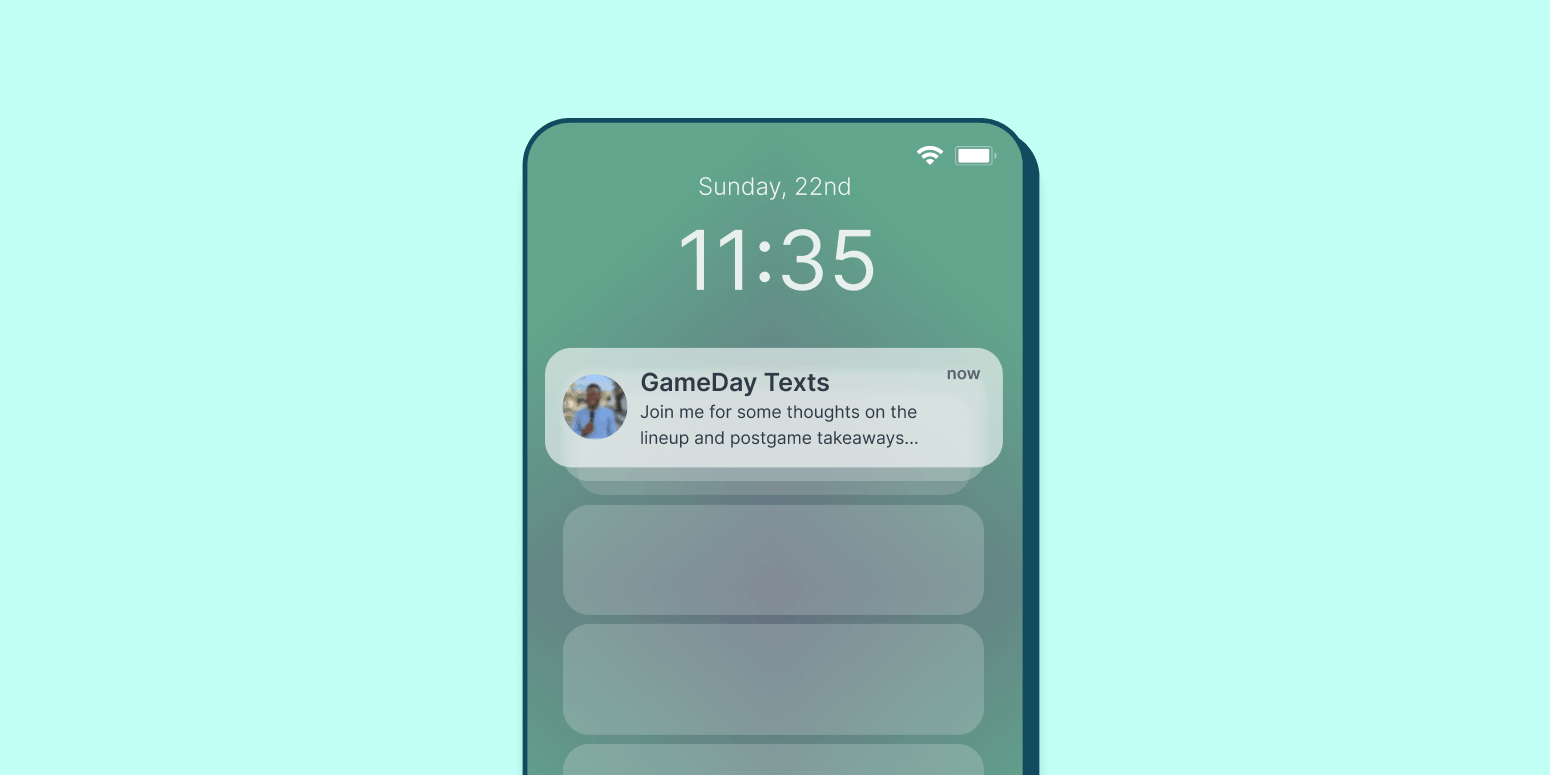
Sports audiences are built on urgency, loyalty, and conversation.
A trade rumor drops. A lineup changes. A coach makes a questionable call. A fan has a take before the broadcast crew even has a replay. Sports fandom moves fast, and the best audience strategies meet fans in that moment.
That is what makes SMS such a strong fit for sports publishers, podcast hosts, journalists, teams, and creators, especially when it is powered by a platform built for two-way audience engagement. With Subtext, texting gives you a direct line to your most engaged fans, the people who want analysis, reactions, updates, questions, and community without waiting for an algorithm to decide whether they see your post.
But launching a successful Subtext campaign takes more than announcing a phone number. The strongest campaigns give fans a clear reason to subscribe, show up consistently after launch, and make the conversation feel worth being part of.
Use this playbook to plan, launch, and grow a sports SMS campaign with Subtext that turns fan attention into a loyal, directly reachable community and creates measurable value for your business.
Why Text in Sports With Subtext
Sports fans do not engage passively. They react, debate, predict, defend, celebrate, complain, and come back the next day to do it again.
That behavior makes sports especially well-suited for SMS. Texting is immediate, personal, and built for quick back-and-forth interaction. With Subtext, that direct line becomes more than a messaging channel. It becomes an owned audience relationship you can use to reach fans, hear from them, and turn engagement into measurable action.
For sports creators and publishers, that direct connection matters because so much of the value happens between major content moments.
A podcast episode may be published once a day or a few times a week. A column may run after a game. A social post may only reach a fraction of followers. But a texting channel can keep the conversation alive in between.
Use Subtext to:
-
React quickly to breaking news, injury updates, trades, lineup decisions, or game results.
-
Share behind-the-scenes thoughts that do not need to become a full article or episode.
-
Ask fans for questions, predictions, and hot takes.
-
Source ideas for future podcast segments, videos, newsletters, or articles.
-
Build loyalty by making fans feel seen, heard, and included.
-
Drive attention back to your highest-value content, events, offers, and community moments.
-
Sell tickets, promote merch, drive paid memberships, and support sponsor activations through a direct audience channel.
Subtext is not just a way to distribute sports content by SMS. It can become the connective tissue between your content, your personality, your audience, and your revenue strategy.
How to Use This Playbook
This playbook is designed for sports publishers, beat reporters, podcast hosts, creators, and media teams launching or improving a sports-focused Subtext campaign.
You can use it before launch to build your campaign plan, or after launch to add more structure to your cadence and content mix.
Start with the core setup steps, then choose the modules that fit your audience, sport, season, and coverage model. You do not need to use every module at once. The strongest Subtext campaigns usually start with a few repeatable formats and expand once fans begin responding.
Step 1: Define the Promise
Before asking fans to subscribe to your Subtext channel, be clear about what they are signing up for.
A vague promise like “get sports updates by text” is not enough. Fans need to understand why your Subtext channel is different from following you on social media, reading your site, or listening to your podcast.
A stronger promise might sound like:
Get my unfiltered Saints reactions, fan questions, and breaking news thoughts by text all season long.
Or:
Join our team text thread for behind-the-scenes practice updates, game-day reactions, exclusive ticket offers, and subscriber-only Q&As.
Or:
Text with our beat reporter for lineup updates, trade deadline thoughts, and postgame takeaways you will not get anywhere else.
Your promise should answer three questions:
-
Who is this for?
-
What will subscribers get?
-
Why is texting the best place to get it?
Once that promise is clear, use it everywhere: your launch article, podcast reads, social posts, Subtext sign-up page, QR code promotions, and website embeds.
Step 2: Set Your Cadence
Consistency is one of the biggest factors in whether fans stay subscribed.
The strongest sports texting channels do not disappear after launch. They show up regularly, create a rhythm, and make fans feel like the Subtext conversation is active.
For most sports campaigns, a good starting cadence is 3–5 texts per week. That gives you enough room to provide ongoing value without making the channel feel noisy.
You may send more often during high-interest moments, such as:
-
Game days
-
Playoff runs
-
Draft week
-
Trade deadlines
-
Free agency
-
Coaching changes
-
Major injury news
-
Rivalry games
-
Tournament coverage
-
Big breaking news windows
You may send less often during quieter offseason periods, but the channel should not go completely silent. Fans subscribed because they want access. Even a weekly offseason pulse check, question prompt, or insider-style observation can keep the relationship warm.
Weekday texts often perform especially well for sports audiences, particularly around midday and early afternoon. A window like 12–3 p.m. Eastern can work well for commentary, questions, and content promotion. Game-day timing will vary, but the general rule is simple: text when fans are most likely to care and have enough attention to respond.
Step 3: Build the Launch Path
A strong Subtext launch depends on more than the channel itself. Fans need repeated, clear, easy ways to subscribe.
Use multiple acquisition paths at the same time so fans can join from wherever they already engage with you.
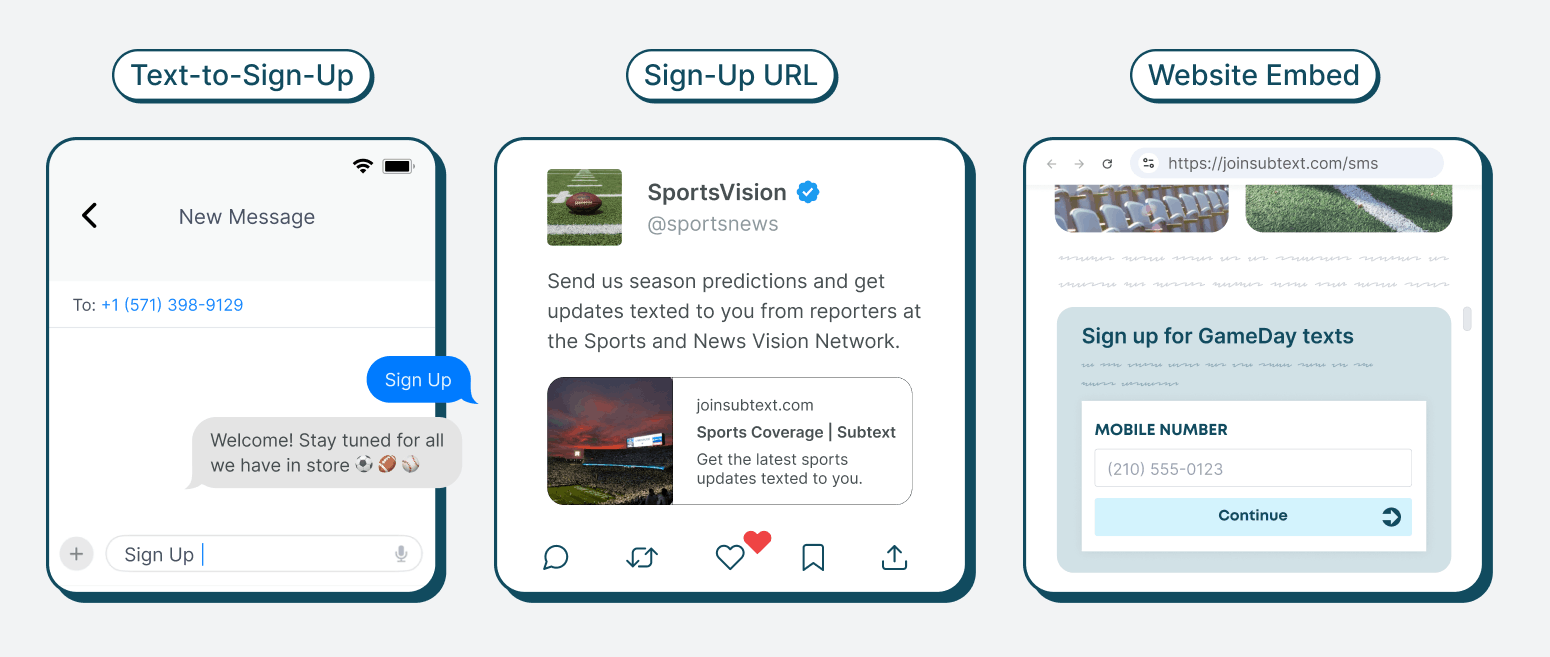
Text-to-Sign-Up
The easiest entry point is letting fans text your number to start the sign-up process.
For some campaigns, a dedicated keyword can make this even smoother. For example, fans might text “SAINTS,” “DRAFT,” or “JOIN” to begin subscribing automatically.
This works especially well for podcast reads, live events, radio mentions, social videos, and printed promotions.
Sign-Up URL
Every Subtext campaign should have a dedicated sign-up page.
Use that URL in:
-
Social bios
-
Link-in-bio tools
-
Podcast show notes
-
Newsletter modules
-
Article footers
-
YouTube descriptions
-
Creator profile pages
-
Team or publication landing pages
The landing page should clearly explain what fans get by subscribing and how often they can expect to hear from you.
Website Embed
If your audience already visits your website, make the texting channel visible there.
A Subtext embedded sign-up form can help convert readers while they are already engaged with your sports coverage. Consider placing it on:
-
Sports section pages
-
Team-specific pages
-
Article templates
-
Podcast pages
-
Newsletter sign-up pages
-
Live blog pages
-
Season preview hubs
This is especially valuable for publishers and media companies with consistent search or direct traffic.
Audience Imports
Already have mobile numbers from ticket buyers, members, event attendees, newsletter subscribers, or previous campaigns?
Audience imports can help you bring an existing, permissioned audience into Subtext so you are not starting from zero. This is especially useful for teams, leagues, publishers, and sports organizations that already have fan relationships across ticketing, memberships, events, or owned databases.
Use imports to:
-
Re-engage known fans with a more direct channel
-
Segment audiences by team, market, event, or interest
-
Promote renewals, ticket offers, memberships, or premium content
-
Reduce reliance on paid channels to reach people who already know your brand
The key is permission and expectation-setting. Fans should understand why they are hearing from you, what kind of value they will receive, and how often you plan to text.
API and Webhooks
For teams and publishers with more advanced workflows, the Subtext API and webhooks can help connect texting to the rest of your audience and revenue stack.
That can mean triggering sign-up flows from your site or app, connecting Subtext to internal tools, syncing audience activity, or using webhooks to understand how subscribers are engaging. For sports organizations, this can be especially valuable around ticketing, memberships, event promotions, live coverage, and sponsor activations.
Use API and webhook workflows to:
-
Connect Subtext to existing fan databases or CRM systems
-
Trigger timely messages around key moments or campaigns
-
Track subscriber actions that matter to your business
-
Support more personalized audience journeys
-
Tie engagement back to revenue-driving initiatives
This is where Subtext can move beyond one-off texting and become part of a larger fan engagement engine.
Launch Article
A dedicated launch article is one of the strongest ways to explain the value of the campaign.
This article should answer:
-
Who is hosting the texting channel?
-
What will fans receive?
-
How often will they get texts?
-
Why is the channel worth joining?
-
How do they sign up?
For loyal readers, the launch article acts as a formal invitation. It also gives you a permanent asset to link across social, newsletters, podcasts, and future sports coverage, turning existing attention into a reachable audience you can continue engaging through Subtext.
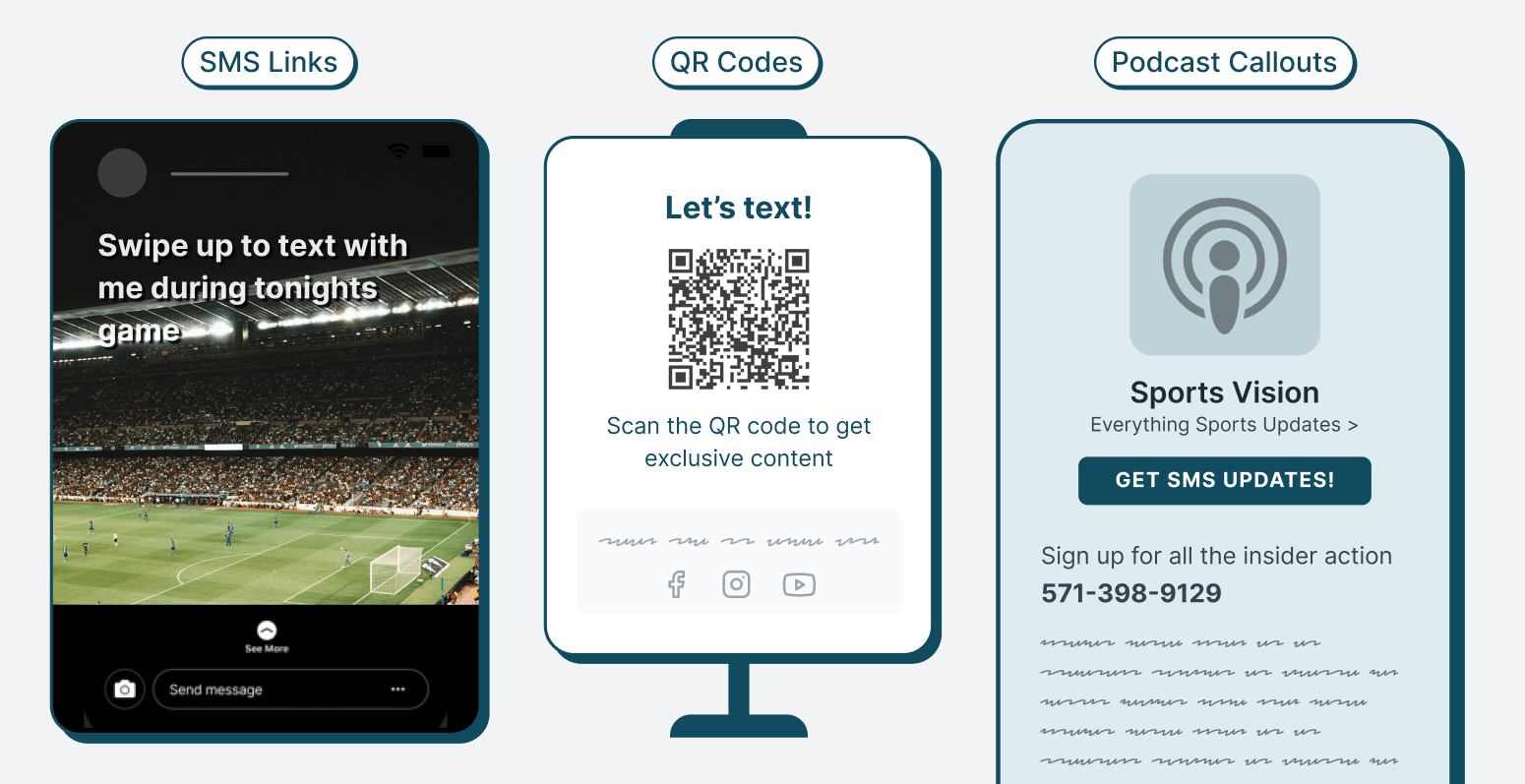
SMS Links
Subtext SMS links are especially useful on mobile-first platforms like Instagram, TikTok, and Reels.
When tapped on a mobile device, an SMS link opens the fan’s messaging app with your Subtext campaign number already loaded. The fan only needs to hit send to begin the sign-up process.
Use SMS links in:
-
Instagram Stories
-
Reels captions
-
TikTok captions
-
Link stickers
-
Social bios
-
Short-form video CTAs
-
Influencer or host promotions
The fewer steps it takes to subscribe, the more likely fans are to follow through.
QR Codes
QR codes are ideal for in-person and offline sports environments.
Use them on:
-
Tailgate signage
-
Event flyers
-
Live podcast posters
-
Stadium-adjacent promotions
-
Watch party materials
-
Merch inserts
-
Press box or media event materials
-
Sponsor activations
For sports, QR codes are particularly useful because fan interest is often highest in live environments. When someone is already at a game, event, or meetup, joining the text list feels natural.
Podcast Callouts
For sports podcasters, the podcast itself is one of the highest-intent acquisition channels.
Your most loyal listeners are already giving you their time. A clear, repeated callout can convert those listeners into SMS subscribers.
A strong podcast read should be specific and benefit-led:
I’m starting a text thread for the fans who want my quick reactions between episodes. I’ll send postgame thoughts, questions for the show, and a few subscriber-only takes each week. Text [keyword] to [number] to join.
Repeat the callout regularly, especially during high-interest parts of the season.
Step 4: Plan Your First Two Weeks
Do not wait until after launch to decide what to send.
Plan at least two weeks of messages before announcing the campaign. This gives your Subtext channel momentum from the start and helps fans understand what kind of value they will receive.
A simple launch sequence could look like this:
Message 1: Welcome and expectation setting
You’re in. I’ll use this thread for quick reactions, questions, and subscriber-only thoughts throughout the season. First question: What topic do you want more of here?
Message 2: Preference or interest check
What do you care about most right now: roster moves, game analysis, draft/free agency, or behind-the-scenes league talk?
Message 3: Subscriber-only take
One thing I did not get to say on today’s episode: I think this lineup change is more about matchups than performance.
Message 4: Question prompt
Recording tomorrow. Send me your best question about this team and I may use it on the show.
Message 5: Content with context
I broke down why Sunday’s loss felt different. The short version: this was less about effort and more about decision-making. Full piece here: [link]
Message 6: Fan participation or poll
Prediction time: who has the bigger game this weekend, the rookie or the vet? Reply ROOKIE or VET.
This early structure sets the tone: fans can expect commentary, access, questions, and useful links, not generic blasts.
Step 5: Decide How You Will Measure Success
Before you start sending regularly, decide which signals matter most for your sports Subtext campaign.
Subtext’s 2026 SMS Marketing Benchmark Report found that sports campaigns generated a 37.40% click-through rate and a 49.10% engagement rate, making sports one of the strongest verticals for audience action. That matters for teams, publishers, and creators because sports engagement is often tied to timely moments: lineup changes, trade news, game-day coverage, ticket releases, merch drops, and sponsor activations.
Subscriber growth matters, but it should not be the only way you judge success. The bigger goal is to build a direct, engaged fan community that strengthens the rest of your audience strategy and helps create or protect revenue.
That means measurement should look at the core signals that show whether your Subtext campaign is growing, engaging, retaining, and converting the right fans:
-
Audience size and quality: Are you building a compliant, loyal list of fans who understand the value of the channel and are likely to engage?
-
Response rate: Are subscribers replying to questions, polls, hot takes, and prompts? For community-driven sports campaigns, this is one of the clearest signs of participation.
-
Click-through rate: Are Subtext messages driving fans to podcast episodes, articles, videos, newsletters, live blogs, subscription pages, event pages, merch offers, or sponsor activations?
-
Churn rate: Are fans staying subscribed after the first few weeks, or are they opting out because the cadence, content, or expectations feel off?
-
Growth rate: Is your audience growing steadily over time through launch articles, podcast mentions, website embeds, social channels, QR codes, SMS links, and other entry points?
-
Tag-based engagement and segmentation: Are replies, clicks, preferences, or repeat behaviors helping you identify high-value fan segments?
-
Conversion and revenue impact: Are texts helping sell tickets, drive paid subscriptions, support sponsorship packages, promote merchandise, increase event attendance, collect first-party data, or reduce reliance on paid social promotion?
For sports campaigns, replies are especially important. A reply shows that a fan is not just receiving the message. They are participating in the conversation. For teams and publishers trying to prove ROI, participation can also create value: better content ideas, stronger sponsor inventory, higher event turnout, more qualified leads, and deeper loyalty from the fans most likely to convert.
For a deeper breakdown of delivery, engagement, conversion, and retention metrics, our guide to SMS marketing metrics covers what teams should monitor when evaluating Subtext as part of a broader audience engagement and revenue strategy.
A simple sports SMS measurement framework could look like this:
| Goal | What to Track | Why it Matters |
| Grow the right audience | New subscribers by source, audience quality, growth rate | Shows which promotion channels are attracting fans who are likely to engage or convert |
| Drive engagement | Response rate, poll participation, repeat replies, tag-based engagement | Shows whether fans are interacting, not just receiving |
| Keep fans subscribed | Churn rate, opt-outs, retention trends | Shows whether cadence and content are meeting expectations |
| Support content | Click-through rate to articles, podcasts, videos, newsletters, or live blogs | Shows how Subtext moves fans into deeper engagement |
| Drive direct revenue | Ticket sales, merch sales, paid subscriptions, memberships, premium content purchases, event registrations | Shows how Subtext can turn fan attention into measurable revenue |
| Support sponsor value | Sponsor activation clicks, branded content engagement, event attendance, offer redemptions | Shows how Subtext can create stronger proof of engagement for partners |
| Save spend | Organic sign-ups, repeat engagement, reduced dependency on paid social retargeting | Shows how owned audience channels can lower acquisition and re-engagement costs |
Set a baseline during your first few weeks, then use the data to adjust. If reply rates are strong, lean into interactive formats. If clicks are strong but replies are low, test more questions. If sponsor or ticket links perform well, build those moments into your campaign calendar. If opt-outs rise after high-frequency sends, tighten your cadence or segment more carefully.
Measurement should not make the campaign feel rigid. It should help you understand what fans value most and where Subtext is creating business impact.
Step 6: Pick Your Subtext Campaign Modules
Choose the modules that fit your sport, audience, and content operation. Some are best for podcasts. Some are stronger for publishers. Others work especially well around live events or major sports moments.
You can rotate these modules throughout the season.
Module A: Breaking News Reaction
Purpose
Help fans understand what just happened and why it matters.
When to Use It
Use this module around trades, injuries, roster moves, coaching changes, lineup decisions, schedule changes, front office news, or major league announcements.
How to Run It
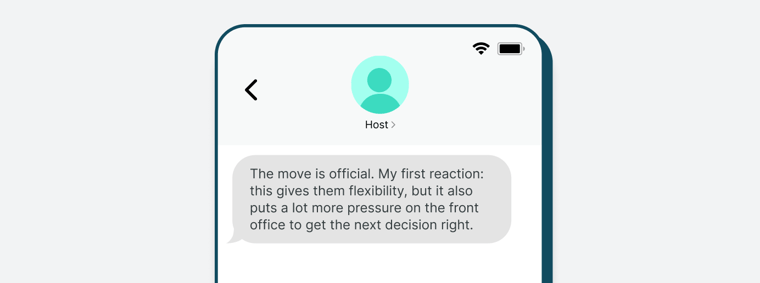
Send a short, timely reaction that gives subscribers context they cannot get from a generic alert. Avoid simply repeating the news. Add your read.
Example Texts
Injury update just dropped. The timeline is not ideal, but the bigger question is how they adjust the rotation this week.
This trade feels like a bet on the next two years, not just this season. I’ll explain more on the show, but that is my first read.
Cadence
As needed. Use during high-interest news moments, but do not text every minor update unless your audience expects real-time coverage.
Measure
Look at replies, clicks, and unsubscribes around breaking news sends. Strong replies usually mean the analysis is useful. Unsubscribes may indicate the update was too frequent, too generic, or poorly timed.
Common Failure Mode
Sending alerts without analysis. Fans can get basic news anywhere. They subscribe to your texts because they want your perspective.
Module B: Subscriber-Only Takes
Purpose
Make your Subtext channel feel like a valuable insider space, not a repeat of what fans already see elsewhere.
When to Use It
Use this module when you have a quick thought, early read, or behind-the-scenes observation that does not need to become a full article, post, or episode.
How to Run It
Share something that feels more direct or personal than your public-facing content. It can be a gut reaction, prediction, caveat, concern, or detail that did not make the final cut elsewhere.
Example Texts
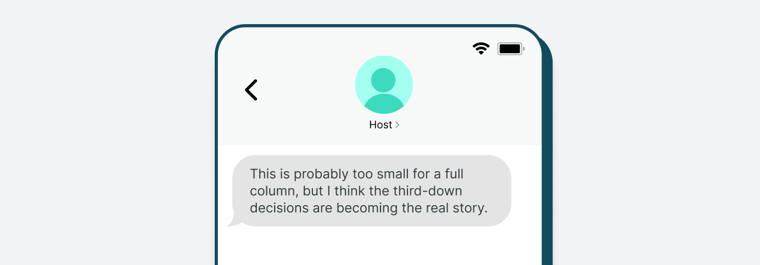
One thing I have not said publicly yet: I think the lineup change is less about performance and more about matchups this week.
My quick read on the trade: I like the player, but the timing tells me something bigger may still be coming.
Cadence
1–2 times per week during active coverage periods.
Measure
Track replies and retention. This module should make subscribers feel like staying subscribed gives them access they would miss elsewhere, which can support retention, loyalty, and future conversion opportunities.
Common Failure Mode
Making the “exclusive” feel generic. The text should feel like it belongs in SMS, not like copy-pasted social content.
Module C: Fan Questions and Mailbag Prompts
Purpose
Turn Subtext replies into future content.
When to Use It
Use this before podcast recordings, mailbag columns, YouTube videos, newsletters, live chats, or Q&A segments.
How to Run It
Ask for specific questions tied to a timely topic. Broad prompts like “send questions” can work, but more focused prompts usually get better responses.
Example Texts
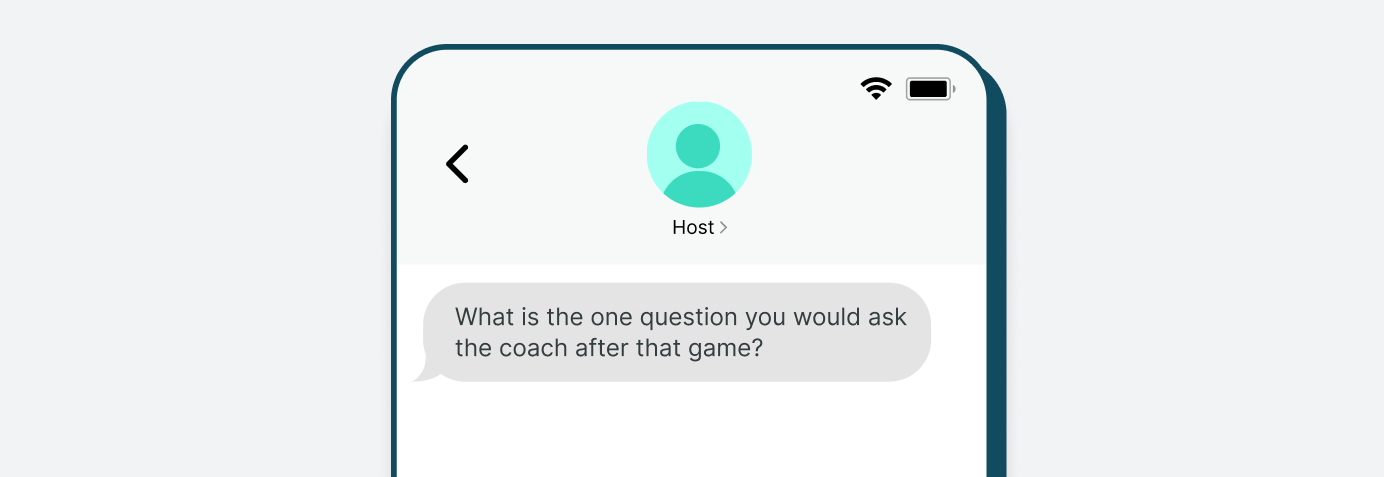
Recording tomorrow. Send me your biggest question about the offense and I may use it on the show.
I’m putting together a mailbag on the trade deadline. What is the move you most want explained?
Cadence
Weekly or tied to your content calendar.
Measure
Track reply volume, quality of questions, and how often Subtext replies become podcast segments, articles, videos, or sponsored content opportunities.
Common Failure Mode
Asking too broadly. Fans respond better when they know exactly what kind of question you want.
Module D: Polls and Predictions
Purpose
Create fast, lightweight participation around games, roster decisions, and fan debates while learning what your most engaged fans care about.
When to Use It
Use before games, after games, around lineup decisions, during draft/free agency periods, or when a debate is already active in the fanbase.
How to Run It
Ask a simple question with clear response options. Keep it easy enough that fans can reply in seconds.
Example Texts
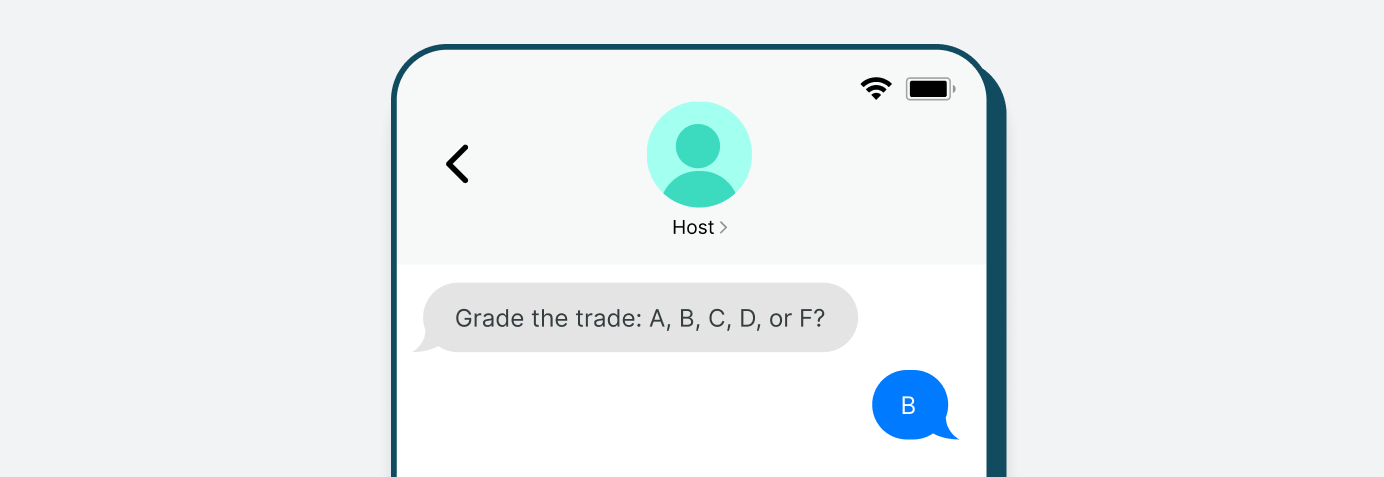
Prediction time: who wins tonight? Reply HOME or AWAY.
Should they start the rookie this week? Reply YES or NO.
Biggest concern after that loss: coaching, execution, injuries, or depth?
Cadence
1–2 times per week during the season, with more during major moments.
Measure
Look at response rate and whether results create useful follow-up content, audience insights, or sponsor-friendly engagement moments.
Common Failure Mode
Making the question too complicated. The easier it is to answer, the more fans will participate.
Module E: Fan Shoutouts
Purpose
Make Subtext subscribers feel seen and encourage better replies.
When to Use It
Use when a fan makes a smart prediction, asks a strong question, or has a take that comes to fruition.
How to Run It
Acknowledge the subscriber or group of subscribers in a follow-up text, podcast segment, article, or social post. Keep privacy in mind and avoid sharing personal details without permission.
Example Texts
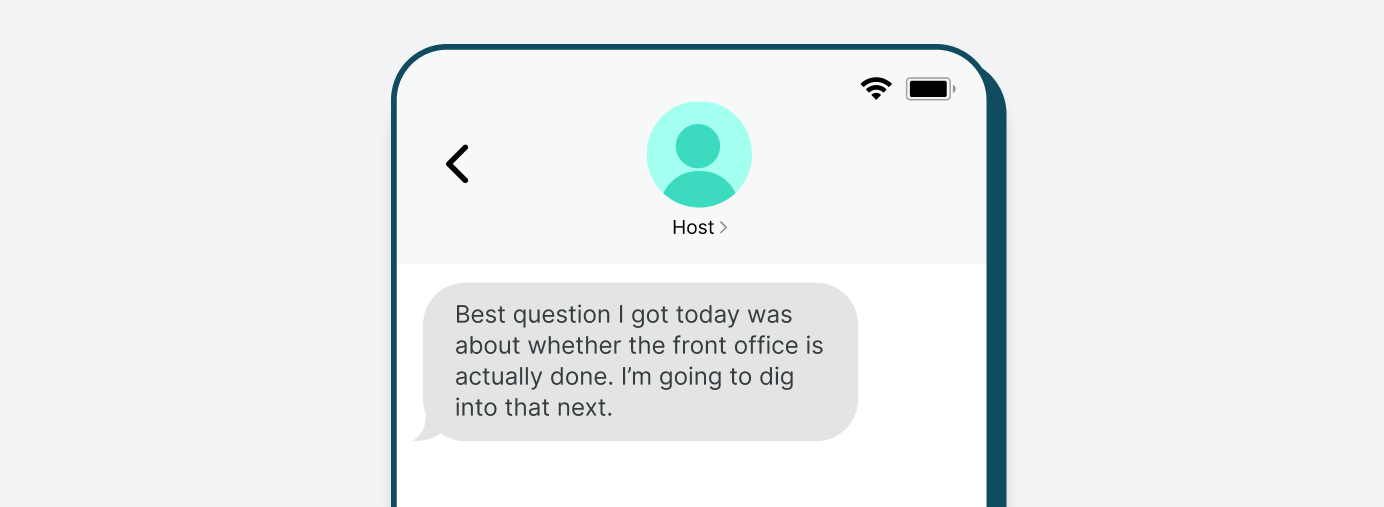
Shoutout to everyone who called the defensive adjustment before kickoff. You were right.
A few of you predicted this move last week. I did not think they would do it this soon.
Cadence
As earned. This works best when it feels genuine, not forced.
Measure
Watch whether shoutouts increase reply quality and repeat participation.
Common Failure Mode
Only highlighting the loudest voices. Balance fun fan participation with thoughtful contributions.
Module F: Event and Meetup Promotion
Purpose
Move your community from passive audience to active participation, while creating moments that can support ticket sales, event revenue, sponsor value, or membership growth.
When to Use It
Use for tailgates, watch parties, live podcasts, fan meetups, in-person events, sponsor activations, or subscriber-only experiences.
How to Run It
Use Subtext for invitations, reminders, day-of logistics, and post-event follow-up. Texting is especially useful when fans are on the move or already near the event, which makes it valuable for driving attendance and reducing no-shows.
Example Texts
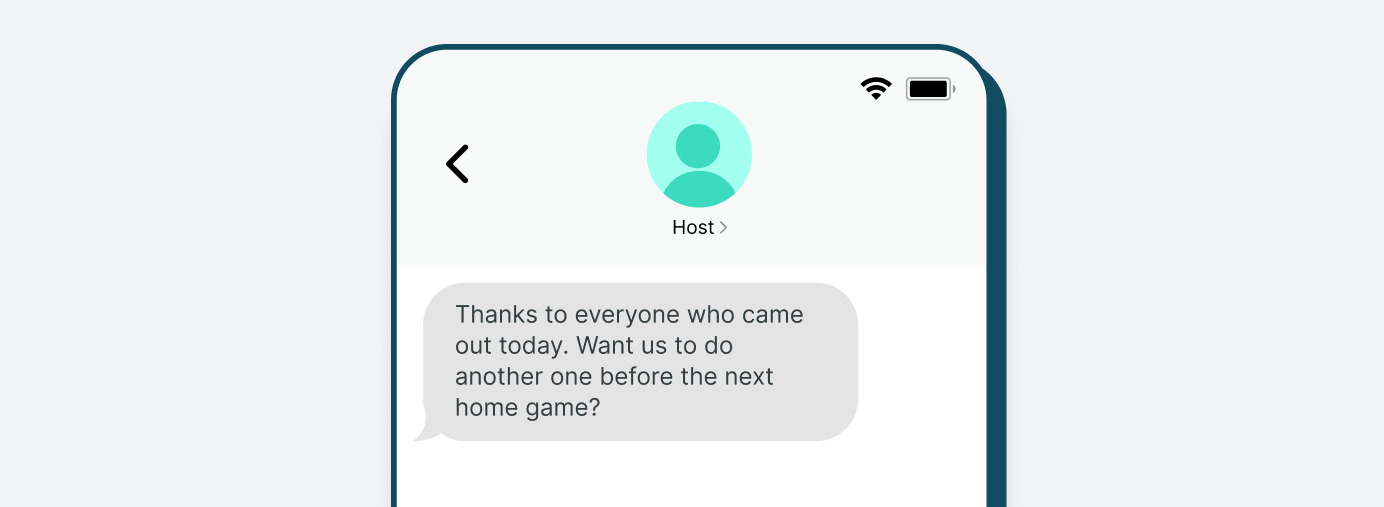
We’re hosting a pregame meetup Sunday at [location]. Subscribers get first RSVP access here: [link]
Tailgate reminder: we’ll be at [location] starting at 11. Reply if you’re planning to stop by.
Cadence
Use in the lead-up to events, day-of, and immediately after.
Measure
Track RSVPs, attendance, replies, repeat event interest, and any direct revenue tied to the event or activation.
Common Failure Mode
Only sending one announcement. Events need reminders, logistics, and follow-up to drive attendance.
Module G: Content Distribution With Context
Purpose
Drive fans to your broader content without making your Subtext channel feel like a link feed.
When to Use It
Use when promoting articles, podcast episodes, videos, newsletters, live blogs, rankings, previews, recaps, analysis, subscription offers, sponsor content, or revenue-driving campaigns.
How to Run It
Lead with the value or strongest angle before sharing the link. Tell subscribers why the content matters.
Example Texts
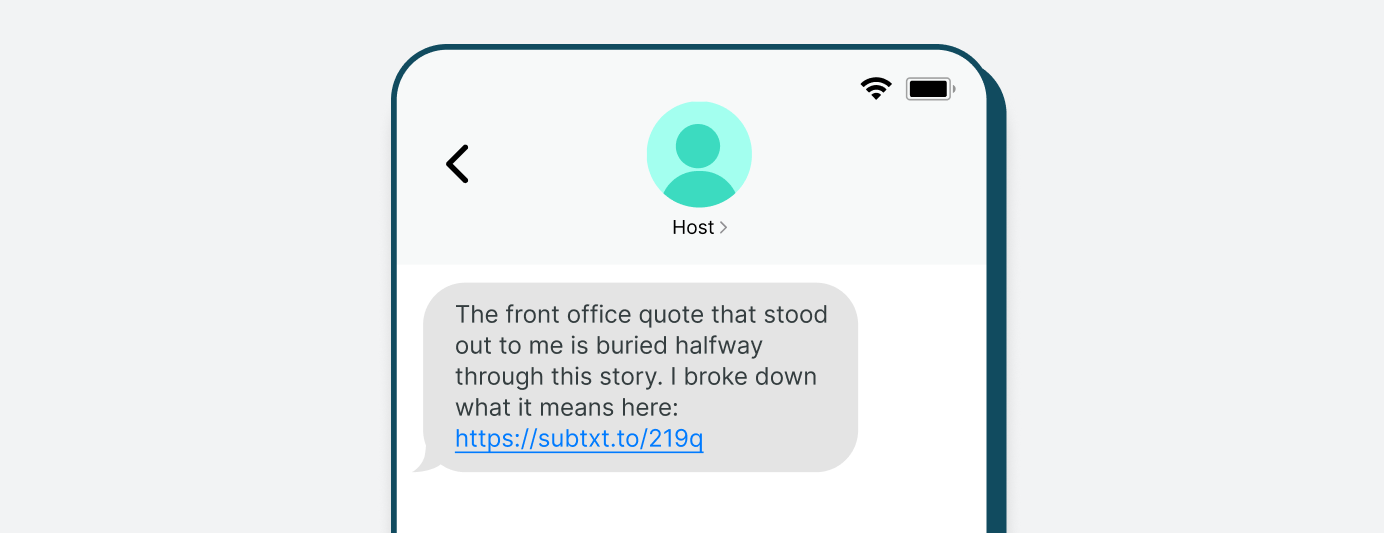
I spent the first 10 minutes of today’s episode on why this loss felt different. Curious if you agree: [link]
I ranked the three decisions that shaped the game. No. 2 is the one I think fans will argue about most: [link]
Cadence
Use as part of your regular rhythm, but avoid making every send promotional.
Measure
Track clicks, downstream engagement, conversions, and whether content-linked texts generate replies.
Common Failure Mode
Sending “new episode is live” or “read more here” without context. SMS should provide value before asking for a click.
Module H: Game-Day Coverage
Purpose
Use Subtext to meet fans during the moments they care about most.
When to Use It
Use before, during, or after games, depending on your coverage model and audience expectations.
How to Run It
Decide whether your game-day texts will focus on pregame context, halftime notes, postgame reactions, or next-day analysis. You do not need to text constantly to be useful.
Example Texts
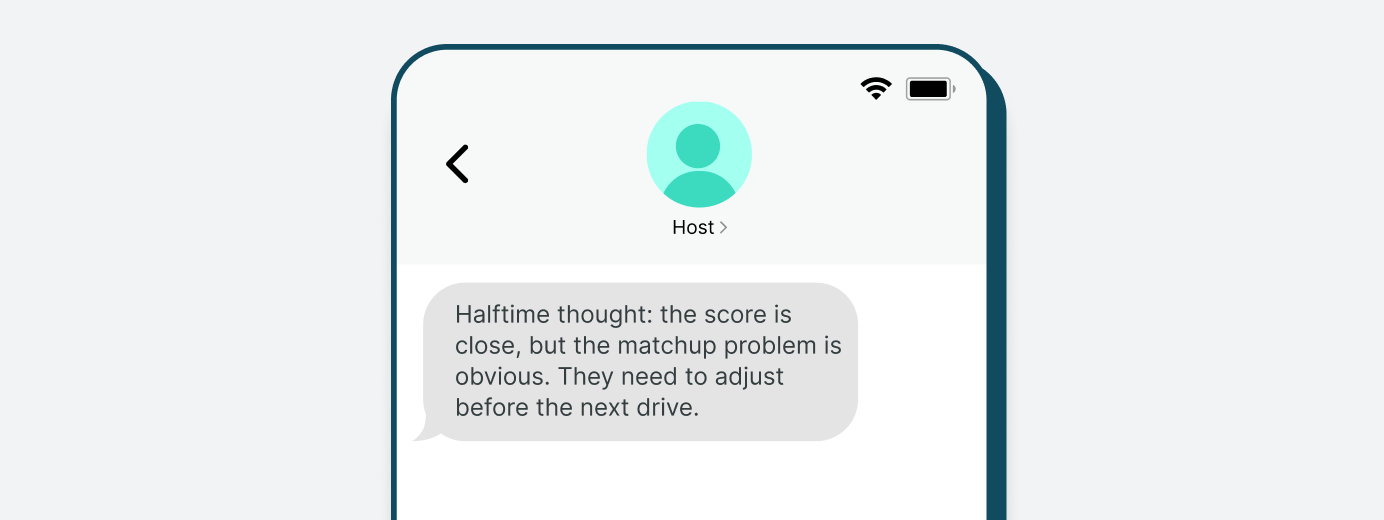
Inactives are out. The secondary is thinner than expected, so watch how much help they give over the top early.
Instant reaction: that win looks better on paper than it felt live. I’ll explain why tomorrow.
Cadence
Game-day cadence depends on the sport and audience. Start with one pregame or postgame text, then increase only if fans respond well.
Measure
Track reply rate, opt-outs, and timing. Game-day engagement can be strong, but over-messaging during live events can wear fans out.
Common Failure Mode
Texting too much during the game. Unless fans opt into live updates, focus on the moments where your perspective adds the most value.
Module I: Revenue-Driving Campaigns
Purpose
Turn fan attention into measurable business outcomes, such as merch sales, ticket sales, paid subscriptions, memberships, premium content, event registrations, or sponsor activations.
When to Use It
Use this module when you have a clear action you want fans to take and a strong reason for them to act now. This can work around big games, rivalry weeks, playoff pushes, season launches, ticket renewals, merch drops, fan events, live shows, paid community upgrades, or sponsor offers.
How to Run It
Start with the value to the fan, not the promotion. The message should feel timely, relevant, and connected to the moment. Subtext works well here because you are reaching fans who have already opted into a more direct relationship with your brand, team, host, or publication.
For best results, tie the offer to context fans already care about: a home game, a winning streak, a new season, a special guest, a limited-edition item, or a subscriber-only window.
Example Texts
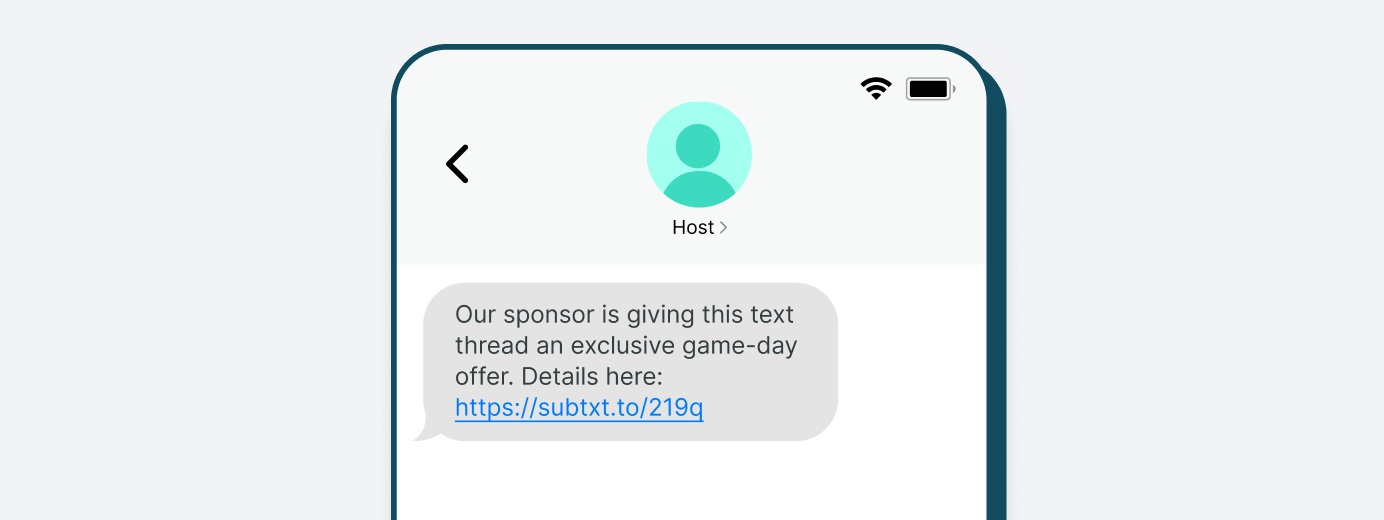
We’re opening early access to Friday’s fan meetup for Subtext subscribers first. Grab your spot here: [link]
New playoff merch just dropped. Subscribers get first access before we share it more broadly: [link]
Cadence
Use intentionally. Revenue-driving texts can be powerful, but they should not become the only thing subscribers receive. Balance promotional sends with analysis, questions, exclusives, and community-building messages.
Measure
Track clicks, conversions, ticket sales, merch sales, paid subscription upgrades, memberships, event registrations, offer redemptions, and sponsor activation performance. When possible, compare performance against other channels so you can show how Subtext contributes to revenue or saves spend.
Common Failure Mode
Leading with the sale before earning attention. Fans are more likely to act when the promotion feels connected to the relationship, the timing, and the value they expected when they subscribed.
Sample Weekly Sports SMS Plan
Here is a simple weekly structure for a sports creator, journalist, or podcast host covering an active team in season.
Monday: Postgame reaction
Still thinking about that fourth-quarter decision. I get the logic, but I do not like the result. What was your biggest issue from yesterday?
Tuesday: Fan question prompt
Recording tomorrow. Send me your biggest question about the offense, and I may use it on the show.
Wednesday: Subscriber-only take
One thing I have not said publicly yet: I think the lineup change is less about performance and more about matchups this week.
Friday: Prediction or poll
Prediction time: Who has the bigger game Sunday, the rookie WR or the veteran TE? Reply ROOKIE or VET.
Saturday: Ticket or merch offer
Home game tomorrow. If you’re still thinking about going, here’s the subscriber ticket offer we mentioned earlier: [link]
Game day: Timely reminder or reaction
Inactives are out. The secondary is thinner than expected, so watch how much help they give over the top early.
This type of structure keeps the Subtext channel active without requiring every text to be a major announcement.
Common Failure Modes
Only Sending Links
If every Subtext message is just a link to a podcast, article, or video, subscribers may stop seeing the channel as valuable. Give them commentary, context, questions, and access too.
Going Silent After Launch
Many campaigns generate early interest but lose momentum due to a lack of consistent follow-up. Plan the first several weeks before launch, so Subtext subscribers hear from you regularly.
Making the Channel Too Generic
Fans subscribe to a specific voice, team, sport, or community. Avoid broad updates they could get anywhere. Make the Subtext channel feel tied to your expertise and relationship with the audience.
Over-Messaging Without Purpose
Sports can create a lot of reasons to text, but every message should have a job. Are you informing, asking, reacting, inviting, or rewarding? If not, reconsider the send.
Forgetting to Ask for Replies
The biggest advantage of Subtext is the ability to create a real dialogue. Ask questions often, and use fan replies to shape future content, community moments, and revenue opportunities.
A Plan You Can Actually Run
A sports SMS campaign does not need to be complicated to work.
Start with a clear promise. Text consistently. Give fans something they cannot get everywhere else. Ask for replies. Use those replies to make your content better. Promote the channel anywhere your most loyal fans already spend time.
Subtext helps sports publishers, journalists, podcast hosts, and creators turn those moments into a direct, owned relationship with their audience. Instead of relying only on social feeds or one-way promotion, you can build a texting channel where fans can hear from you, respond to you, and take action, whether that means reading more, buying a ticket, attending an event, subscribing, or engaging with a sponsor.
The best sports texting channels feel less like a broadcast list and more like a standing conversation with the fans who care most. That is the opportunity with Subtext: build a more loyal, reachable community that strengthens engagement and creates more ways to drive measurable value.
Ready to launch a sports texting strategy with Subtext? Book a demo or visit our FAQ.