
Newsrooms today are under more pressure than ever to cultivate direct, loyal relationships with their audiences. Social platforms shift, newsletters get crowded, AI-powered search continues to reduce organic referral traffic, and readers increasingly expect immediacy and intimacy. SMS offers a solution: it’s direct, personal, fast, and built for engagement.
This playbook breaks down how news and media organizations can launch and scale an effective Subtext channel — with real examples from publishers who’ve used Subtext to deepen loyalty, drive habit, and create new revenue opportunities.
Key Takeaways
- Newsrooms are turning to SMS as search and social decline — it provides a direct, algorithm-proof channel to reach audiences.
- Clear goals matter: define your channel’s purpose, identify KPIs, and choose the right mix of editorial, community, and revenue-driving use cases.
- Acquisition should be multi-channel; retention and win-back campaigns work especially well via SMS because it reaches readers email often misses.
- Early momentum is key: a strong welcome text and a high-value first week set engagement and habit.
- SMS supports more than messaging — it’s a two-way channel that drives polls, tips, Q&A, and data collection.
- Combining collected and imported data unlocks smarter targeting and more relevant campaigns.
- Case studies across news, politics, sports, and commerce prove the model: SMS drives engagement, retention, revenue recovery, and even affiliate conversions.
How to Launch Subtext for News & Media
Below is the step-by-step playbook our CS team uses with top newsrooms. These are the strategies that consistently work across local, regional, and national publishers.
1. Define Your Channel’s Purpose
Before sending your first message, clarify what value you’ll deliver and why a reader should opt in. A strong channel starts with a clear mission — but it also needs clear KPIs. Establishing your goals upfront helps determine how you’ll measure success over time.
Common KPIs for newsroom SMS channels include:
- Subscriber and owned audience growth
- Engagement and reply rates
- Click-through rates to owned properties
- Audience retention and churn rate
- Conversion rate and revenue collected
For a deeper dive into SMS performance benchmarks, read our guide on the metrics that matter for SMS.
Common newsroom channel types:
- Breaking news & political coverage
- Sports coverage (pro, college, and high school updates + photo submissions)
- Weather alerts (including severe-weather notifications)
- Event promotion & community updates
- Advertiser or sponsor-driven channels
- Tips, transparency & behind-the-scenes reporting
- Interactive community channels (Q&A, feedback, neighborhood questions)
- Subscriber acquisition, retention, or win-back campaigns
- Paid product promotion campaigns
2. Make Acquisition Easy and Everywhere
A strong launch depends on consistently getting your sign-up link and phone numbers in front of readers. The most effective publishers promote their channel across multiple touchpoints:
Owned channels
- Article embeds
- Homepage/app placements
- Newsletter modules
- Paywall or subscription prompts
- API and/or Webooks connected to your CRM
Social + On-Air
- Reporter posts on X, Instagram, TikTok
- Podcast callouts
- Radio/TV mentions
Offline
- QR codes in print
- Event signage
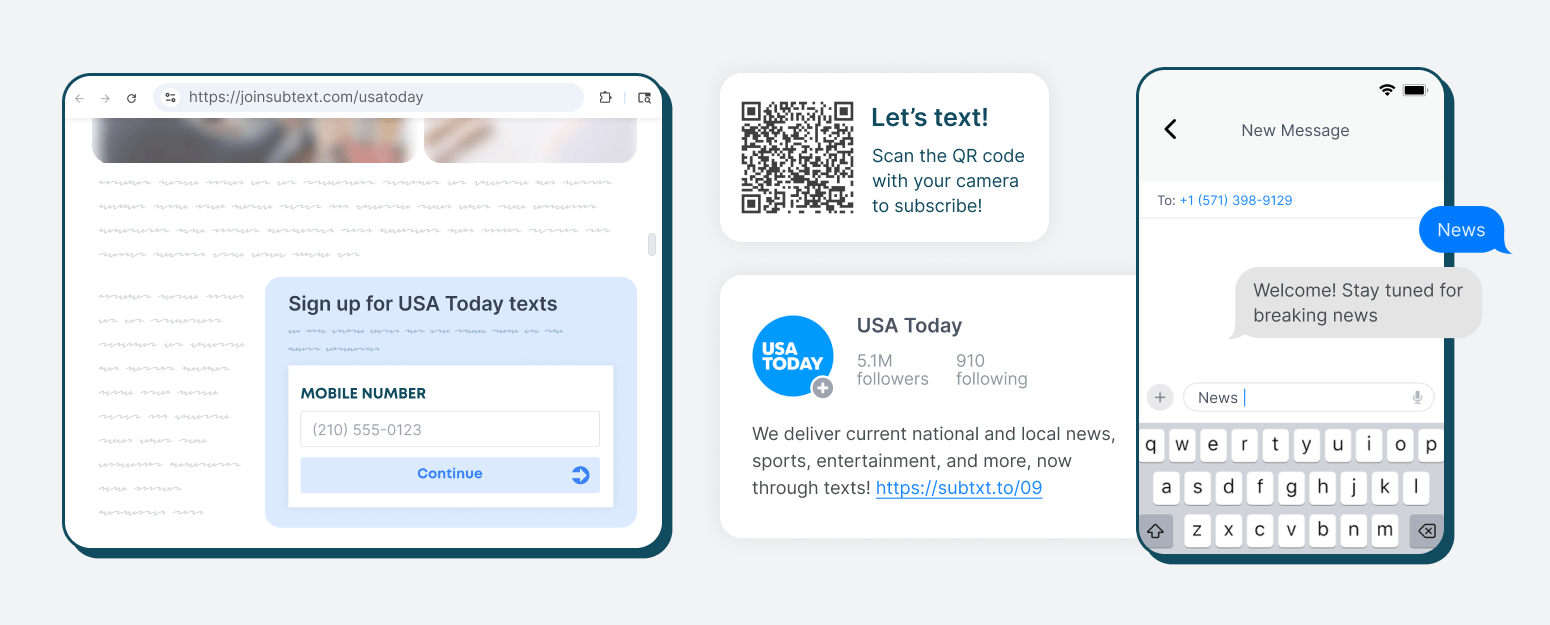
Repetition builds momentum — the more often readers see the invitation and understand its value, the faster your subscriber list grows.
3. Nail the First Week of Messaging
Your first messages set the tone for what subscribers can expect.
Send a clear welcome text
- Introduce the reporter or desk
- Set expectations (frequency, coverage areas)
- Invite questions or replies
Start with momentum
Early value builds a habit. Week one messages often look like:
- “Here’s what’s happening right now…”
- “Here’s the story behind today’s headline…”
- “What do you want us to ask next? Reply with your questions.”
4. Build a Sustainable Messaging Rhythm
Newsrooms typically use one (or a mix) of these formats:
- Breaking news + context
- Daily or weekly digest summaries
- Behind-the-scenes reporting
- Q&A and audience-sourced questions
- Exclusive previews or early intel
5. Keep Subscribers Engaged With Interactivity
Subtext is built for conversation. Engagement grows when you:
- Ask readers for feedback on content and messaging cadence
- Run SMS surveys
- Invite questions for reporters or experts
- Source tips or community issues
- Share additional context with readers who engage
By creating a participatory experience, you strengthen audience habits, grow reader trust, and gain the insights needed to build a powerful feedback loop that shapes future coverage.
6. Collect and Import Subscriber Data
SMS gives newsrooms a direct path to learn about their audience — and when combined with the data you already have, it becomes a powerful engine for personalization, targeting, and revenue.
Collect data directly through SMS
Two-way messaging allows you to gather first-party data that’s often difficult to capture elsewhere, such as:
- ZIP code or neighborhood
- Topic or beat preferences
- Team affiliations
- Reader questions, tips, and story ideas
- Email addresses for newsletter onboarding
- Interest in paid products or upcoming events
Import existing data to strengthen targeting
Many publishers also import audience data from their CMS, CRM, or subscription systems and map it directly to their Subtext subscribers. This can include:
- Purchase or subscription history
- Engagement level
- Subscriber type (free vs. paid, recurring vs. promo)
- Funnel stage or propensity to subscribe
- Past participation in campaigns or events
By combining collected and imported data, newsrooms can create smarter segments, deliver more relevant messages, identify high-value audience cohorts, and support acquisition, retention, and monetization strategies.
Examples From Leading News & Media Organizations
Real-world outcomes show how SMS supports audience engagement across coverage areas and newsroom sizes.
New York Post
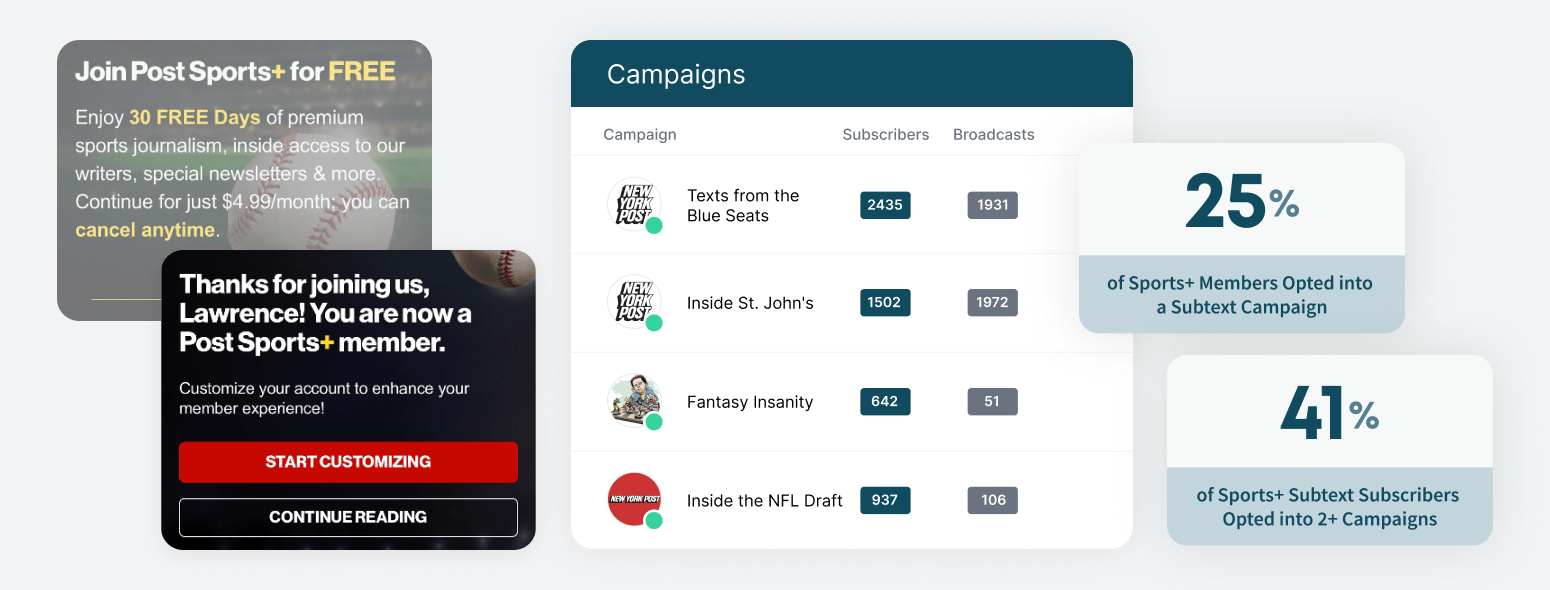
The New York Post used Subtext inside its Sports+ membership program to give fans direct access to columnists through exclusive text-based campaigns.
Results:
- 25% of Sports+ members joined at least one texting campaign.
- 41% of those subscribers opted into multiple campaigns.
- An NFL Draft–focused channel for existing SMS users saw 87% retention.
- Reporters noted how personal the channel felt and how quickly readers responded.
This approach turned premium sports coverage into a direct, high-engagement experience that strengthened loyalty among the Post’s most invested audience segment.
The Spokesman-Review
The Spokesman-Review used Subtext to reach digital subscribers whose payments had failed — a group that normally churned at over 91% — and ran a focused SMS win-back campaign.
Results:
- Recovered $17,866 in revenue in Q3
- Delivered a 38x ROI
- Each text generated an average of $22 in recovered revenue
- 39% of targeted subscribers updated their payment method after receiving a text
SMS allowed the team to reach readers who weren’t responding to email reminders, turning a high-risk audience segment into meaningful retained revenue.
Cleveland.com
Editor Chris Quinn launched a Subtext channel to connect directly with Cleveland residents — offering updates on newsroom decisions, soliciting subscriber input, and turning readers into collaborators.
Results:
- Achieved a 31% engagement rate among subscribers.
- Over 25% of subscribers replied to prompts such as town-hall interest.
- Expanded into four distinct Subtext channels within the organization.
This channel transformed a newsroom’s broadcast mindset into a two-way conversation, reinforcing trust, transparency, and commitment to community-led journalism.
Prime Day Affiliate Links
A tech-journalism publisher utilized Subtext during Amazon Prime Day to send affiliate deals directly to its SMS audience, resulting in measurable revenue from the campaign.
Results:
- Achieved a CTR of 15% across Prime Day texts.
- Many individual texts delivered 10%+ CTR, with top posts reaching 20-32%.
- Five of the top 25 overall purchased items during the event were promoted via Subtext — one exclusively to the SMS audience.
The campaign shows how SMS can serve not just audience engagement but direct revenue generation, particularly when aligned with affiliate or e-commerce models.
Putting It All Together
Launching Subtext in a newsroom doesn’t require complex workflows — it requires clarity, consistency, and a strategy built around direct connection. When you define your channel’s purpose, promote it widely, deliver valuable messages, and tap into interactivity, SMS becomes one of your most reliable engines for audience engagement.
Ready to launch your newsroom channel?
Book a demo or read the FAQ to explore how Subtext can support your coverage, audience strategy, and revenue goals.